

What happens after termite bait stations are installed? Homeowners considering termite bait station installation Arlington VA often want to know what installation day involves, how monitoring works afterward, and how baiting fits when there are signs of termite activity inside the home. The answers depend on what an inspection finds at the property.
Bait stations are not a one-time placement. They’re part of a monitored approach, and a suitable plan depends on termite evidence, the property’s layout, and access to potential station locations. If you’re concerned about termites, a professional assessment can help identify what the signs indicate and guide treatment planning.
This article explains the typical assessment, placement, and monitoring process, along with site conditions that can shape a plan. You’ll also learn how termite control and a wood-destroying organism inspection can help distinguish visible evidence from potential structural concerns, so you can decide on a practical next step.
Key Takeaways
- Mud tubes, damaged wood, or swarmers are reasons to arrange a professional assessment, not proof on their own of the cause or extent of activity.
- With termite bait station installation Arlington VA, placement and station quantity depend on the property and inspection findings.
- Compare baiting and liquid treatment by how each works, what follow-up involves, and how each approach fits the home.
- Photograph signs and note where you’ve seen activity before the assessment. Leave suspected termite evidence undisturbed.
- Use the inspection findings and follow-up recommendations to understand a practical treatment plan for your property.
Why Arlington Homeowners Consider Termite Bait Station Installation
A mud tube, hollow-sounding wood, or a cluster of winged insects can raise a reasonable concern: could termites be active, and what treatment would suit the home? These signs call for a closer look, but they don’t establish the extent of activity or determine which treatment is appropriate. A professional assessment helps distinguish what’s visible from what the evidence supports.
A termite bait station is a monitored system placed to attract foraging termites to bait. Follow-up checks are part of the treatment approach. Placing stations does not confirm that termites have found the bait or that the treatment plan is working as intended. Monitoring provides information to guide follow-up.
What termite bait stations do around a home
Stations are positioned around a property where they can intercept termite foraging activity. Their locations and number depend on the home’s layout and inspection findings, rather than a one-size-fits-all pattern. The bait provides a targeted way to address termites that encounter a station. A professional checks the stations over time and uses those observations to guide follow-up. For background on one named baiting approach, see the Sentricon Termite Colony Elimination System. That reference describes a specific system, not a claim that every bait station works the same way.
For homeowners, the key point is that station placement begins a monitored plan, rather than proving treatment success. An assessment helps determine whether baiting may suit the property and what follow-up is appropriate. If there’s visible activity inside the home, the inspection can put that evidence in context instead of relying on outdoor stations alone.
What Arlington homeowners may notice before an assessment
Common clues include mud tubes along a foundation or another surface, discarded wings near windows or doors, and wood that appears damaged. Winged insects can be difficult to identify by sight, and damage to wood can have causes other than termites. Mud-like material or moisture near wood also needs context. These observations are useful details for an inspection, but they don’t identify the cause by themselves.
- Mud tubes: Photograph where they appear and note whether they run along a foundation, wall, or another surface.
- Discarded wings: Record where you found them, such as beside a window, without assuming they came from termites.
- Wood or moisture concerns: Note the location and visible condition. Moisture or damage alone doesn’t confirm termite activity.
Conditions vary from one Arlington property to another, so don’t assume a particular soil or climate feature means a home needs bait stations. An inspection connects the signs, the building, and site conditions to a treatment recommendation. If you’re considering termite bait station installation Arlington VA, an assessment is a practical first step toward deciding whether monitored baiting fits your home.
How Termite Bait Station Installation Works in Arlington, VA
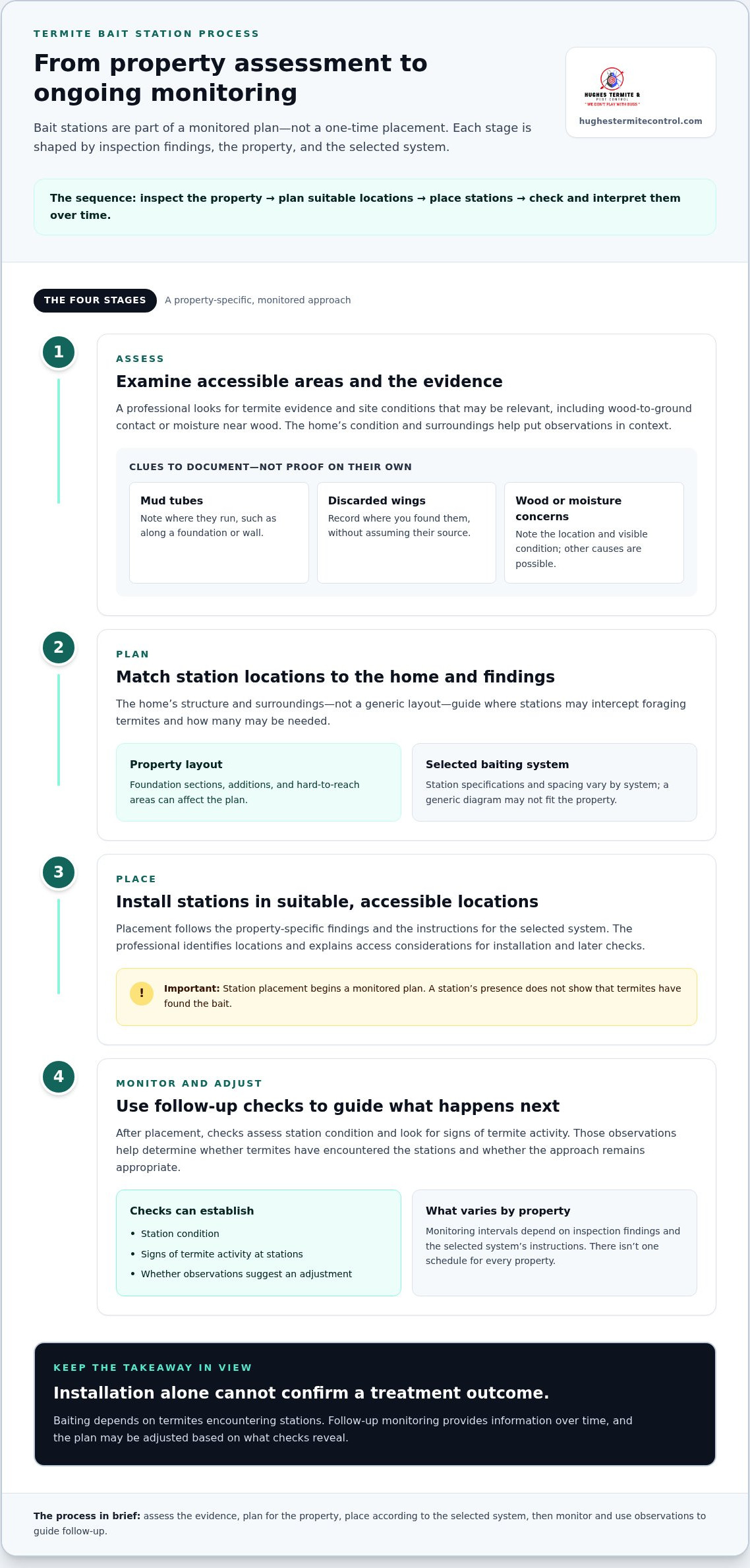
A bait-station plan follows a sequence: assessment, site planning, placement, and follow-up monitoring. The goal is not simply to put stations around a home. A professional first considers the property’s condition and any signs of termite activity, then plans where stations may intercept foraging termites. For homeowners considering termite bait station installation Arlington VA, the details depend on the inspection findings and the baiting system selected.
Monitoring is part of the treatment because station checks show whether termites are interacting with the system and whether the plan needs adjustment. A station’s presence alone can’t establish that termites have found the bait or indicate what is happening elsewhere on the property.
Assessment and station placement around the property
The assessment starts with an examination of accessible areas for termite evidence and conditions that may be relevant to activity, such as wood-to-ground contact or moisture near wood. The professional considers the home’s structure and surroundings rather than relying on a generic layout. These observations help determine how many stations may be needed and where they can fit the site.
Placement follows the property-specific findings and the instructions for the selected system. The professional identifies suitable locations and explains any access considerations for installation and later checks. A home with several foundation sections, additions, or hard-to-reach areas may need a different plan from a property with a simpler layout. Spacing and station specifications vary by system, so don’t rely on a generic diagram or online example to plan a property’s installation.
Monitoring visits and what they are meant to establish
After placement, follow-up checks assess station condition and look for signs of termite activity. The professional uses those observations to determine whether termites have encountered the stations and whether the approach remains appropriate. The plan may be adjusted based on what a check reveals. Monitoring intervals depend on the inspection findings and the selected system’s instructions, so there isn’t one schedule for every property.
Baiting relies on termites encountering stations, and monitoring provides information over time. An installation visit alone can’t confirm a treatment outcome. Ask for a clear explanation of what follow-up checks are intended to assess and how observations will inform next steps. The EPA guidelines on termite control also provide general background on identifying and controlling termites, including bait approaches.
To help keep the process straightforward, make accessible inspection areas reachable and share any new signs you notice between visits. Hughes Termite Control’s termite control assessment can connect evidence at your property with a treatment recommendation and monitoring plan based on the findings.
Bait Stations vs. Liquid Termite Treatment: How to Compare Options
Bait stations and liquid treatments work differently, so a useful comparison looks beyond the initial application. Baiting relies on termites encountering bait at stations and includes follow-up monitoring. Liquid treatment applies a termiticide to soil in selected areas, with the goal of creating a treated zone. The approach depends on the product, property, and inspection findings.
| Comparison point | Bait stations | Liquid treatment |
|---|---|---|
| Method | Stations are positioned for termites to encounter bait while foraging. | Termiticide is applied to soil in selected areas according to the treatment plan. |
| Follow-up | Monitoring checks station condition and activity, and informs next steps. | Follow-up depends on the treatment plan and site findings. |
| Site fit | Station locations and access around the home matter. | Soil access and the areas requiring treatment matter. |
| Homeowner expectations | Expect a monitored approach, not a result established by placement alone. | Expect treatment tailored to identified areas, not a universal solution. |
These criteria describe general differences, not a ranking. Neither approach is automatically faster, safer, more effective, or less disruptive in every situation. A professional assessment determines what the evidence shows, which areas need attention, and which treatment options may fit the property. The EPA also provides guidance on termite identification and control, including general information about treatment methods.
When a bait-based approach may be considered
A professional may consider baiting after evaluating termite evidence and site conditions, including where stations could be positioned and checked. Ongoing monitoring is central to this approach: follow-up observations help establish whether termites are interacting with the stations and whether the plan needs adjustment. Baiting doesn’t replace an assessment of existing damage. A wood-destroying organism inspection can help clarify visible evidence and potential structural concerns.
Questions an inspection should resolve before treatment
Before choosing a method, the assessment should connect the signs to the property. Useful questions include:
- What evidence of termite activity is present, and where?
- Which areas appear affected, and what remains accessible to inspect?
- How do the home’s layout and site conditions shape treatment options and follow-up?
- What is monitoring or other follow-up intended to establish?
These answers help set expectations, especially if you’re weighing termite bait station installation Arlington VA against another approach. For broader context on treatment choices and termite control in the region, see the DMV termite control guide. The inspection, rather than a general comparison, is the basis for a property-specific recommendation.
How to Prepare for a Termite Bait Station Assessment in Arlington
A little preparation can make an assessment more useful, but you don’t need to diagnose the problem or choose a treatment in advance. Your observations provide helpful context. The inspection connects those details with what can be seen around the property and helps determine whether bait stations or another treatment approach may fit.
What to document before the visit
Make a brief record of what you noticed, where it appeared, and when you first saw it. If signs change, note that as well. Photos can show location and appearance, especially if the evidence is no longer easy to see. Take pictures only from safe, accessible areas, and don’t pull apart material or disturb suspected activity to get a closer view.
- Photograph visible tubes, discarded wings, or damaged wood, and note the room or exterior area.
- Record sightings and any changes you’ve noticed over time.
- Share relevant history, such as known leaks, repairs, or previous termite treatment.
- Identify areas you’re concerned about, even if you’re unsure whether the signs are termite-related.
Leave the original evidence in place where possible. A close-up photo can help, but the surrounding location may also show how the evidence relates to the building.
How to make the inspection more useful
Before the visit, make accessible areas of concern reachable. For example, move stored items away from a basement wall or clear a path to an accessible crawlspace entrance. Don’t dismantle anything, handle suspected termites, or alter existing stations or signs. The aim is to provide access, not to investigate or treat the area yourself.
Bring questions that will help you understand the recommendation and what happens after installation. For example:
- What findings support the proposed treatment approach?
- Where would stations be placed, and what site conditions affect those locations?
- What will monitoring checks look for, and how will observations guide follow-up?
- Should visible damage or other structural concerns be assessed separately?
These questions clarify the difference between confirming activity and deciding how to address it. The inspection, not a homeowner checklist, determines whether bait stations suit the property. A subterranean termite treatment guide can also help explain the kinds of considerations involved in treatment planning.
If you’re preparing for termite bait station installation Arlington VA, sharing what you’ve observed gives the assessment a useful starting point. For professional support, arrange a termite assessment with Hughes Termite Control. A clear review of the evidence can help you understand the recommendation and what follow-up may involve.
Plan Professional Termite Bait Station Installation with Hughes Termite Control
Once you’ve recorded what you’ve noticed, have the evidence assessed. A professional recommendation should reflect the inspection findings and conditions at your property, rather than assume one treatment fits every home. For Arlington homeowners considering termite bait station installation Arlington VA, the assessment helps determine whether baiting is appropriate and what the next steps involve.
What to expect from a professional recommendation
Hughes Termite Control provides termite control and wood-destroying organism (WDO) inspections to help homeowners understand visible termite evidence and potential structural concerns. Inspection findings inform treatment planning. A recommendation should explain the reasoning behind the proposed approach, including how station placement relates to the property and what follow-up monitoring is intended to establish.
Before moving forward, make sure you understand the plan in practical terms. Ask which areas were assessed, what findings influenced the recommendation, and what will be checked during follow-up. If parts of the property were inaccessible, understanding that can help put the assessment in context. Clear answers also explain your role, such as keeping relevant areas accessible and sharing new signs you notice.
A recommendation is a plan based on available evidence, not a promise of a particular outcome. The selected method, station locations, and monitoring approach should be explained in relation to the property. Don’t assume a product, fixed schedule, or treatment result without a site-specific assessment and plan.
Move from concern to a clear next step
The decision path is straightforward: document the signs you’ve observed, arrange an assessment, review the findings and recommendations, and understand what follow-up involves. If the assessment identifies termite activity or possible damage, those details help guide treatment planning. If the evidence points elsewhere, the findings still give you a clearer basis for deciding what to address.
Bring your notes and photos, share relevant history such as known repairs or previous treatment, and ask how the recommendation addresses your concerns. This helps turn a troubling sign into a practical discussion about your property, treatment options, and monitoring expectations.
For homeowners in Arlington and across the DMV, Hughes Termite Control provides professional termite service and WDO inspection support. The assessment informs the recommendation, and follow-up helps track what happens next. To discuss your termite concerns and arrange a professional next step, contact Hughes Termite Control.
Take the Next Step with a Clear Plan
A termite concern doesn’t have to turn into guesswork. A property-specific assessment gives you a sound basis for deciding what to do, rather than choosing a treatment based on assumptions. If you’re considering termite bait station installation Arlington VA, focus on understanding how the recommendation relates to your home and what information will guide decisions as the plan progresses.
After the assessment, keep the recommendations and follow-up notes together. This gives you a practical record of what was observed, what actions were planned, and what later checks show. If new signs appear, add their locations and share the information with your termite professional.
Hughes Termite Control serves homeowners across the DMV with professional guidance grounded in conditions at their properties. Discuss termite concerns with Hughes Termite Control and take a measured next step toward understanding what your home needs.
Frequently Asked Questions
Can termite bait stations eliminate an active infestation?
Bait stations may be part of a plan to address active termite activity, but placement alone doesn’t guarantee that an infestation will be eliminated. Results depend on whether termites encounter the bait and what follow-up checks show. If you’re seeing fresh signs indoors, tell the inspector where and when they appeared. The assessment can clarify whether baiting fits the situation and whether other treatment steps should be considered.
How often do termite bait stations need to be inspected?
Inspection frequency depends on the system instructions and findings at your property, so there isn’t one schedule that fits every Arlington home. Follow the monitoring plan for the system installed, and keep track of scheduled checks. If you notice new signs between visits, record their location and share that information with your termite professional rather than waiting for the next routine inspection.
Are termite bait stations safe around pets and children?
Safety depends on the specific station and bait, how it is installed, and the product’s directions. Don’t assume every system has the same access protections or handling instructions. During the assessment, tell the technician about children, pets, and areas they use often. Follow the product label and the professional’s instructions about station locations, avoiding disturbance, and any precautions for your household.
How long does termite bait station installation take?
There isn’t a reliable universal installation time. The visit can depend on the property’s size and layout, access to planned station locations, and what the assessment identifies. A home with hard-to-reach areas may require a different amount of work than one with straightforward access. Ask for an estimate based on your property and clarify whether the visit includes only installation or other inspection work as well.
Do bait stations work for every termite problem in Arlington, VA?
No single treatment approach suits every termite situation. The right plan depends on confirmed activity, affected areas, site conditions, and the home’s layout. For termite bait station installation Arlington VA, an inspection helps determine whether stations are appropriate or whether another treatment approach should be considered. Local conditions alone don’t establish which method is right; the evidence at the property matters.
What happens if termites are found inside the home?
Tell the inspector exactly where you saw them and avoid disturbing the area before it can be assessed. Indoor evidence can prompt a closer evaluation of nearby wood and other accessible areas to understand the concern. Finding termites inside doesn’t automatically determine which treatment is needed. A professional can assess the evidence, discuss potential structural concerns, and explain appropriate treatment and follow-up options.
Can I install termite bait stations myself?
Some consumer termite products are available, but choosing locations and interpreting activity can be difficult without a property assessment. A professional plan accounts for the home’s conditions and includes follow-up, which helps make observations more meaningful. Avoid placing stations based on a generic diagram or disturbing suspected activity. For a termite concern in the DMV, Hughes Termite Control’s professional termite control can help establish an informed next step.


