

A new exterior door can improve energy efficiency when it replaces one that leaks air or has weak insulation. Front entry door installation in Alexandria, VA, typically takes three to five hours for a standard exterior door, though work may take longer if the opening needs extra attention.
A replacement door can make your home more comfortable, but the door itself is only part of the result. Its fit, seals, and installation all affect how well it limits drafts and heat transfer.
This guide covers door features suited to Northern Virginia weather, the installation process, and what to check during the final inspection. You’ll also learn what can affect the schedule so you can plan with fewer surprises.
Key Takeaways
- A replacement door can help reduce drafts and heat transfer when its fit, seals, and installation work together.
- Door materials and features should suit Northern Virginia’s changing weather and your home’s exposure to the elements.
- Installation timing depends on the door and the condition of the opening, so the process includes careful fitting and a final inspection.
- Use local seasonal conditions as context: mid-July’s average temperature in Alexandria, Virginia, is 80°F, according to National Centers for Environmental Information (NOAA).
How long does door installation take?
Most standard exterior door installations in Northern Virginia take three to five hours. A decorative or double exterior door can take four to five hours or longer, particularly with glass or transoms. Mid-July’s average temperature in Alexandria, Virginia, is 80°F, according to National Centers for Environmental Information (NOAA). The opening’s condition and the door’s design also affect the schedule.
For front entry door installation in Alexandria, VA, replacement usually means removing an existing door and fitting another into the current opening. New installation may require preparing an opening, which can add work. Interior door installation is different: a single or double interior door can take one to two hours. Commercial door installation and replacement depends on the door and opening, along with access and how the work fits the building’s operations. A representative can explain the sequence and expected timing for the specific project.
There is no single average cost for front entry door installation in Alexandria, and labor has no universal rate. The price depends on the project and is provided after a quote request. Replacing a door may involve straightforward removal and fitting, while a new opening or damaged frame can require additional work.
- Frame repair: Damage or poor fit may mean the existing frame needs attention.
- Sidelights: Glass panels beside entry doors affect the scope and fitting work.
- Hardware: Locks, handles, and other selected components influence the installation details.
When choosing an entry door installer in Alexandria, review the written scope and confirm applicable licensing and insurance documentation. Check whether the work includes removal, frame repairs, sidelights, hardware, and final fitting. A clear plan distinguishes door replacement from new installation, so you understand the work before scheduling. For example, establish whether the existing opening will remain unchanged or needs modification.
Are new exterior doors energy efficient?
A new exterior door can support energy efficiency by limiting drafts and reducing heat transfer. The result depends on the complete assembly: door, frame, weather seals, and threshold. A well-insulated slab cannot compensate for gaps around its edges. Accurate fitting and secure sealing help the door perform as intended.
Alexandria’s average late-January temperature is 37°F, so winter comfort matters alongside summer heat. Look for a door designed to limit air leakage, with insulation suited to the home’s needs. Glazed entry doors can bring in daylight, while the glass area and frame design affect the overall assembly. Patio doors have the same basic concern: a poor fit can let outside air pass around the moving panel.
For patio doors, choose a configuration that suits the opening and daily use. Sliding doors save swing space, while hinged patio doors need room to open. In either case, check how the panels meet, how the frame sits, and whether the seals close evenly. Even a durable door needs proper installation to limit drafts and support energy efficiency.
Weather can affect scheduling and the exterior remodeling sequence. Before work begins, the installer assesses the opening, removes the existing unit if needed, and prepares the frame. The new door is positioned, secured, sealed, and tested for smooth operation. Rain or unsuitable site conditions can delay exterior work, so consider the forecast and the project’s condition when planning.
Virginia rebates or tax credits depend on current program terms and the specific door selected. Confirm that an incentive applies before including it in your project budget.
If you’re planning an exterior upgrade, review exterior door replacement options as part of the remodeling plan.
Door choices for Northern Virginia weather
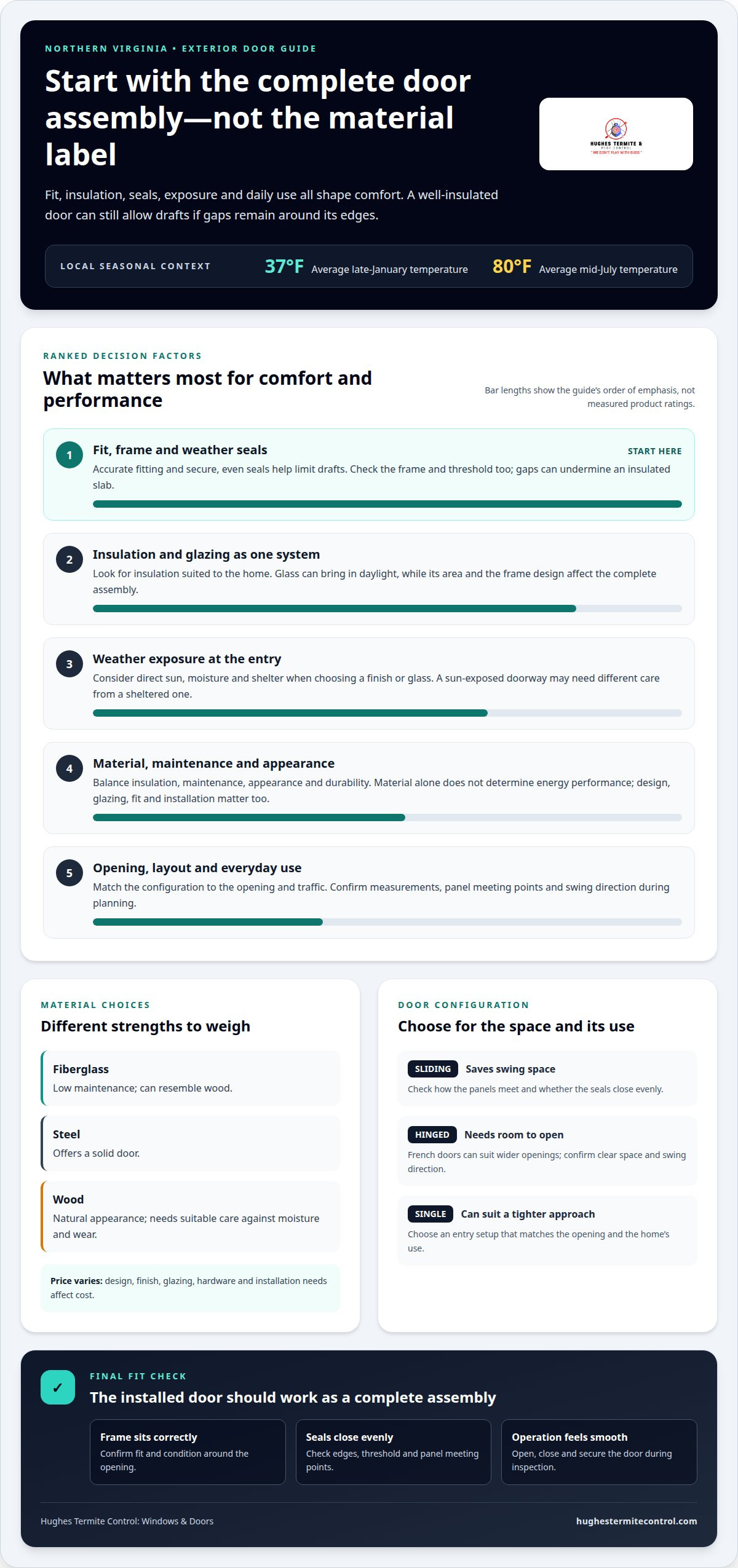
Northern Virginia homes face changing temperatures, moisture, and seasonal weather. Choose an entry door by balancing insulation, maintenance, appearance, and the condition of the opening. The door material matters, but the frame, weather seals, and installation also affect comfort. A beautiful door with gaps around its edges can still let in drafts.
Fiberglass, steel, and wood differ in cost, durability, and energy performance. Price depends on design, finish, glazing, hardware, and installation needs, while insulation and a tight fit affect energy efficiency. Fiberglass is a low-maintenance option and can resemble wood. Steel offers a solid door, while wood has a natural appearance and needs suitable care to protect it from moisture and wear.
Consider the home’s exposure before selecting a finish or glass. A door facing direct sun may need different care from a sheltered entry. If the doorway includes a window or sidelights, consider their size and placement for privacy, daylight, and how they fit with the complete door assembly. Choose the glass and frame as parts of one system.
French doors can suit wider openings, while a single entry door may fit a tighter approach. For a patio connection, choose a configuration that works with the room layout and expected traffic. Sliding doors avoid a swinging panel, while hinged French doors need clear space to open. Confirm measurements and swing direction during planning.
For an energy-conscious choice in Virginia, compare complete door assemblies rather than material labels alone. Consider insulation, glazing, frame fit, seals, and maintenance needs together, then match them to the home’s exposure and your preferred appearance. This helps narrow durable options without assuming one material suits every doorway.
Door installation process and final inspection
A reliable installation follows a clear sequence: assess the opening, fit the door, and test its operation. During the final inspection, confirm that you can open, close, and secure the door smoothly.
Permits and Building Code Requirements
Permit and code requirements depend on the project’s scope. Replacing a door in an existing opening differs from changing the opening or its structure. The installation plan should account for applicable Alexandria requirements and the selected door’s fit. A wider unit, new sidelights, or structural work calls for closer review than a like-for-like replacement.
Common Installation Problems
Common problems include a door that binds, uneven gaps, a latch that misses, or seals that allow drafts. These issues can result from inaccurate measurements, an out-of-square frame, or poor adjustment. Assess the opening and frame before installation. During fitting, align the door and check clearances. Then test the handle, latch, and weather seals rather than relying on appearance alone.
Installation starts by confirming the door selection and measuring the opening. Next, the existing unit is removed if required, and the exposed frame is assessed. The installer positions and secures the new door, then seals around the assembly. Even a fiberglass door needs accurate alignment; its material cannot correct a poorly fitted frame.
Final inspection focuses on operation and fit. Open and close the door several times, check that it sits evenly, and test the handle and lock. For a sliding exterior door, move the panel through its track and confirm it closes evenly. Inspect the edges for consistent contact with the seals. Review any adjustments and the completed work before confirming satisfaction.
A careful selection and inspection process helps catch fit issues before the job is complete. Plan your exterior door installation with the scope, opening, and final checks in mind.
Hughes Termite Control: Windows & Doors
Hughes Termite Control provides Windows & Doors services for homeowners planning an entry door replacement or installation. Turn to this service when you’re ready to move from comparing materials and assessing the opening to planning the work. The project scope can cover the selected door, existing frame, installation, and final operation checks.
Before work begins, identify the door style and any concerns with the current opening, such as visible damage or a door that does not close smoothly. These details help define the project. For a replacement, note whether the existing opening will remain unchanged. For a new installation, the opening and its preparation are central to the plan.
Whether you’re considering a fiberglass entry door, a glazed design, or another exterior option, Hughes Termite Control can help with Windows & Doors installation. Contact Hughes Termite Control to discuss your door project.
Make the Next Step a Clear One
Planning front entry door installation in Alexandria, VA, starts with deciding what you want the new entry to do for your home. Consider everyday comfort, the appearance from the street, and how the doorway fits your routine. These priorities can guide the project discussion and keep your selection focused on what matters.
Before moving ahead, gather your preferences: door style, glazing choices, and any concerns about the current entry. A clear starting point makes it easier to discuss the scope, understand the work, and make a considered decision. Hughes Termite Control’s Windows & Doors service is the next step for homeowners ready to plan an installation or replacement.
Contact Hughes Termite Control to discuss your door project and the right next step for your home.
A well-planned project starts with the details that matter to you. Move forward when you’re ready.
Frequently Asked Questions
Should I replace my door or repair it?
Repair is often suitable when the problem is limited to a loose handle, worn hinges, or a latch that needs adjustment. Replacement makes more sense when the door is warped, broadly damaged, or no longer suits the opening. For example, recurring difficulty closing may point to a door or frame issue rather than hardware alone. The condition of both helps determine the practical choice.
What types of doors are best for Northern Virginia weather?
Choose a door suited to the entry’s exposure, upkeep needs, and design. A sheltered doorway and one exposed to wind-driven rain may call for different priorities for finish and weather protection. Consider how the door sheds water and how easily its surface can be maintained. The opening, porch cover, and direction of exposure help narrow options for a Northern Virginia home.
What types of front entry doors are best for Alexandria, VA weather and homes?
The best fit depends on the home’s entrance, not just the local climate. For a compact foyer, a single door can preserve approach space; a wider entrance may accommodate a pair if the layout allows. A window or glass panels can brighten a darker entry, while a solid design may better suit a household that prioritizes privacy. Match the style to the opening and daily use.
What does front entry door installation include, and how long does it take?
A standard exterior door installation generally takes three to five hours. The work typically includes removing the old unit when replacing one, preparing the opening, fitting and securing the new door, and testing its operation. The installer also checks the threshold, hardware, and perimeter seal. Frame damage, a changed opening, or a decorative design can add work beyond a straightforward replacement.


