

A five-star rating on a national directory won't guarantee that a contractor understands framing integrity, moisture management, or regional building codes. When you search online for remodeling companies near me, you're usually met with an endless feed of sponsored lead brokers rather than direct trade specialists. It's completely natural to feel exhausted by the noise, especially when you're worried about unvetted crews abandoning projects, inflating costs halfway through, or covering up rotted subfloors with fresh finishes.
A successful renovation should bring lasting comfort and equity to your household, not lingering anxiety over structural shortcuts. You deserve clarity from the very start. In this guide, you'll learn a methodical framework to evaluate local remodeling companies, verify state licensing and required insurance coverage, and ensure your upgrades rest on a rock-solid foundation. We'll walk step by step through the exact credentials to check, trade questions to ask, and critical warning signs to watch for before any demolition begins.
Key Takeaways
- Learn how to bypass generic lead aggregators and evaluate authentic remodeling companies near me based on verifiable trade qualifications.
- Discover the exact licensing, insurance minimums, and permit standards required across Washington, D.C., Maryland, and Virginia to protect your home from legal liabilities.
- Understand why thorough substrate and framing inspections must happen before installing finish materials to prevent costly, hidden moisture damage down the road.
- Master the correct sequencing for building envelope upgrades—including roofing, siding, and energy-efficient windows—to safeguard your interior renovations.
- Follow a practical 5-step roadmap to partner with local renovation specialists who provide single-source accountability from diagnostic assessment to project completion.
Navigating Remodeling Companies Near Me: Beyond Directory Ratings
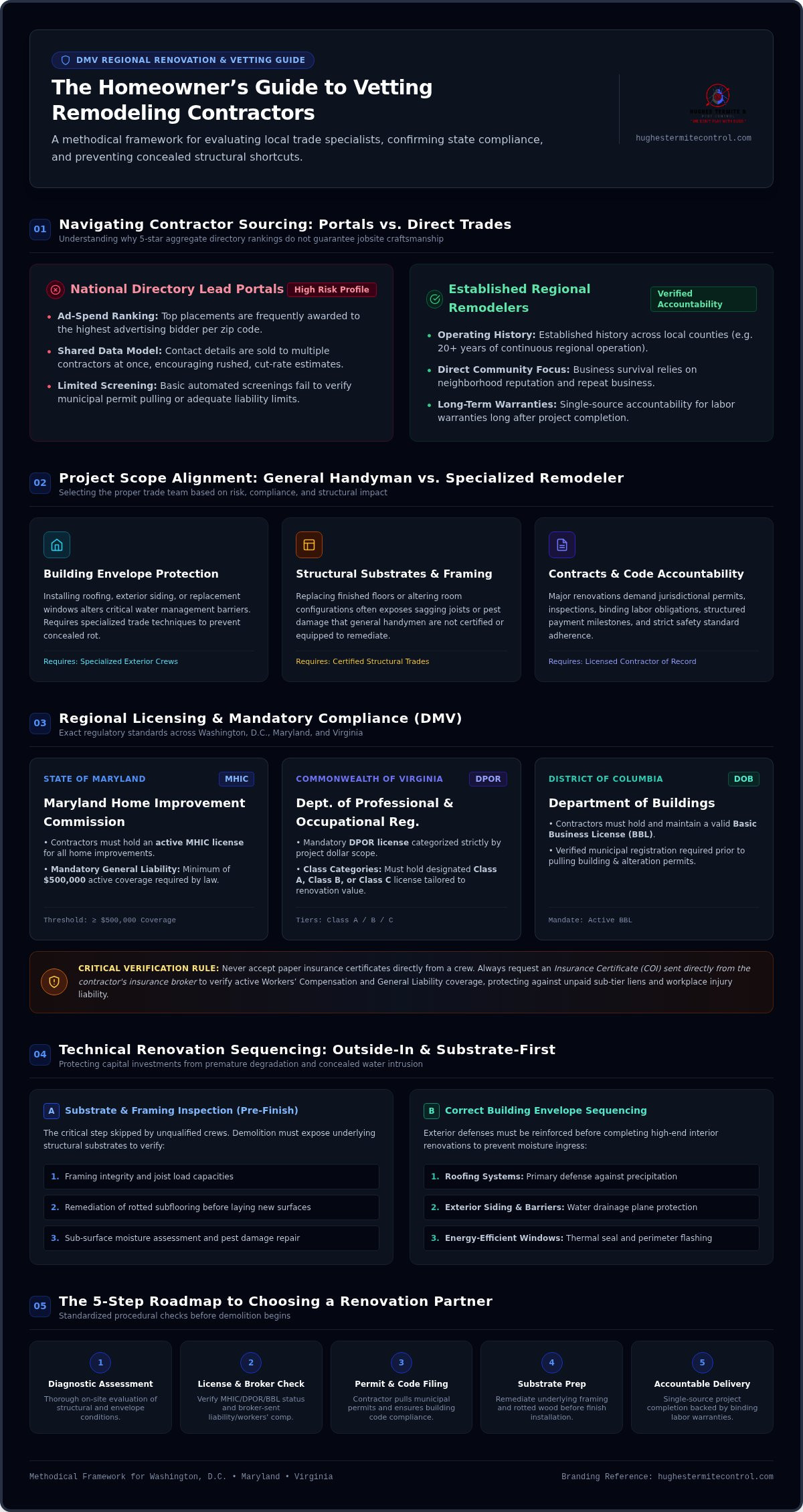
Searching online for remodeling companies near me produces hundreds of polished results within seconds. However, these search engine rankings and national aggregator profiles rarely reflect actual jobsite craftsmanship. Most national directory platforms operate on automated bidding systems, ranking contractors by advertising spend rather than field competence, verified trade licenses, or local building code compliance. A business holding a top placement may simply be the highest bidder for your zip code.
Homeowners facing significant renovations need dependable tradespeople, not lead-generation middlemen. Securing lasting results requires shifting your focus away from glossy marketing claims and toward verified operating history across the Washington, D.C., Maryland, and Northern Virginia corridors.
The Limitations of Online Contractor Lead Portals
Lead portals sell homeowner contact details to multiple contractors simultaneously. This business model encourages rushed, cut-rate estimates rather than thorough on-site assessments. While national aggregator sites run basic automated business screenings, these checks do not confirm whether a crew pulls required municipal permits or carries proper liability coverage for substantial alterations.
A contractor with twenty years of continuous operation in your local county offers tangible accountability. Established regional remodelers rely on repeat neighborhood business and direct community relationships. Because their business survival depends on their reputation, they remain accountable for labor warranties long after the project concludes.
General Handymen vs. Specialized Remodeling Contractors
Minor drywall patches or fixture replacements are well-suited for a solo handyman. In contrast, complex home renovations involving load-bearing framing, structural subfloors, or building envelope modifications require licensed, specialized remodeling contractors with dedicated trade teams. Knowing who to hire comes down to scope, compliance, and risk:
- Building Envelope Protection: Installing roofing, exterior siding, or replacement windows alters your home's water management barriers. These exterior projects demand specialized installation techniques to prevent concealed rot.
- Structural Substrates: Replacing finished flooring or reconfiguring interior rooms often reveals sagging joists or pest damage that general handymen are not certified or equipped to remediate.
- Contractual and Code Accountability: Major home improvements require jurisdictional permits, rigorous inspections, and clear legal protections. When formalizing project scopes, understanding construction contracts ensures both homeowner and contractor adhere to binding labor obligations, payment milestones, and safety standards.
Hiring a contractor whose core competencies align with your project prevents structural compromises and costly rework down the road.
Essential Vetting Criteria for Local Home Remodeling Contractors
Hiring a contractor requires far more diligence than accepting an online profile badge at face value. When sorting through remodeling companies near me, you need a repeatable method to confirm legal standing, risk protections, and fiscal transparency. A legitimate business welcomes this scrutiny. It protects you from personal liability and safeguards your real estate investment against substandard trade work.
Verifying Regional Licensing, Insurance, and Bonding
Each jurisdiction across our region enforces distinct legal mandates. In Maryland, contractors performing home improvements must hold an active Maryland Home Improvement Commission (MHIC) license and carry at least $500,000 in general liability coverage. Virginia requires contractors to hold a Department of Professional and Occupational Regulation (DPOR) license categorized by project scope (Class A, B, or C). In Washington, D.C., contractors must maintain a valid Basic Business License through the Department of Buildings.
Always request an insurance certificate sent directly from the contractor's broker to confirm workers' compensation and liability policies are currently active. Reviewing the FTC guide to avoiding scams reinforces that unverified tradespeople expose property owners to unpaid sub-tier liens and workplace injury claims. For a deeper breakdown of jurisdiction checks, consult our home improvement contractors vetting guide.
Deconstructing Bids: Allowances, Fixed Pricing, and Scope of Work
Vague estimates are a frequent source of project stress. Look closely at how prospective contractors handle material allowances. Lowball allowances for finish goods like tile, hardwood, or replacement windows make a proposal appear attractively affordable initially, but they guarantee expensive change orders once real materials are selected.
Demand a line-item scope of work specifying:
- Surface preparation methods and structural substrate reviews
- Exact manufacturer lines, product series, and finish grades
- Debris disposal protocols and county permit management
- Clear milestone payment schedules tied to verified inspection stages rather than arbitrary calendar dates
Interviewing References: Questions That Reveal Real Performance
Speaking with three recent local clients reveals operational habits no sales pitch can hide. Ask practical questions about daily site management:
- Did the team maintain clean containment barriers to protect living areas from dust?
- How did the project lead communicate unexpected site conditions or supply delays?
- Did the assigned crew remain consistent, or did unfamiliar sub-crews rotate in without notice?
- Was the punch list completed promptly before final payment was requested?
If you prefer working with an established local team with decades of trade accountability, consult Hughes Termite Control to discuss your upcoming home improvement plans.
The Critical Step Most Remodelers Skip: Substrate and Structural Inspection
The most expensive mistake in residential renovation is installing luxury finishes over decaying framing. When screening remodeling companies near me, homeowners often focus entirely on countertop slabs, paint palettes, or tile selections. However, premium materials cannot stabilize rotted sill plates, compromised floor joists, or insect damage hidden behind old drywall. A durable remodel always begins with a comprehensive diagnostic evaluation of the substrate.
Covering structural deficiencies merely traps moisture and accelerates hidden rot. Contractors with dual capabilities in structural diagnostics and residential remodeling inspect framing before touching cosmetic elements. A thorough pre-renovation structural review covers:
- Subfloor Deflection: Checking joist spacing and subfloor rigidity to prevent cracked tile or squeaking hardwood floors.
- Envelope Integrity: Inspecting exterior sheathing and flashing around window and door rough openings for water penetration.
- Framing Soundness: Verifying that sill plates, studs, and roof decking remain free from moisture decay and wood-destroying insect damage.
Uncovering Hidden Damage Before Hanging Drywall or Siding
Before hanging new drywall, installing replacement windows, or mounting exterior siding, crews must inspect open cavities for historic leaks and pest activity. Reputable remodeling teams pause progress when they discover soft rim joists or damaged studs. They sister or replace compromised lumber, resolve the underlying moisture source, and treat affected areas before closing the building envelope. Rushing this stage to meet an arbitrary deadline leads to bowed surfaces, recurring drafts, and eventual structural failure.
Evaluating Deck Footings and Framing for Safety and Longevity
Outdoor additions face harsh Mid-Atlantic seasonal extremes. When planning a deck upgrade, fastening new composite boards across an aged, weathered substructure creates an immediate safety hazard. Dependable remodeling contractors examine existing ledger board flashing, joist hangers, and concrete footings to verify load-bearing capacity against current building codes. Consult The Homeowner's Guide to Successful Home Remodeling in 2026 for planning durable outdoor living spaces. Building on a sound foundation guarantees that your exterior improvements endure for decades.
Planning Key Remodeling Projects for Lasting Property Value
Coordinating trade work in the wrong order wastes thousands in duplicate labor. When vetting remodeling companies near me, look for builders who prioritize whole-structure durability over isolated cosmetic updates. Renovating an interior bathroom or laying fresh hardwood while an aged roof or failing window seals leak moisture into the walls puts your investment at direct risk. Long-term property value demands a clear sequencing strategy: secure the outer envelope first, then build out the interior living spaces.
Exterior Envelopes: Roofing, Siding, and Window Upgrades
Your exterior envelope serves as the first line of defense against severe weather and regional humidity. Coordinating roofing and siding projects under one accountable contractor guarantees integrated flashing at critical wall-to-roof intersections. Installing high-performance replacement windows and insulated doors alongside new siding ensures weather-resistant barriers overlap correctly, eliminating drafts and stopping water infiltration before it can reach framing studs.
A systematic exterior envelope strategy incorporates several key safeguards:
- Coordinated Flashing Details: Step flashing, kick-out diverters, and drip edges must direct bulk water cleanly away from wall sheathing.
- High-Efficiency Thermal Openings: Modern replacement windows and entry doors lower air leakage while reducing strain on HVAC systems.
- Decay-Resistant Trims: Using rot-resistant exterior trim materials prevents recurring paint failure and wood rot during humid Mid-Atlantic summers.
Functional Upgrades: Flooring, Millwork, and Interior Spaces
Once the exterior shell is watertight, interior updates can proceed without risk of water degradation. Installing premium hardwood, engineered planks, or luxury vinyl begins beneath your feet. Before laying finish materials, trade crews must test subfloor moisture levels, secure loose panels to eliminate floor squeaks, and level high or low spots.
Interior doors and baseboards also require careful planning. Trim carpentry must incorporate proper expansion gaps to accommodate natural seasonal humidity fluctuations, preventing sticking doors and buckled planks. Balancing high-traffic durability with precision millwork creates living spaces that remain beautiful and functional through years of heavy family use.
To plan your exterior or interior home improvements with single-source trade accountability, contact Hughes Termite Control to schedule an assessment.
Selecting the Right Local Partner for Your DMV Renovation
Selecting the right trade partner transforms a complex home renovation from an unpredictable ordeal into a smooth, orderly process. Instead of cycling through dozens of sponsored listings when searching for remodeling companies near me, homeowners benefit most from following a methodical evaluation framework. A clear contracting sequence eliminates guesswork, establishes realistic material lead times, and protects your household from start to finish.
The Step-by-Step Contracting Process
A dependable residential renovation always adheres to a transparent, logical progression:
- Step 1: Diagnostic Site Walk-Through: Review project goals while inspecting underlying framing, subfloors, and moisture barriers to detect hidden vulnerabilities early.
- Step 2: Detailed Scope Review: Finalize a firm, line-item proposal that specifies brand products, exact materials, and realistic completion milestones.
- Step 3: Permitting and Supply Logistics: Secure necessary municipal permits and confirm warehouse delivery dates before scheduling on-site demolition.
- Step 4: Controlled Construction: Execute structural and finish trades with designated milestone check-ins, active dust control, and consistent site supervision.
- Step 5: Punch List and Warranty Resolution: Complete a thorough final walk-through to address every detail before issuing final payment.
Hughes Termite Control: Structural Integrity Meets Quality Remodeling
For more than twenty years, Hughes Termite Control has served property owners across the DMV region with direct trade expertise and quiet reliability. Most conventional remodelers lack the specialized background required to identify hidden wood-destroying insect damage or moisture decay behind walls. Conversely, standard remediation outfits don't possess the craftsmanship to build custom living spaces. Hughes resolves both sides of the equation.
Our dedicated home improvement team delivers complete exterior and interior renovations, including roofing, siding, decking, flooring, and energy-efficient windows and doors. We confirm that underlying framing is structurally sound before installing fine finishes, providing single-source accountability for your home. When you're ready to evaluate remodeling companies near me and partner with a team committed to lasting property stability, connect with Hughes Termite Control for a straightforward, no-pressure consultation.
Take the Next Step Toward a Structurally Sound Home Remodel
Vetting remodeling companies near me comes down to prioritizing structural health, verifying trade credentials, and following disciplined project sequencing. Lasting renovation value relies on inspecting framing, subfloors, and moisture barriers before installing fine finishes. When you verify regional licenses and demand transparent scopes of work, you protect your household from costly mid-project surprises.
With over 20 years of structural diagnostic and residential improvement experience across the DMV, Hughes Termite Control delivers single-source accountability for your home. Whether you're updating roofing, siding, decking, flooring, or replacement windows and doors, our team ensures underlying framing is sound before completing fine carpentry. You don't have to navigate your next renovation with uncertainty. Schedule a thorough remodeling consultation with Hughes Termite Control today to bring your vision to life with lasting confidence.
Frequently Asked Questions
How do I know if a remodeling company near me is properly licensed and insured?
You can verify credentials by searching your state licensing registry directly, such as the Maryland Home Improvement Commission (MHIC), Virginia's Department of Professional and Occupational Regulation (DPOR), or the DC Department of Buildings. Never rely solely on directory badges. Always require the contractor's insurance broker to send a current Certificate of Insurance confirming general liability and workers' compensation coverage. This ensures you aren't held liable for on-site worker injuries or property damage.
What is the difference between a general contractor and a specialized home improvement company?
General contractors typically manage broad residential scopes and frequently subcontract major portions of labor to independent crews. In contrast, a specialized home improvement company employs dedicated in-house trade specialists who focus directly on specific building elements like roofing, siding, decking, flooring, and replacement windows. Choosing a specialized firm provides direct craftsman accountability, tighter quality control over substrate preparation, and faster resolution of unexpected trade challenges without third-party handoffs.
Why should structural or pest inspections occur prior to starting a home remodeling project?
Conducting a thorough inspection reveals concealed moisture decay and insect activity before you invest in expensive cosmetic materials. Installing new hardwood flooring, cabinetry, or exterior siding over rotted joists or termite-damaged studs traps decay and creates future structural failures. Specialized inspection ensures existing framing, sill plates, and subfloors are completely sound, treated, and reinforced before finish carpentry begins, protecting your capital improvement from costly rework.
What are the most common red flags to look for when reviewing contractor estimates?
The most critical warning signs include large upfront cash deposits, vague lump-sum pricing without specific product lines, and artificially low material allowances. An honest estimate details exact manufacturer brands, disposal fees, and clear inspection milestones. Avoid contractors who push you to skip municipal permits, refuse to provide physical local office addresses, or offer steep discounts only if you sign a contract immediately on the spot.
How are change orders managed if unexpected damage is discovered during renovation?
Professional contractors document discovered issues immediately with high-resolution photos and a written condition assessment before touching the affected area. When vetting remodeling companies near me, ensure the contractor uses formal change orders detailing the exact scope, materials, and timeline adjustments required. Both homeowner and builder must sign this document before any supplemental work starts, keeping overall project costs predictable and preventing surprise billing upon final project delivery.
Can a remodeling company replace my exterior siding, roofing, and windows simultaneously?
Yes, and synchronizing these exterior envelope projects often produces superior structural performance and weatherproofing. Replacing roofing, siding, and performance windows together allows crews to properly integrate underlayment barriers, step flashing, and sill pans at critical wall intersections. This unified sequencing eliminates moisture gaps that frequently occur when different contractors install overlapping exterior systems months or years apart.
What warranty terms should I expect on labor and materials for residential home improvements?
You should expect two distinct warranty tiers: manufacturer coverage for materials and contractor coverage for labor. Reputable local remodelers typically provide a written labor warranty covering workmanship for one to five years, alongside standard manufacturer warranties on roofing shingles, siding panels, flooring, or replacement windows. Always verify that labor warranties are backed by an established local business with a permanent physical presence in the DMV area.


