

What if the new windows look perfect, but the frames behind them are already weakened by moisture or termites? In the DMV’s humid climate, hidden rot or pest damage can turn a straightforward window and door replacement into a missed structural problem. That’s why planning a window and door replacement DMV project should start with more than choosing a style or comparing energy ratings.
It’s reasonable to focus on lower energy bills, better curb appeal, and clear explanations of terms like Low-E glass and U-factor. You also want confidence that the opening is sound before new windows or doors go in. A careful assessment can help bring those priorities together and identify concerns that may need attention during the work.
This guide explains how to plan a durable, energy-efficient upgrade, from checking frames for moisture and wood-destroying organisms to comparing performance features and confirming which local permit or code requirements to ask about. You’ll also learn what to discuss with a contractor before installation, so the finished project supports your home’s appearance, comfort, and structural integrity.
Key Takeaways
- Learn which signs of frame failure, drafts, and condensation may point to issues that go beyond comfort or energy loss.
- Compare vinyl, wood, and fiberglass frames with the DMV’s humidity and seasonal temperature changes in mind.
- Understand how U-factor and Solar Heat Gain Coefficient ratings can help you compare window performance for local winters and summers.
- Plan your window and door replacement DMV project around a structural assessment, so hidden rot or termite damage can be identified before new units are installed.
- See how a structural-first approach can help protect your home’s integrity and support a more lasting upgrade.
When to Replace Windows and Doors in the DMV
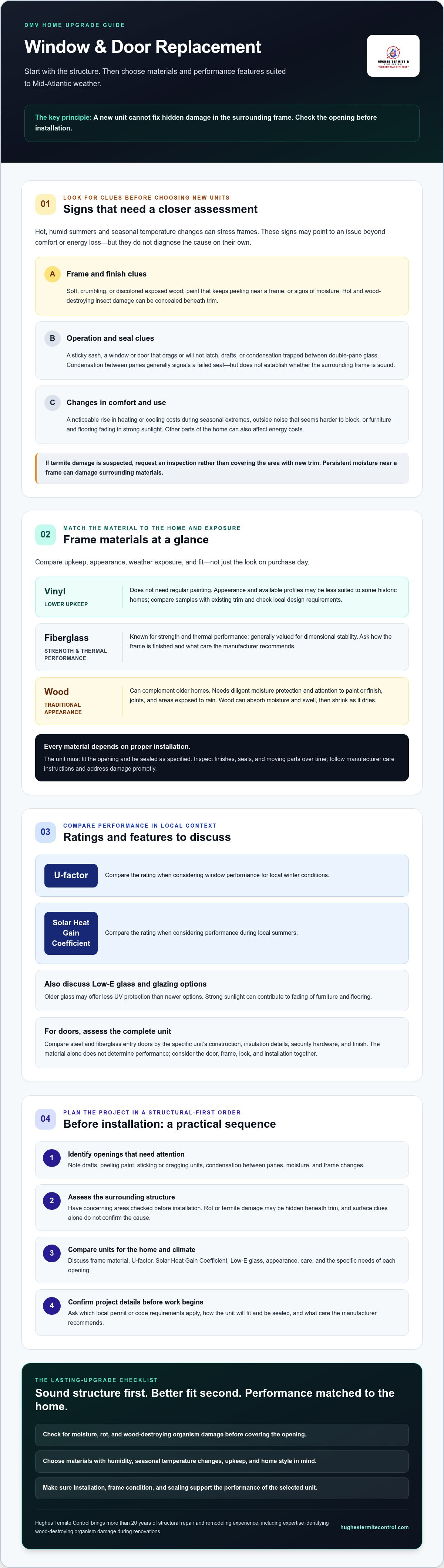
In the Mid-Atlantic, hot, humid summers and seasonal temperature changes can put stress on window and door frames. Deterioration doesn’t always start with an obvious leak. A draft, a sticky sash, or paint that keeps peeling near a frame can be an early clue that moisture has reached the assembly. Before planning a window and door replacement DMV project, check both the unit and the material around it. A new window won’t solve damage hidden in the surrounding structure.
Visual and Physical Red Flags
Press gently on exposed wood around the frame. Soft, crumbling, or discolored areas can indicate moisture-related rot, while wood-destroying insect damage may also weaken the frame. These signs aren’t enough to diagnose the cause, so have the area assessed before installation. Termite activity and water damage can be concealed beneath trim.
Notice how the units operate, too. Windows or doors that stick, drag, or won’t latch may be affected by moisture-related expansion, settling, or a damaged frame. Condensation trapped between double-pane glass generally signals a failed seal. It can impair the unit’s performance, but it doesn’t by itself establish that the surrounding frame is sound or damaged. Understanding basic window components and styles, including the frame, sash, and glazing, can help you describe what you’re seeing during an assessment.
Performance Indicators
Pay attention to changes in comfort and daily use. A noticeable rise in heating or cooling costs during seasonal extremes may point to air leakage or inefficient glazing, though other parts of the home can contribute. Drafts and condensation deserve attention beyond energy use: persistent moisture near a frame can damage surrounding materials, and gaps or deteriorated seals may create potential entry points for insects. If you suspect termite damage, ask for an inspection rather than covering the area with new trim.
Other clues include outside noise that seems harder to block, especially near busy streets in DC or suburban Maryland, and furniture or flooring that fades in strong sunlight. Older glass may offer less UV protection than newer options. These symptoms can help you decide which openings need closer evaluation first.
Replacing worn windows and doors can improve comfort and curb appeal, and well-maintained, functional openings can support a home’s overall presentation to future buyers. It doesn’t guarantee a higher sale price. The more important first step is confirming the structure is sound. Hughes Termite Control brings more than 20 years of structural repair and remodeling experience, with expertise in identifying wood-destroying organism damage during renovations. That structural-first assessment helps homeowners address hidden concerns before new units are installed.
Choosing the Right Materials for Mid-Atlantic Weather
DMV windows and doors need to handle humid summers, winter cold, and changing temperatures. Material choice affects upkeep, appearance, and how well each unit fits its opening over time. Compare options based not only on the purchase-day look, but also on exposure to weather, maintenance needs, and the style of your home.
Material Breakdown: Pros and Cons
- Vinyl: A low-maintenance option that doesn’t need regular painting. Its appearance and available profiles may be less suited to some historic homes, so check local design requirements and compare samples against the existing trim.
- Fiberglass: Known for strength and thermal performance, fiberglass can be a practical choice where temperatures swing between seasons. Ask how the frame is finished and what care the manufacturer recommends.
- Wood: Offers a traditional look that can complement older homes. It needs diligent protection from moisture, including attention to paint or finish condition, joints, and areas exposed to rain.
Moisture and temperature changes affect materials differently. Wood can absorb moisture and swell, then shrink as it dries. Vinyl can change dimension with temperature, while fiberglass is generally valued for dimensional stability. Proper installation matters for every material: the unit must fit the opening and be sealed as specified. Over the next 20 years, expect to inspect finishes, seals, and moving parts rather than assume any material is maintenance-free. Follow the manufacturer’s care instructions and address damage promptly.
Selecting the Best Door Types
For an entry door, compare steel and fiberglass based on the specific unit’s construction, insulation details, security hardware, and finish. The material alone doesn’t determine performance. Ask how the door, frame, lock, and installation work together.
Sliding patio doors need a clear track and enough wall space for the panel to move. French doors require room for their swing, and the opening must accommodate the door configuration. Either choice depends on the layout and condition of the surrounding structure. Weatherstripping and a well-fitted threshold are important for limiting air leaks; ask how these components will be checked and replaced if they’re worn.
Balance appearance with the work you’re willing to take on. A wood frame may suit a home’s character, while a lower-maintenance material may better fit your routine. For a window and door replacement DMV project, include a structural check before finalizing materials or ordering units. Moisture or wood-destroying organism damage around an opening can affect the installation and should be addressed first. Hughes Termite Control handles windows and doors as part of its remodeling work, with experience identifying and repairing structural damage before or during installation. Review its window and door remodeling information as you plan your project.
Understanding Energy Efficiency Ratings for DMV Homes
Window labels can make comparison easier once you know what the numbers measure. For a window and door replacement DMV project, focus on how a unit handles heat loss, incoming sunlight, and daylight, then consider the room’s orientation, shading, and comfort needs. No single rating tells the whole story.
The Technical Terms Homeowners Should Know
- U-factor: U-factor measures the rate of heat loss through a window assembly; a lower number means better insulation against heat escaping in cold weather.
- Solar Heat Gain Coefficient (SHGC): SHGC measures how much solar radiation passes through the glass. A lower value generally limits solar heat entering the home, which may help with summer cooling, while the best balance depends on exposure and shade.
- Visible Transmittance (VT): VT indicates how much visible daylight the glass allows inside. Compare it alongside U-factor and SHGC so a unit’s energy performance doesn’t come at the expense of the natural light you want.
Low-emissivity, or Low-E, coatings are thin layers on the glass that help reflect infrared heat while allowing visible light through. Their effect depends on the glass package and product design, so compare the full unit ratings rather than assuming that “Low-E” alone guarantees a particular performance level.
Regional Performance Targets
Maryland and Virginia homeowners should compare product labels with the current ENERGY STAR criteria for the applicable climate zone. ENERGY STAR requirements can vary by zone and product type, so ask for the manufacturer’s documentation and confirm which criteria apply to your specific window or door. Columbia Gas of Virginia, for example, describes a rebate for qualifying high-efficiency windows, doors, and skylights that meet ENERGY STAR specifications for the North-Central climate zone. Check current program terms before relying on an incentive.
Don’t choose a rating just to pursue a federal tax credit. The federal Energy Efficient Home Improvement Credit for windows and doors isn’t available for property placed in service after December 31, 2025. State or utility incentives can have separate rules, so verify eligibility directly with the program before ordering.
Triple-pane glass isn’t automatically the right choice for every opening. Consider the home’s existing insulation, window exposure, local noise, and how much additional performance the product offers over a suitable double-pane option. Compare documented ratings and discuss the trade-offs with your installer instead of choosing by pane count alone. This keeps the decision tied to your home’s actual needs, not a label that sounds more efficient.
How to Prepare for Your Replacement Project
A good plan starts with a careful look at each opening, not just a product quote. Note drafts, water staining, soft trim, difficult operation, and visible frame damage. Decide which windows and doors need attention first, then set a budget that accounts for the units, installation, possible repairs, and permit or review costs. Ask for a written scope that explains what is included and how concealed damage would be handled if it appears after work begins.
Vetting Your Local Home Team
Ask who will inspect the openings, who will complete the installation, and how the crew will address rot or suspected termite damage. Request proof of applicable licenses and insurance, and verify the requirements with the relevant local authority. Ask for a written explanation of a pocket installation, which fits a new unit into the existing frame when that frame is suitable, versus a full-frame replacement, which removes the existing frame and allows more of the opening to be inspected. For more questions to raise, see this guide to home improvement contractors near me.
Planning and Permitting
Permit rules depend on the jurisdiction and project details. Washington, D.C., requires a building permit for window replacement, and properties in historic districts may need Historic Preservation Office review. In Maryland and Virginia, contact the building department for the specific county or city before work starts, especially if the project changes an opening’s size or structure. If you live in a community with an HOA, confirm its design approval process and any material or appearance rules before ordering.
Custom sizes and specialty glass can take longer to arrive, so ask the supplier for a written delivery estimate and build the schedule around it. Weather can also affect the work plan; discuss how the installer will protect the home if conditions change. Before installation day, clear furniture and window coverings from work areas, secure pets, and ask how the crew will manage dust, debris, and access through the home.
Before anyone orders units, arrange for the frames and surrounding structure to be checked. A standard measurement may not reveal moisture damage or wood-destroying organisms concealed beneath trim. Hughes Termite Control combines remodeling experience with expertise in identifying and repairing structural damage before or during window and door installation. For help planning your window and door replacement DMV project, review Hughes’ window and door remodeling services.
Why a Structural-First Approach Matters for Your Home Team
New windows or doors can’t correct a frame that’s already weakened by rot or wood-destroying insects. If an installer covers damaged wood without addressing it, the opening may remain vulnerable to moisture, poor fit, and future deterioration. A structural-first plan checks the surrounding frame before installation, so repairs can be considered before new units conceal the area.
Protecting Your Investment from Hidden Threats
A wood-destroying organism inspection can be a useful step before exterior renovations, particularly if you see soft wood, staining, bubbling paint, or unexplained gaps around an opening. An inspection can help identify signs of termite activity or other wood-destroying organisms. It also helps distinguish visible damage from conditions that need further assessment.
Moisture deserves attention, too. Failed caulking, poor drainage near an opening, or water intrusion can leave wood damp and more susceptible to deterioration. Address the source of moisture as well as any damage found; replacing a window without resolving the underlying issue may leave the new installation exposed to the same conditions.
Hughes Termite Control brings remodeling experience and expertise in identifying and repairing structural damage before or during window and door installation. That combination helps connect the condition of the opening with the work needed to prepare it. For homeowners, it means the discussion can include both the replacement unit and the structure supporting it.
Long-Term Maintenance for DMV Homeowners
After installation, ask the contractor to review the finished work with you. Check that each window and door opens, closes, and latches smoothly. Look over the visible caulking, weatherstripping, trim, and threshold, and ask which products or care instructions apply to your units. Keep the written scope and warranty terms for reference.
Seasonal checks can catch small concerns before they grow. Look for cracked or separated sealant, worn weatherstripping, water stains, or areas where the frame feels soft. Clear debris from tracks, clean them as directed, and lubricate hinges or moving hardware only as the manufacturer recommends. If a window starts sticking or a door no longer seals evenly, investigate rather than forcing it.
Before choosing a contractor, ask what warranty coverage applies to the materials and installation, how long each term lasts, and what conditions or maintenance responsibilities affect coverage. This guide to remodeling companies near me offers more questions to consider. For a structural-first approach to window and door replacement DMV homeowners can plan with confidence, explore Hughes’ window and door remodeling services.
Plan Your Upgrade with Confidence
A lasting replacement project depends on more than selecting attractive windows and doors. Start with units that suit your home and local conditions, compare energy ratings in plain terms, and make sure the structure around each opening is sound before installation begins. A clear scope, permit check, and discussion of maintenance expectations can help prevent surprises along the way.
For window and door replacement DMV homeowners can approach with greater peace of mind, Hughes Termite Control brings more than 20 years of experience in structural repair and remodeling. The company is licensed in the DMV for both home improvement and pest control, with expertise in identifying wood-destroying organism damage during renovations. Its grounded approach connects the condition of your home with the work it needs, so decisions are made with structural integrity in mind.
Contact Hughes Termite Control for a structural-first window and door assessment today. With a careful plan and the right team, you can move forward toward a more comfortable, efficient home with confidence.
Frequently Asked Questions
How much does window and door replacement cost in the DMV?
There isn’t one reliable price for a window and door replacement DMV project because the total depends on the number and type of units, materials, installation scope, and any repairs needed around the frames. A pocket installation may involve different work than a full-frame replacement. Ask for a written, itemized estimate that explains what’s included and how concealed rot or pest damage could affect the scope.
Is it better to replace all windows at once or in phases?
Replace all windows at once if the units are failing across the home and your budget, schedule, and installation plan support a larger project. Phasing can make sense if only some openings need attention now. Prioritize windows or doors with damage, persistent drafts, or operation problems, and plan for consistent materials and appearance if replacements will happen over time. Address structural damage before installing new units.
Do I need a permit for window replacement in Maryland or Virginia?
Permit requirements depend on the project and the local building department, so check with your Maryland county or Virginia city or county before ordering units. Ask specifically whether a permit is needed for a like-for-like replacement and whether changing an opening’s size or structure changes the requirements. Confirm who is responsible for submitting applications and arranging any required inspections, and keep approval records with your project documents.
How long does a typical window and door installation take?
Installation time varies with the number of units, their size and type, site access, and whether the frames need repair. A straightforward replacement can follow a different schedule than work involving structural repairs or custom units. Ask the contractor for a project-specific schedule, including expected delivery dates, installation days, and how the home will be protected during work. Confirm how unexpected damage could affect the timeline.
What is the best time of year to replace windows in the DMV?
There isn’t one best season for every DMV home. Choose timing based on product availability, the installer’s schedule, and forecast conditions for the planned work. Ask how the crew will manage weather and protect exposed openings if conditions change. Custom-sized windows and specialty glass may have longer lead times, so get a written delivery estimate before setting an installation date. Don’t delay necessary repairs just to wait for a particular season.
Can new windows and doors really lower my energy bills?
They can help reduce heating and cooling use if the existing units are drafty, poorly sealed, or inefficient, but savings aren’t guaranteed. Results depend on the new units’ performance, installation quality, and other factors such as insulation and air leakage elsewhere in the home. Compare U-factor and Solar Heat Gain Coefficient ratings, and ask the installer how the selected products fit your home’s exposure and comfort needs.
What is the difference between a pocket installation and full-frame replacement?
A pocket installation fits a new window into the existing frame, provided that frame is in suitable condition. A full-frame replacement removes the existing window and frame, exposing more of the opening for inspection and repair. If you see soft wood, water staining, or possible pest damage, ask for an assessment before choosing an installation method. The condition of the frame should guide the decision, not the label alone.
How do I know if my window frames have termite damage or just rot?
You usually can’t confirm the cause by appearance alone. Rot is often associated with persistent moisture and may leave wood soft or crumbling; termite damage can be hidden and may appear as weakened wood or concealed galleries. These clues aren’t a diagnosis, and both problems can affect the same opening. Arrange a wood-destroying organism inspection if you suspect termites, and address moisture sources before new units cover the area.


