

The most useful home remodel may not be the one that looks best in an inspiration photo. A new floor or updated exterior can catch your eye, but the right project depends on your home’s condition and how you plan to use it. If you’re unsure where to start, compare practical examples with what you’ve observed in your own home.
Before choosing a project, weigh appearance, practical needs, and your plans for the home. Worn flooring, aging siding, or a deck that no longer suits your routine may point to different priorities. If you’ve noticed possible moisture, pest, or wood damage, have the affected area assessed before covering or replacing materials.
This guide covers common interior and exterior remodel examples, including flooring, roofing, siding, decking, and windows and doors. You’ll learn how to match a project to your home’s condition, set a sensible scope, and prepare questions for a remodeling professional. Inspiration can help you identify what you like. Your home’s actual needs should guide what comes next.
Key Takeaways
- Identify the problem first, then decide whether maintenance, a focused repair, replacement, or a broader remodel fits.
- Compare roofing, siding, decking, flooring, and window or door projects by the condition they address and the result you want.
- Use visible condition, intended outcome, and questions for a professional to compare project options before settling on a scope.
- Gather relevant photos, measurements, maintenance history, and questions before discussing a home remodel.
- Raise possible pest or wood damage before covering or replacing affected materials so the underlying concern can be assessed.
What Counts as a Home Remodel, and What Problem Should It Solve?
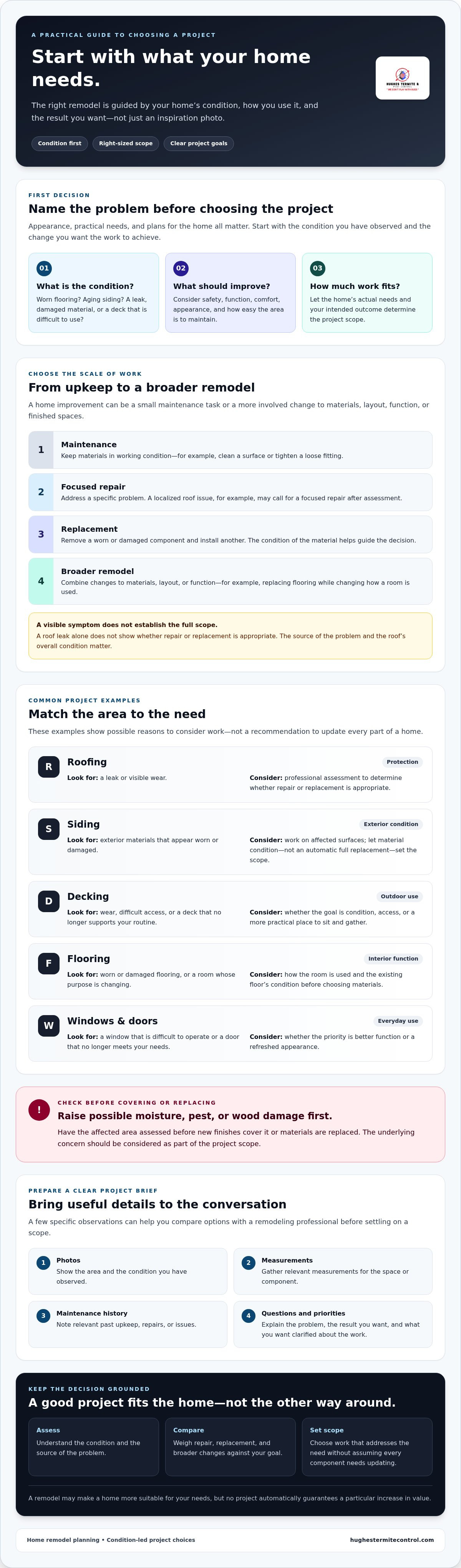
A home remodel changes materials, layout, function, or finished spaces. The scope might involve one worn component or several parts of a room. Home improvement is a broader category that also includes maintenance and repairs, as described in What Counts as a Home Remodel. The practical question is not how dramatic the project looks, but what work your home needs.
Maintenance helps keep materials in working condition, such as cleaning a surface or tightening a loose fitting. A repair addresses a specific problem. Replacement removes a worn or damaged component and installs another. A broader renovation may combine changes, such as replacing flooring while changing how a room is used.
How is a remodel different from a repair or replacement?
Consider a roof leak. If an assessment finds a localized issue, a focused repair may be appropriate. If wear extends across a larger area, replacement may be worth discussing. The visible leak alone does not determine the scope. The roof’s overall condition and the source of the problem matter.
Flooring offers another useful comparison. Replacing worn flooring updates a material. Turning a seldom-used room into a work area may also involve decisions about layout and function. A professional assessment can help determine whether the need calls for repair, replacement, or a broader remodel. Conditions vary, so confirm the right scope for your home.
Which homeowner goal should guide the project?
Start by naming the issue you want the work to resolve. Is a surface damaged or hard to maintain? Does a room no longer work for your household? Are you looking for greater comfort, a refreshed appearance, or easier upkeep? Functional needs and appearance-led updates can both be valid. Be clear about which goal matters most and how the work would address it.
Safety, function, comfort, appearance, and upkeep can point to different solutions. Damaged materials, for example, may need assessment before new finishes cover them. If you notice signs of wood damage or pests, raise the concern before replacing affected materials.
Let your home’s condition and your goals set the project scope, rather than letting an inspiration photo decide what needs to change. Assess each improvement on its own merits. A remodel may make a home more suitable for your needs, but no project automatically guarantees a particular increase in value.
Home Remodel Examples for Roofs, Siding, Decks, Floors, Windows, and Doors
A useful project starts with a condition or need, not a trend. These hypothetical scenarios are not client case studies. They show how similar projects can serve different purposes, and why a home remodel should fit the home rather than assume every component needs updating.
Roofing protects the home, decking supports outdoor use, and flooring, siding, windows, and doors can improve function or finish. The appropriate scope depends on what is worn, damaged, difficult to use, or no longer suited to your priorities.
What exterior remodel examples address protection and outdoor use?
Roofing: Imagine noticing a leak or visible wear and wanting to know whether the roof needs attention. A professional assessment can help determine whether repair or replacement is appropriate. One symptom by itself does not establish the full scope.
Siding: If exterior materials appear worn or damaged, siding work may address affected surfaces and refresh the home’s exterior. The extent of the work should reflect the materials’ condition, rather than defaulting to full replacement.
Decking: A deck may feel difficult to access, show signs of wear, or no longer support how your household uses its outdoor space. The project might focus on condition, access, or making the area more practical for sitting and gathering. Decide which goal matters before settling on a scope.
What interior remodel examples improve comfort and daily function?
Flooring: Worn or damaged flooring may call for replacement to improve the room’s finish and everyday use. A homeowner might also update flooring as part of changing a room’s purpose. Before choosing materials, consider how the room is used and what condition the existing floor is in.
Windows and doors: A window that is difficult to operate or a door that no longer meets your needs may prompt an update. Other homeowners may be focused mainly on appearance. Before agreeing to work, consult this Federal Trade Commission guide to finding a trustworthy contractor for practical tips on evaluating a contractor.
Hughes provides residential remodeling services that include roofing, siding, decking, flooring, and window and door installation or replacement. If one of these categories fits your needs, explore Hughes remodeling services as a next step.
How to Compare Home Remodel Ideas Without Overbuilding the Project
A larger project is not automatically a better one. The right scope is the one that addresses the actual need and supports the outcome you want. Use this comparison to organize what you’ve observed and what you still need to ask. It can help prepare for a professional assessment, but it is not a way to diagnose a problem from a photograph.
| Need | Visible condition | Intended outcome | Professional assessment |
|---|---|---|---|
| Focused repair | A localized concern, such as one area of flooring that has loosened | Address the specific issue while keeping unaffected materials in place | Ask whether the problem is limited or connected to a broader condition |
| Component replacement | A component appears worn, damaged, or difficult to use across a wider area | Replace the affected component and restore its intended function or finish | Confirm the extent of the condition and whether replacement is appropriate |
| Larger remodel | Several parts of a space need attention, or the current layout no longer serves its purpose | Address related needs together or change how the space functions | Discuss project boundaries, dependencies, and which work is necessary |
Should you repair, replace, or remodel?
A targeted repair may be worth discussing when the concern seems limited and the surrounding materials appear serviceable. If problems keep returning or deterioration extends beyond one spot, ask whether replacement should be assessed. A broader remodel may make sense when several related needs or a change in how a room is used are involved. Avoid choosing a solution based on photos alone. An assessment can clarify what is visible and whether anything needs further attention.
How should you weigh appearance, condition, and disruption?
Rank three priorities before requesting an assessment: the practical need, the finish you prefer, and how much disruption you can manage. A dated floor may be mainly an appearance concern, while loose or damaged flooring raises a condition question. Both can matter, but they may call for different scopes. Note where and when you observed the issue, what you want the space to do, and what you still need to know.
If you see signs of pests or wood damage, raise them before affected materials are covered or replaced. The underlying concern may need assessment first. A well-planned home remodel does not have to be the biggest option. It should be clear about what it addresses, what it leaves unchanged, and why that scope fits your home.
How to Turn a Home Remodel Example into a Clear Project Plan
An example can help you picture what is possible, but a useful project plan explains what your home needs and what you want the work to accomplish. Before discussing a home remodel with a professional, prepare a short record of the issue and the details that can help define the scope.
What should you prepare before discussing a remodel?
Start with the problem, desired outcome, and areas involved. Gather what you can, such as photos, basic measurements, maintenance or repair history, and reference images. Mark which details in an inspiration photo are essential and which are optional. A particular finish may be flexible, while resolving a condition or fit concern may not be.
Use this sequence to turn your notes into a clear project brief:
- 1. Describe the need. Note what you observed, where it appears, and when you first noticed it.
- 2. State the outcome. Explain what you want to work better, look different, or be easier to maintain.
- 3. Gather useful details. Share relevant photos, measurements, and maintenance history where available. Do not treat photos as a diagnosis.
- 4. Identify open questions. Ask what inspection, materials, access, and preparation the proposed scope may require.
- 5. Discuss the scope. Review what the work includes, what it excludes, and what conditions could change the plan.
Product choices and timing should follow site conditions and professional guidance. A material that suits a reference image may not suit the surface or space being assessed. Clarify the project’s needs before settling on specific choices.
What questions help clarify a proposed scope?
Ask the contractor to explain the proposed work in plain terms. Confirm what is included and excluded, how changes are handled, and how schedule updates or newly discovered site conditions will be communicated. If you’re comparing contractors, use a reliable contractor-vetting guide and a remodeling-company guide to shape your questions and review the plan.
For homeowners in the DMV, permit or code requirements can vary by location and project. Check with the appropriate local authority rather than assuming a rule applies across the region. Keep the answers with your project notes so the scope, expectations, and next steps are easy to review.
If you’re planning roofing, siding, decking, flooring, or window and door work, discuss your remodeling project with Hughes as a practical next step.
Choosing a Local Partner for Your Home Remodel: A Practical Next Step
A clear project brief gives you a better starting point for speaking with a remodeling professional. Before choosing a partner, make sure you can explain the need, understand the proposed scope, and review how the work is expected to proceed. You do not need to settle every detail at once. Start by confirming that you and the professional are discussing the same problem and intended outcome.
- Define the need: Describe what you’ve observed and what you want the project to improve.
- Confirm the scope: Ask which areas and materials are included and what falls outside the proposed work.
- Ask questions: Clarify preparation, communication, and how newly discovered conditions will be discussed.
- Review the plan: Make sure the written details reflect your priorities before deciding how to proceed.
Which Hughes remodeling services match these examples?
Hughes Termite Control provides residential remodeling and home improvement services in several defined categories. Roofing, siding, and decking relate to exterior projects. Flooring, along with window and door installation or replacement, may suit interior finish or component needs. The right fit depends on your home’s condition and the project you’re considering. Discuss the specific work you have in mind and review the proposed scope instead of assuming every service applies to every home.
Check that the plan describes the work clearly and answers your practical questions. Make sure the details you discuss are reflected in the proposal. If anything is unclear, ask for an explanation before moving forward.
When should a remodel plan account for pest or wood damage?
Pest or wood-damage assessment is not required for every remodel. But if you notice possible damage in an area scheduled for replacement or covering, raise the concern before work begins. Hughes offers wood-destroying organism inspections, which may be relevant when there is a specific reason to investigate affected wood. If you suspect termites, ask whether termite control is relevant to your situation as well.
If your project fits Hughes’s roofing, siding, decking, flooring, or window and door services, discuss your goals and prepared scope with the team. A practical conversation can help clarify whether the work matches the need. Your home remodel should reflect the condition you’ve observed, the outcome you want, and a plan you understand.
Choose a Project That Fits Your Home
A successful home remodel begins with a clear purpose. Use inspiration to identify what you like, then let your home’s condition and your priorities shape the scope. Before work begins, make sure you understand what is included, what needs assessment, and how the proposed plan addresses the problem you want to solve.
Hughes Termite Control is a locally owned and operated business serving the DMV, with residential remodeling services that include roofing, siding, decking, flooring, and windows and doors. If you notice possible wood damage or have another relevant property concern, wood-destroying organism inspections may also be appropriate to discuss. Not every project needs the same work, so a focused conversation can help you consider the right next step.
Discuss your home remodeling project with Hughes Termite Control and share what you’ve observed, what you hope to improve, and any questions about scope. A thoughtful plan can help you move forward with greater clarity.
Frequently Asked Questions
What are common examples of a home remodel?
Common examples include replacing flooring, updating siding, replacing a roof, improving a deck, or installing or replacing windows and doors. These projects can address wear, damage, function, or appearance, but they are not necessary for every home. Hughes Termite Control offers residential remodeling services in these categories for DMV homeowners. Which example is relevant depends on your home’s condition and the outcome you want, not simply on what looks appealing elsewhere.
What is the difference between a home remodel and a renovation?
The terms often overlap, and their meaning can vary by contractor or homeowner. People may use “remodel” for changes to a home’s materials, layout, function, or finished spaces, while “renovation” can describe updating or restoring existing spaces. Rather than relying on the label, ask what work is included. Clarify whether the project involves a focused repair, component replacement, or broader changes to how a space looks or works.
How do I decide what to remodel first?
Start with the issue that most affects your home’s condition or your daily use of a space. Write down what you’ve observed, where it occurs, and what you want the project to resolve. Then discuss the condition with a qualified professional before setting the scope. Appearance can matter too. Ranking practical needs, preferred finishes, and the disruption you can manage can help you choose a sensible first step without assuming the biggest project is best.
Can I remodel one part of my home at a time?
Yes, you can plan projects in stages, particularly when they address separate needs or spaces. Before dividing a project, ask whether one stage could affect another. If you’re considering several changes to the same room, discuss their order and scope before beginning with a finish update. A professional can help clarify related work, site conditions, and how each stage can fit your home and priorities.
Should I repair or replace a roof, floor, window, or deck?
The right choice depends on the component’s condition, the extent of the issue, and whether the problem keeps returning. A focused repair may suit a limited concern, while broader wear or repeated problems may warrant a replacement assessment. Do not diagnose the issue from a photo or assume one solution fits every home. Ask a qualified professional to assess the affected area and explain the proposed scope.
What should I prepare before meeting with a remodeling contractor?
Bring a concise record of the problem, the areas involved, and the outcome you hope to achieve. Useful details may include relevant photos, measurements, maintenance or repair history, and reference images. Note which design details matter most and which are flexible. Prepare questions about inspection, materials, access, preparation, what the proposal includes, and how schedule updates or changes will be communicated. These notes make the project discussion more specific and useful.
Do I need a permit for a home remodel in the DMV?
Permit requirements depend on the project and local jurisdiction, so there is no single answer for the entire DMV. Before work begins, contact the appropriate local building department and ask whether your proposed project requires approval. You can also ask the remodeling professional what requirements may apply, then verify them with the local authority. Do not assume a rule in one DMV location applies in another. Confirm requirements for your property.


