
What if the most expensive part of your home renovation isn't the luxury tile you chose, but the structural decay hidden behind the drywall? It's natural to feel a knot of anxiety when you imagine a project where a remodeling contractor disappears mid-way or covers up termite damage with a fresh coat of paint. Navigating the complex web of DMV regulations is equally stressful, especially when Maryland requires an MHIC license for projects over $500 while D.C. sets the bar at just $300. You want a home that's as sturdy as it is stylish, and you shouldn't have to guess if the framing is sound.
This guide will show you how to evaluate a professional based on their structural expertise, financial transparency, and commitment to long-term property value. We'll break down the essential licensing differences across Virginia, Maryland, and D.C. while explaining why structural stewardship is non-negotiable. You'll learn how to ensure your project stays on track from the first permit to the final inspection, giving you the confidence that your updated space is built on a solid foundation that protects your investment for decades to come.
Key Takeaways
- Verify local licensing and insurance mandates for your specific jurisdiction to ensure legal protection and safety compliance.
- Understand why identifying wood-destroying organisms and moisture damage is a non-negotiable first step before any cosmetic work.
- Learn to select a remodeling contractor who balances interior design with the technical expertise required for structural remediation.
- Discover how maintaining your home’s thermal envelope through quality roofing and siding protects your property’s long-term value.
- Follow a methodical project workflow that prioritizes thorough initial assessments to ensure a predictable timeline and no-surprise results.
Essential Criteria for Selecting a Remodeling Contractor in the DmV
Choosing a remodeling contractor in the DmV requires more than just browsing a photo gallery of finished kitchens. Because our region spans three distinct legal jurisdictions, the baseline for professionalism varies significantly depending on whether your home is in Bethesda, Arlington, or Capitol Hill. A qualified professional should prioritize the bones of the house. If a contractor focuses solely on paint colors and cabinet styles without discussing the load-bearing capacity of your floors or the health of your framing, they aren't treating your home with the necessary stewardship. You need a partner who values structural integrity as much as aesthetic appeal.
Licensing and Insurance Requirements
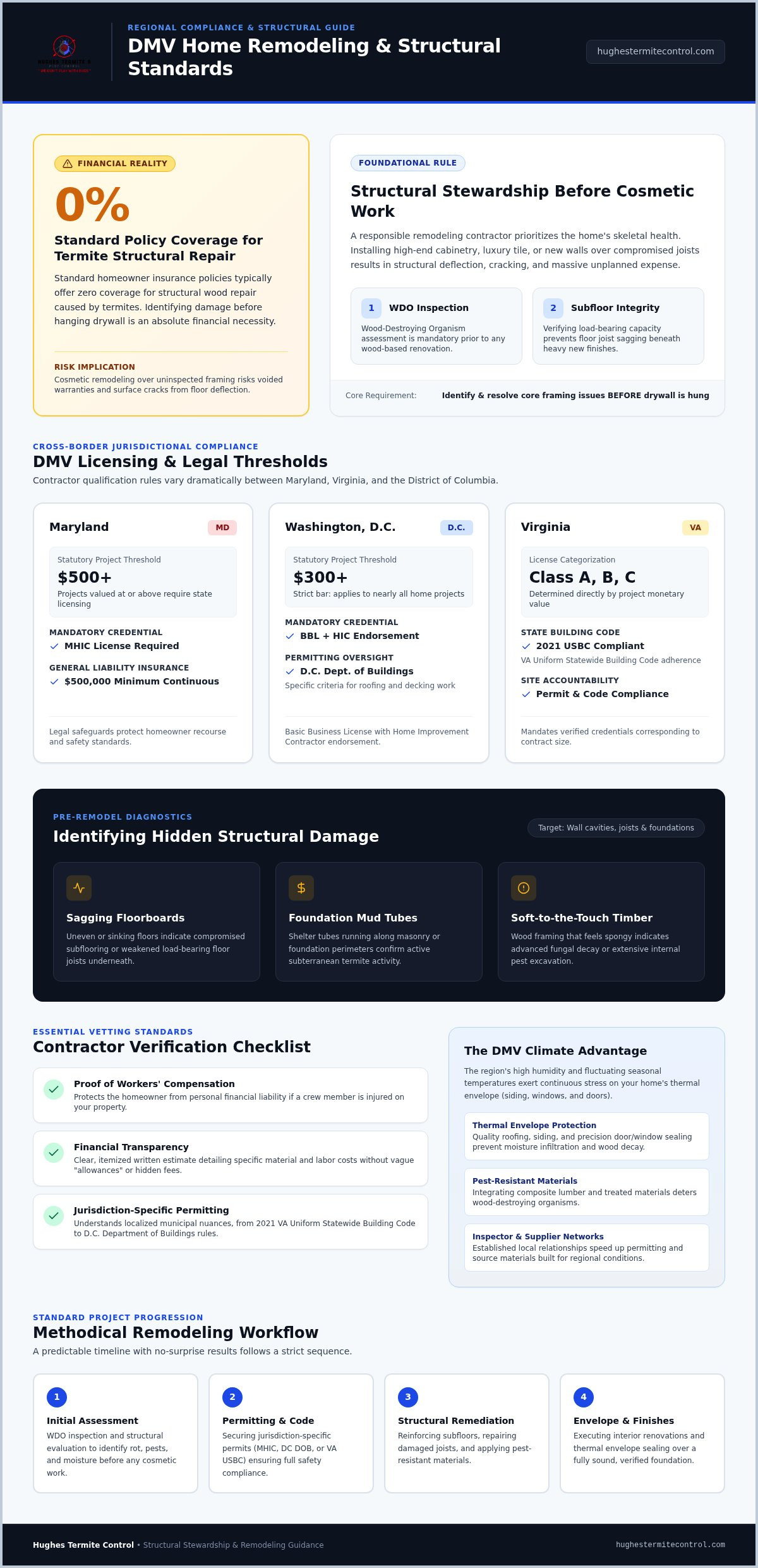
Legitimate credentials are the first line of defense for any homeowner. In Maryland, any residential project valued at $500 or more requires an MHIC license and a minimum of $500,000 in continuous general liability insurance. Virginia homeowners must verify if a contractor holds a Class A, B, or C license based on the project's monetary value, while D.C. requires a Basic Business License with an HIC endorsement for work exceeding $300. These aren't just bureaucratic hurdles; they are legal safeguards that define general contractor responsibilities, ensuring the person managing your site is accountable for safety and code compliance. You should always request:
- Proof of workers' compensation: This protects you from personal liability if a crew member is injured on your property.
- Jurisdiction-specific permits: Ensure the contractor understands the 2021 Virginia Uniform Statewide Building Code or specific D.C. Department of Buildings requirements for roofing and decking.
- Financial transparency: A clear, written estimate should detail material costs and labor without hidden fees or vague "allowances."
The Value of Local Expertise
Hiring a DmV-based professional provides a distinct advantage when dealing with our unique climate stressors. We experience high humidity and fluctuating temperatures that can wreak havoc on siding, windows, and doors if they aren't installed with precision. A local remodeling contractor understands these patterns and maintains established relationships with county building inspectors and regional suppliers. This network often speeds up the permitting process and ensures that materials are sourced from reputable vendors who understand local conditions. When the project is complete, a neighborly contractor remains accessible for long-term support. They stand by their craftsmanship rather than disappearing once the final check clears, providing the quiet confidence that your investment is secure.
Structural Stewardship: Why Your Remodel Starts with Integrity
Structural stewardship is the practice of identifying and resolving core framing or foundation issues before a single sheet of drywall is hung. A responsible remodeling contractor understands that a home’s skeletal health is the only thing protecting your financial investment. While many competitors focus on transforming a space through high-end finishes, they often ignore the damage lurking within the wall cavities. If you install custom cabinetry over floor joists weakened by moisture or insects, the resulting deflection will eventually crack your new surfaces and void your warranties. Because standard homeowner insurance policies typically offer 0% coverage for structural wood repair caused by termites, finding these issues early is a financial necessity.
Identifying Hidden Damage Before Renovating
A Wood-Destroying Organism (WDO) inspection is the critical first step in any wood-based remodel. In older DmV homes, common signs of structural compromise include sagging floorboards, mud tubes along the foundation, or wood that feels soft to the touch. Addressing rot or infestation early prevents the need for costly remediation after you've already finished the room. Following FTC contractor hiring guidelines helps you find a professional who values this level of thoroughness and transparency.
Integrating Pest Prevention into Home Improvement
Integrating pest prevention into your home improvement plan ensures that your new siding or decking remains resilient for years. Using pest-resistant materials or composite lumber can deter wood-decaying fungi and insects. Additionally, precise window and door installation seals the home against moisture, which is the primary attractant for most wood-destroying organisms. For a deeper look at protecting your property, read our A Grounded Guide to Effective Termite Control in the DmV. Before you commit to a major renovation, consider scheduling a professional structural assessment to ensure your home is ready for its next chapter.
Comparing Remodeling Services: Interior vs. Exterior Expertise
A successful renovation requires a dual focus on exterior resilience and interior precision. While interior work often captures the most attention during the design phase, the exterior components serve as the home's primary defense system. A professional remodeling contractor recognizes that these two areas demand different technical skill sets but must work in tandem to protect the property's value. Balancing these priorities ensures that your home remains both beautiful and structurally sound for decades.
Exterior Remodeling: Roofing, Siding, and Decking
The exterior of your home, often called the thermal envelope, regulates temperature and manages moisture. In the DmV, where we face intense summer humidity and unpredictable winter storms, roofing materials must be installed with specific ventilation and flashing techniques to prevent ice dams and shingle degradation. Siding serves a similar protective role. It isn't just about curb appeal; it acts as a critical barrier against wood-destroying pests and water infiltration. Choosing high-quality siding materials creates a durable shield that reduces long-term maintenance costs.
Decking projects also require a high level of structural stewardship. For the DmV climate, homeowners often choose between pressure-treated wood and composite materials. While wood offers a traditional look, it requires consistent maintenance to prevent rot. Composite options provide durability but still rely on properly treated footings and supports. If the substructure isn't built to last, the surface material's lifespan becomes irrelevant. We ensure every deck we build rests on a foundation that can handle the region's soil conditions and weight requirements.
Interior Enhancements: Flooring, Windows, and Doors
Interior remodeling focuses on daily functionality and energy efficiency. When we install new flooring, the process often reveals subfloor issues that were hidden for years. A skilled remodeling contractor won't just cover these problems; they'll remediate the subfloor to ensure the new surface remains level and quiet. This attention to detail extends to window and door replacements. Modern, high-efficiency windows do more than lower utility bills. They provide a tighter seal against the elements and improve the home’s overall structural protection.
For many DmV residents living in historic or mid-century properties, these upgrades involve strict safety protocols. Projects disturbing paint in homes built before 1978 must adhere to EPA lead-safe certification standards to protect occupants from hazardous dust. Replacing an entry door is another critical upgrade that balances security with insulation. By choosing materials that offer high R-values and robust locking mechanisms, you create a home that's safe, efficient, and structurally sound from the inside out.
The Remodeling Process: From Planning to Completion
A successful project relies on a predictable timeline and clear communication. A professional remodeling contractor should offer a step-by-step roadmap that eliminates guesswork and lowers your stress. This methodical flow guides you from initial uncertainty to a structurally sound, finished result. By following a logical progression, we ensure that every phase of the build receives the thoroughness it deserves.
Phase 1: Assessment and Design
The process begins with a comprehensive site walkthrough. We don't just look at the layout; we identify potential structural hurdles like sagging floor joists or evidence of wood-destroying organisms. By finalizing designs that align with the 2021 Virginia Uniform Statewide Building Code or Maryland standards, we ensure the project is viable from the start. You'll receive a transparent, detailed estimate that accounts for both the visible finishes and the underlying support systems.
Phase 2: Permitting and Preparation
Navigating municipal requirements is a critical step that ensures your project is legal and safe. Whether it's securing a permit for a new deck in Montgomery County or ensuring compliance with D.C. Department of Buildings regulations, we handle the logistics. During this phase, we also set up the job site to minimize disruption to your daily life. We order materials early, verifying lead times for windows or specialized flooring to keep the project on a strict schedule. This preparation prevents mid-project delays that often plague less organized crews.
Phase 3: Execution and Final Walkthrough
Skilled craftsmanship is visible in every layer of the build, from the framing to the final trim. We conduct mid-project inspections to verify that structural standards are being met before they are covered by drywall. Once the work is complete, we perform a final walkthrough. This isn't a formality; it's a rigorous check to ensure every detail meets our "straight-shooting" quality standard. We want you to feel that your home is in safe, capable hands throughout the entire transformation.
Ready to start your project with a team that prioritizes structural integrity? Schedule your initial remodeling consultation today.
Why Hughes Termite Control is Your Trusted DmV Remodeling Partner
Choosing a remodeling contractor is a decision that impacts your home's safety and your financial peace of mind. While many firms focus on the cosmetic surface, Hughes Termite Control brings a dual-specialty approach that is rare in the DmV market. We combine our deep roots in pest management and structural remediation with full-service home improvement. This means when we handle your roofing, siding, or flooring, we aren't just looking at the finish; we are ensuring the bones of the house are healthy. We believe that a beautiful home is only as good as the foundation it rests upon.
A Legacy of Reliability in the DmV
Two decades of experience in the region have taught us that integrity is the only way to build a lasting reputation. We act as a straight-shooting advisor, helping you navigate complex structural renovations without the high-pressure sales tactics common in the service industry. Our local expertise ensures that every project meets the specific demands of the Maryland, Virginia, and D.C. climates. By prioritizing clarity over hype, we provide a reassuring presence during what can often be a stressful process. For broader planning advice, you can review The Homeowner’s Guide to Successful Home Remodeling in 2026. Our commitment to doing things the right way means we never cut corners on the structural elements that protect your property value.
Ready to Start Your Project?
We provide a single-source solution for your home’s most critical components, including roofing, siding, decking, flooring, windows, and doors. This integrated model eliminates the need to coordinate between multiple vendors, reducing the risk of communication gaps and project delays. When you schedule a consultation, we perform a thorough evaluation that addresses both immediate aesthetic goals and underlying structural health, such as potential wood-destroying organism damage or moisture issues. We believe in providing clear, declarative answers about what your home needs to remain sound and efficient.
Our approach is methodical and steady, guiding you from a state of uncertainty to a definitive resolution. By choosing a remodeling contractor with a legacy of structural stewardship, you ensure that your investment is protected from the inside out. We invite you to take the next step toward a more secure and beautiful home. Your property is in safe, capable hands with a team that values long-term relationships and high-quality craftsmanship over quick wins.
Building a Sound Foundation for Your DmV Home
Your home is likely your most significant investment, and protecting it requires a partner who looks beneath the surface. Selecting a remodeling contractor shouldn't be a gamble on cosmetic finishes. Instead, it's a commitment to structural stewardship. By prioritizing thorough inspections for wood-destroying organisms and adhering to strict local licensing standards across Maryland, Virginia, and D.C., you ensure your renovation lasts for decades. This methodical approach turns a stressful project into a predictable journey toward a better, more resilient home.
Hughes Termite Control brings over 20 years of DmV structural expertise to every project. Our dual-specialty in pest management and high-end remodeling allows us to identify and fix core issues before they compromise your new kitchen, deck, or siding. We value transparency and fairness, providing clear communication and predictable results without high-pressure tactics. You deserve the quiet confidence that comes from knowing your property is in safe, capable hands. Schedule your transparent remodeling consultation with Hughes Termite Control today. We look forward to helping you build a beautiful space on a rock-solid foundation that adds lasting value to your property.
Frequently Asked Questions
How do I know if I need a remodeling contractor or just a handyman?
Use a handyman for small, cosmetic repairs like fixing a leaky faucet or painting a single room. You should hire a professional remodeling contractor for any project involving structural changes, multiple trades, or work that requires a building permit. Projects like full kitchen renovations, deck installations, or roofing replacements fall under the contractor's scope due to the specialized licensing and insurance required in the DmV jurisdictions.
Will a remodeling contractor handle the required building permits in the DmV?
Yes, a reputable professional manages the entire permitting process from application to final inspection. Navigating the specific requirements of the Fairfax County Land Development Services or the Maryland Home Improvement Commission is a standard part of their responsibility. Hiring a contractor who handles permits ensures that your project complies with the 2021 Virginia Uniform Statewide Building Code and protects you from legal or insurance issues during a future home sale.
How does a WDO inspection impact the cost of my remodeling project?
A Wood-Destroying Organism (WDO) inspection provides financial predictability by identifying hidden structural damage before construction begins. While it's an initial step, it often saves money by preventing the need to tear out new finishes to repair old termite or rot damage later. Addressing these issues early allows your remodeling contractor to provide a more accurate estimate, ensuring that your budget accounts for the home's actual skeletal health rather than just cosmetic upgrades.
What should I ask a remodeling contractor during the first meeting?
Focus on credentials and structural experience first. Ask for proof of a valid license for your specific state (VA, MD, or DC) and a certificate of general liability insurance. Inquire about their process for identifying hidden structural issues and how they handle mid-project discoveries. You should also request a list of local references for projects similar in scope to yours, such as roofing or decking, to verify their history of reliability and craftsmanship.
How long does a typical exterior remodeling project take to complete?
Timelines vary based on the project's complexity and the DmV weather conditions. A standard roofing replacement might take two to four days, while a comprehensive siding and window project could span two weeks. Larger structural additions or custom decking often require several weeks of active construction after permits are approved. Your contractor should provide a methodical schedule during the planning phase, including lead times for materials to ensure the project moves at a steady, predictable pace.
Can a remodeling contractor help improve my home’s energy efficiency?
Yes, many remodeling projects directly impact your home’s thermal envelope and utility costs. Replacing old windows and doors with high-efficiency models reduces air infiltration and improves insulation. Similarly, installing modern siding and roofing materials can significantly enhance your home's ability to regulate temperature. These upgrades not only make your living space more comfortable but also increase the long-term structural value and energy performance of your property in the fluctuating DmV climate.
What happens if structural damage is found after the remodeling has started?
If we discover hidden rot or pest damage after opening a wall, the first step is to pause and assess the extent of the compromise. A dual-specialty contractor will provide a clear remediation plan to fix the core issue before proceeding with cosmetic work. This ensures that your new finishes are installed over sound framing. We prioritize transparency during these moments, providing a logical progression toward a solution that maintains the integrity of your home.
Is it worth remodeling my home if I plan to sell in the next few years?
Strategic remodeling often provides a high return on investment by improving curb appeal and verifying structural integrity for potential buyers. High-quality roofing, siding, and flooring are particularly attractive because they suggest the home's been well-maintained. Because standard insurance doesn't cover termite damage, having a certified WDO inspection and professional repairs on record can be a significant selling point. It gives buyers the quiet confidence that the property is sound and move-in ready.


