
Scratching above the ceiling or movement beneath a deck can leave you with two immediate questions: what animal is there, and how did it get in? With wildlife removal DMV homeowners also need to consider safety, property damage, and local rules. A quick fix based on a guess may leave the entry point unaddressed.
Before work begins, it helps to understand the plan. This guide explains what professional wildlife control should cover, from assessing activity and planning a response to identifying possible access points and reducing the chance of repeat entry. It also explains why local requirements may differ across Washington, DC, Maryland, and Virginia.
Hughes Termite Control provides wildlife control in the DMV. Its home improvement work includes roofing, siding, decking, windows, and doors, which can be relevant when property conditions may be connected to animal access. Read on for practical steps and local considerations, then share what you’ve noticed with Hughes Termite Control to get started.
Key Takeaways
- Describe clues such as noises, droppings, damaged vents, or disturbed insulation, and keep people and pets away from the animal.
- A wildlife removal DMV plan should account for the animal, its location, possible entry points, and ways to reduce repeat access.
- Before service, note where you’ve seen activity, secure pets, and keep the affected area accessible only when it’s safe to do so.
- Don’t block suspected exits or disturb animals, nests, or potentially contaminated materials yourself.
- Hughes Termite Control provides wildlife control in the DMV. Share the signs, affected area, and property concerns through the website to get started.
DMV Wildlife Removal: What to Do When Animals Get Inside
Scratching in the attic, droppings near a vent, a damaged screen, or disturbed insulation can point to wildlife activity. Seeing an animal is another clear sign, but it doesn’t necessarily show where it entered or whether others are present. First protect people and pets, then record what you’ve noticed. These details help when arranging wildlife removal DMV service.
Which signs suggest wildlife may be inside a DMV property?
Listen for movement in a ceiling or wall, especially if it returns in the same area. Droppings, unfamiliar odors, damaged vents, torn screening, and displaced attic insulation may also indicate activity. You may notice changes in a garage, crawl space, or attic, but observe from a safe distance. These signs can have several causes, so don’t identify an animal based on one sound or mark alone.
Where the signs appear can help describe the problem without diagnosing it. Note whether the sound seems to come from an attic, a wall beside a vent, or beneath a deck. A general overview of nuisance wildlife management explains why animal activity and control approaches can vary. A professional assessment can consider your observations alongside the affected area and possible access points.
What should homeowners do before wildlife removal?
Keep your distance. Don’t corner, touch, feed, or try to capture the animal, and keep children and pets away. If it’s inside a room, leave it undisturbed. Don’t approach it to open windows or doors, block a suspected exit, or disturb a nest, animal, or potentially contaminated material. These actions can create additional risk or complicate an assessment.
Instead, record details from a safe location. Note where and when you heard or saw activity, whether it has happened more than once, and any visible damage. Take photos only if you can do so without approaching the animal or entering a potentially hazardous space.
- Separate people and pets from the affected area. Close an interior door if you can do so safely.
- Observe without investigating inside tight spaces. Don’t climb into an attic or reach into vents or crawl spaces.
- Share the location and signs when arranging professional wildlife control, including any damage you’ve noticed.
Some situations need prompt attention: an animal is in an occupied living area, a person or pet has been injured or had direct contact, or the animal’s presence creates an immediate safety concern. Seek appropriate help for an injury or immediate danger. If activity is limited to an inaccessible space and there’s no immediate threat, document it and arrange a professional assessment rather than attempting removal yourself.
How Professional Wildlife Removal Works Across the DMV
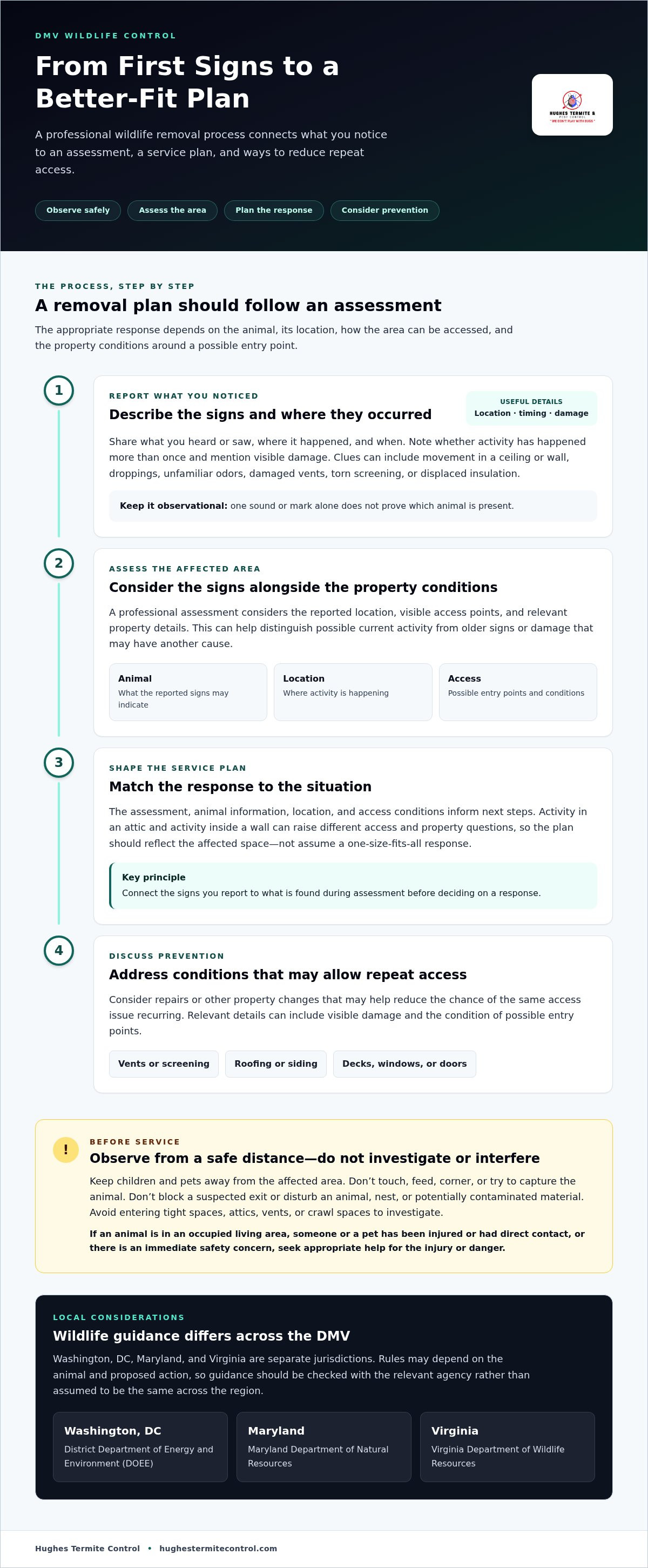
A useful wildlife control process connects the signs you report to an assessment, a service plan, and steps to address conditions that may have allowed entry. The response depends on the animal, where it is, how the area can be accessed, and the property’s structure. A sound in an attic and activity inside a wall, for example, raise different access and property questions.
A removal plan should follow an assessment. The right response depends on the animal, its location, and the conditions around a possible entry point.
In practice, professional wildlife removal DMV service should follow a clear sequence:
- Describe the signs. Share what you observed, where it happened, and when. Repeated activity or visible damage can help clarify the situation.
- Assess the affected area. Consider the reported location and visible access points to understand the property conditions involved.
- Plan the service. Use the assessment, animal information, and access conditions to shape an appropriate response.
- Discuss prevention. Consider repairs or other changes that may help reduce the chance of the same access issue recurring.
What happens during an initial wildlife assessment?
An initial assessment starts with the activity you reported and the spaces affected. A professional considers the location of the signs, visible entry points, and relevant property details. This helps distinguish possible current activity from older signs or damage that may have another cause. The findings inform next steps, but one clue alone shouldn’t be treated as proof of a particular species.
The assessment is also an opportunity to explain what has changed and raise concerns about access or damage. The aim is a plan based on the situation, not a one-size-fits-all response. Wildlife control is part of Hughes Termite Control’s pest management work in the DMV. Its home improvement work can also be relevant when property condition is part of the discussion. Learn about wildlife control in the DMV.
How do local wildlife rules affect DMV service?
Wildlife guidance isn’t uniform across the region. Washington, DC, Maryland, and Virginia are separate jurisdictions, and rules may depend on the animal and the proposed action. The District Department of Energy and Environment (DOEE) is a relevant source for DC guidance. Maryland’s Department of Natural Resources and Virginia’s Department of Wildlife Resources provide guidance for their respective states.
That local context matters before species-specific advice or a removal approach is presented. Regulations can change, and assumptions shouldn’t be carried from one jurisdiction to another. Before making claims about a particular animal or method, verify current rules with the relevant District or state agency. This keeps the service discussion grounded in the property and applicable local requirements, and explains why an assessment comes before a removal plan.
How to Judge a Wildlife Removal Plan, Not Just the Removal
A removal plan should do more than describe how an animal will be addressed. It should connect reported signs to the affected part of the property, explain how access conditions inform the response, and consider ways to reduce the chance of another entry. For wildlife removal DMV homeowners, a clear explanation makes it easier to understand what the service is intended to address and what may remain a separate repair concern.
Use these points to assess whether a plan accounts for the whole situation:
| Plan element | What it should clarify |
|---|---|
| Assessment | How reported signs and affected spaces inform the proposed work. |
| Animal-specific approach | How the animal involved and its circumstances shape the response. |
| Access concerns | Which possible entry points or property conditions need attention. |
| Prevention | What practical next steps may reduce repeat access. |
| Communication | What homeowners should expect and how access or preparation will be discussed. |
Responsible service should account for animal welfare and applicable local requirements, rather than assuming one response suits every situation. Rules can differ by jurisdiction and animal, so species-specific plans should reflect current guidance. A clear explanation should also distinguish the wildlife service from any separate repairs the property may need.
What should a property-specific plan explain?
A useful plan links observations to decisions in plain language: what was reported, which areas are affected, and why the proposed service fits those findings. If evidence is limited or an entry point is only suspected, the explanation should make that clear rather than present an assumption as a confirmed cause. The plan should also describe how access concerns and practical prevention measures relate to the property.
Homeowners should understand which areas may need to be accessible and what preparation is relevant to the work. That discussion helps avoid surprises without relying on a generic checklist. Ask for unfamiliar terms or steps to be explained so you can understand the proposed plan.
How do removal and prevention fit together?
Addressing animal activity may not resolve the property conditions that made entry possible. A damaged vent or gap near a roofline may be worth assessing, but neither should be treated as the cause without evaluating the specific property. Prevention discussions help identify what may need attention after the animal issue is addressed, including whether a repair is appropriate.
Hughes Termite Control provides wildlife control in the DMV and also works on home improvement projects, including roofing, siding, and windows and doors. That repair experience is relevant when property condition is part of the discussion. Learn about the wildlife control service and share the signs and property concerns you’ve observed.
How DMV Homeowners Can Prepare for Wildlife Control
A little preparation can make a wildlife assessment more useful without putting anyone at risk. Record what you’ve noticed, keep the affected area safe, and leave uncertain or hazardous work to a professional. You don’t need to identify the animal or investigate hidden spaces yourself. Clear observations help connect the reported activity to property conditions that may need attention.
What information helps explain the wildlife problem?
Keep a simple record from a safe distance. Note the date and time of each sound or sighting, where it occurred, and whether it happened again. Describe visible damage and whether activity seems limited to one space or has appeared in several. A checklist such as a pest inspection in Washington, DC can also help organize observations about property conditions.
Be specific but factual. “Scratching near the ceiling above the garage after dark” is more useful than guessing which animal is responsible. Take a photo only from a safe location. Don’t climb into an attic, reach through an opening, or approach wildlife for a better image.
Which prevention steps are safe to take?
Simple housekeeping can help limit access to food: secure household waste and store food appropriately where practical. Keep pets away from the affected area. Make access to that space clear for an assessment only if you can do so safely. These steps don’t replace a property evaluation or resolve an animal already inside.
Leave animal handling, exclusion work, and hazards you can’t identify to professionals. Don’t block a suspected exit or disturb nests, animals, or potentially contaminated material. Sealing a gap before the situation is assessed could interfere with an animal’s access, while disturbing material may expose you to an unknown hazard.
Separate routine preparation from repairs. You can record activity and secure food sources yourself, but damaged vents, gaps, or other possible access points need assessment before anyone assumes they caused the problem. A repair should address the actual property condition, not a guess based on one mark or sound. That distinction matters for wildlife removal DMV homeowners seeking to resolve the current issue and reduce repeat access.
For a clear starting point, share the activity locations, timing, and property concerns with Hughes Termite Control about wildlife control. These details help frame the situation for a professional assessment.
Getting Wildlife Removal Help from Hughes Termite Control
Recurring activity, an animal inside the home, or visible damage are good reasons to consider professional wildlife control. Hughes Termite Control provides wildlife control in the DMV, with a plan shaped by the signs you report and the property concerns involved. A clear description helps establish what needs assessment, while the location and access conditions help frame next steps.
Don’t try to capture or handle the animal yourself. Keep people and pets away from the affected area, and avoid disturbing possible nests or materials. If there’s immediate danger or someone has been injured, seek appropriate help for that situation. For other concerns, share the details through the website so they can be understood in context.
When does professional wildlife control make sense?
Professional help may be appropriate if activity keeps returning, wildlife is inside an occupied area, or you’ve noticed possible property damage. One sign may not reveal which animal is present or how it entered, so don’t treat a guess as a diagnosis. Describe what you’ve observed and let the assessment guide the service plan.
Leave capture, removal, and exclusion work to professionals. Don’t seal a suspected opening or disturb the animal in an attempt to solve the problem quickly. Those steps could create new risks or complicate an assessment. A measured approach starts with the reported issue and considers the affected property before determining the response.
What should homeowners share when requesting help?
Include the property location within the DMV and a concise account of what prompted your request. Useful details include:
- Where you’ve noticed activity, such as a particular room, attic, garage, or exterior area.
- When it occurred and whether the signs or sounds have repeated.
- Any visible damage or changes to the property that concern you.
- Whether activity seems limited to one area or has appeared in more than one place.
Specific observations help distinguish a wildlife concern from other property issues. For example, suspected insect-related wood damage is separate from animal activity and may call for a different assessment. Keeping your description factual helps focus attention on the issue you’re seeing.
Hughes Termite Control combines pest management services, including wildlife control, with home improvement and repair work. If animal activity may involve a damaged roof, siding, or window or door area, include that concern. The service plan should address the wildlife issue described and consider relevant property conditions without assuming an unverified cause or promising a particular result.
Ready to explain what you’ve noticed? Share your wildlife concerns with Hughes Termite Control through the website to take the next step toward a property-specific assessment.
Take the Next Step Toward a More Secure Home
You don’t need to solve the mystery before asking for help. A clear account of what you’ve noticed is a practical starting point, even if the animal or entry route is uncertain. From there, the conversation can focus on your home’s conditions and what needs attention next.
For wildlife removal DMV homeowners can turn to Hughes Termite Control for wildlife control through its pest management services. If the concern also involves property damage or a possible access point, Hughes’ home improvement and repair work may be relevant to the broader discussion. The goal is to make the next step understandable and grounded in the situation you describe.
Share your concern through the website and request wildlife control help from Hughes Termite Control. A calm, informed first step can help you move forward with greater confidence.
Frequently Asked Questions
What animals can wildlife removal services handle in the DMV?
Wildlife control may address different animals, but the appropriate service depends on the animal, its location, and local requirements. Hughes Termite Control provides wildlife control in the DMV. Share what you’ve observed rather than assuming which animal is responsible. A professional can use the reported signs and property details to discuss a suitable plan and relevant local considerations.
Is wildlife removal in the DMV required to follow local rules?
Yes. Wildlife control requirements differ among Washington, DC, Maryland, and Virginia, and may depend on the species and activity. In DC, the Department of Energy and Environment regulates wildlife control operators. Maryland and Virginia have their own agencies and requirements for commercial wildlife control. Rules can change, so species-specific guidance should be checked with the appropriate jurisdiction before work is planned.
Can I remove a wild animal from my attic myself?
It’s safer not to try. Attics can have limited visibility and awkward access, and an animal may react unpredictably if approached or trapped. Avoid reaching into insulation, moving stored items near the animal, or placing a trap without understanding the situation. Keep the space undisturbed and prevent children and pets from entering. If there’s immediate danger or someone has been injured, seek appropriate help.
How do I know if wildlife is inside my house?
You may notice repeated movement in a ceiling or wall, an unusual odor, droppings, disturbed materials, or damage near an opening. A sound that seems to move between areas is useful to report, but it doesn’t prove an animal’s identity or exact location. Note what you observe over time and whether signs appear in a living space, garage, or attic.
What happens during a wildlife removal service visit?
A service visit generally begins with a discussion of the reported activity and the parts of the property involved. An assessment can help clarify whether signs appear current and which access or structural conditions may matter. The professional then discusses a plan suited to the situation and relevant local requirements. Details vary, so make sure the proposed steps and homeowner expectations are explained plainly.
Will wildlife removal stop animals from returning?
No removal plan can promise that wildlife will never return. Reducing the chance of repeat activity may involve identifying and addressing conditions that could allow access, such as a damaged vent or an opening in the building. Whether those conditions are present requires an assessment. Keep food and waste secured where practical, and follow prevention recommendations that apply to your property.
How should I prepare my home for wildlife control?
Before a visit, make a brief record of where signs appeared and when, and note any visible damage. Keep pets away from the affected area and let household members know not to enter it. If you rent, notify the property manager about activity or damage so access and repair decisions can be coordinated. Don’t seal openings or move potentially contaminated materials before the situation is assessed.


