

Does a leak mean your roof needs replacing, or could a focused repair solve the problem? For homeowners comparing roof replacement contractors DMV-wide, that distinction matters. A careful assessment can identify visible wear, signs of moisture, and whether the problem appears localized or more widespread.
It’s reasonable to want a clear scope before committing to a major project. DMV roofs face hot, humid summers, winter snow and ice, and storms. The right plan depends on the roof’s condition, design, and exposure, not just the regional weather.
This guide explains what an assessment can reveal, how to weigh repair against replacement, and which decisions shape the project. You’ll also find practical ways to prepare, from reviewing the proposed work to planning around site access and weather. Hughes Termite Control provides roofing installation and repair through its home improvement division. Use the information below to understand your options, then discuss your home’s needs with the company.
Key Takeaways
- A recurring leak, visible wear, or storm damage doesn’t automatically mean you need a full roof replacement. An assessment can help clarify the scope.
- When considering roof replacement contractors DMV homeowners can benefit from understanding how roof shape, drainage, flashing, and moisture signs affect project planning.
- Use your home’s exposure to rain, humidity, wind, storms, and seasonal temperature changes as context for roof replacement decisions.
- Prepare by reviewing the project scope, clearing the work area, and allowing scheduling to account for weather and project requirements.
- Hughes Termite Control provides roofing installation and repair through its home improvement services.
When Does a DMV Home Need Roof Replacement Instead of Repair?
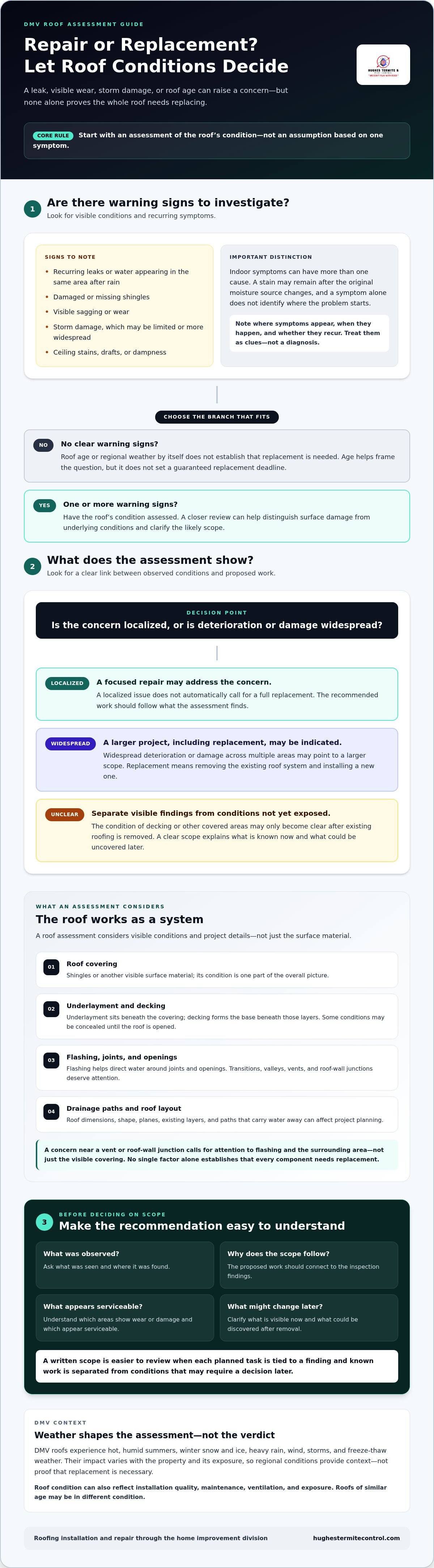
Recurring leaks, visible wear, storm damage, or an aging roof can leave homeowners unsure what to do next. These signs deserve attention, but none proves on its own that the entire roof needs replacement. A localized issue may call for a repair. Widespread deterioration or damage across multiple areas may point to a larger project. For homeowners considering roof replacement contractors DMV, start with an assessment of the roof’s condition rather than assuming one symptom tells the whole story.
A roof assessment reviews visible conditions and relevant project details to help determine what needs attention. The components of a roof work together to protect the home, so findings involving the covering, flashing, drainage, or moisture can affect the recommended scope. Replacement involves removing an existing roof system and installing a new one. The assessment helps establish whether that work is appropriate or a repair may address the concern.
Which roof warning signs deserve a closer inspection?
Recurring leaks, damaged or missing shingles, and visible sagging are reasons to investigate. Patterns can offer useful clues. Water appearing in the same area after rain may suggest a persistent issue, while storm damage could be limited to one section or extend across a broader area. An indoor symptom alone, however, doesn’t identify the source.
Ceiling stains, drafts, or dampness can have more than one cause. A stain may also remain visible after the original moisture source has changed. Note what you see and where it appears, but don’t treat it as a diagnosis. A closer review can help distinguish surface damage from underlying conditions and clarify whether a targeted repair or replacement may be needed.
Why does a roof’s age not tell the whole story?
Age helps frame the question, but it doesn’t set a guaranteed replacement deadline. Two roofs of similar age may be in different condition because of installation quality, maintenance, ventilation, and exposure. Repeated moisture concerns or poor airflow can affect roof components over time. Regular upkeep can also help bring smaller issues to light before their full scope is clear.
DMV roofs face changing seasonal conditions. Heavy rain, humidity, wind, storms, and freeze-thaw weather can affect roofing materials and the paths that carry water away from the home. The impact varies with the property and its exposure, so regional weather is context for an assessment, not proof that replacement is necessary.
Note where and when symptoms appear, whether they recur, and any changes you can see. Then have the roof’s condition assessed before deciding on a scope. This keeps the decision focused on what the home needs, whether that means repair or replacement.
What Should Roof Replacement Contractors Assess Before Recommending Work?
A roof assessment reviews visible conditions and project details before the work is scoped. It should explain what appears serviceable, where wear or damage is present, and what the proposed work would address. When comparing roof replacement contractors DMV, look for a clear connection between the observations and the recommended scope, rather than a leap from a general concern to full replacement.
The roof’s shape and layout affect planning. A steep roof with several planes, valleys, and penetrations presents different considerations from a simpler roofline. Existing roofing layers, drainage paths, flashing around openings and edges, and signs of moisture can also affect the work. InterNACHI’s professional roof inspection guidelines provide a general reference for areas an inspection may cover.
What parts of the roof inform the replacement scope?
The roof covering, such as shingles or another surface material, is the most visible part, but it is only one element. Underlayment sits beneath the covering, flashing helps direct water around joints and openings, and roof decking forms the base beneath those layers. Their condition and how they work together affect how the roof manages water. An assessment should consider transitions, valleys, penetrations, and drainage paths, where surfaces meet or water is directed.
For example, damage near a vent or roof-wall junction calls for attention to the flashing and surrounding area, not just the visible covering. Experienced exterior specialists like GTE Construction & Roofing emphasize that inspecting drainage paths, gutters, and flashing together gives a complete picture of how water moves across the structure. Roof dimensions, shape, and existing layers also help define the work. None of these factors alone establishes that every component needs replacement.
How should homeowners understand inspection findings?
Ask for the observations and proposed scope to be explained in plain language. A useful explanation identifies what was seen, where it was found, and why the proposed work follows from it. Broader home improvement project planning can help you organize questions and understand the steps involved before work begins.
Some conditions are concealed. An initial assessment can describe visible evidence, but the condition of decking or other covered areas may only become clear after the existing roofing is removed. A clear scope distinguishes what is observable now from conditions that might be uncovered later, and explains how those findings could affect the work.
Replacement scope should follow observed roof conditions, not a generic checklist. A written scope is easier to review when it connects each planned task to an inspection finding and separates known work from anything that may require a decision once the roof is opened. This gives you a practical basis for understanding the project and its sequence.
Hughes Termite Control provides roofing installation and repair through its home improvement services. If you’re weighing what your roof may need, learn about Hughes Termite Control’s roofing services and consider how the assessment findings relate to your home and proposed scope.
How DMV Homes and Weather Shape Roof Replacement Decisions
DMV weather and home styles can shape how a roof replacement is planned, but they don’t point to one solution for every property. A DC rowhouse, a Maryland suburban home, and a Northern Virginia property may differ in access, layout, exposure, and existing features. These details help guide an assessment, while the condition of the individual roof remains central.
What local weather patterns should DMV homeowners keep in mind?
Heavy rain and storms make drainage paths, valleys, roof edges, and transitions between surfaces useful areas to review. Wind and storm exposure may also prompt a closer look at visible wear or displaced roofing. Seasonal temperature changes, including freeze-thaw cycles, can stress roof components, but climate alone can’t establish that a roof is damaged or needs replacement.
Humidity and repeated wetting are relevant context when an assessment considers moisture signs and how water moves off the roof. The home’s position, surrounding features, roof design, and observed condition all matter. A sheltered roof and one exposed to open wind may experience different conditions, even in the same neighborhood.
How can home style affect replacement planning?
A DC rowhouse may have limited exterior access or a roofline adjoining neighboring buildings. A detached suburban home may have more space around it but a larger or more varied roof layout. Neither description fits every property. Roof pitch, complexity, existing features, and access should be considered individually. Broader home remodeling planning can help put a roof project in context with other work at the property.
The comparison below offers questions to bring into an assessment, not assumptions about what a home needs.
| Home feature | Potential roofing consideration | Question the inspection should resolve |
|---|---|---|
| DC rowhouse or attached home | Roof access, adjoining structures, and transitions may affect how the work is planned. | Which roof areas and transitions are included in the assessment? |
| Maryland suburban home | Roof size, shape, drainage paths, and exposure can vary from one property to another. | How do the roof’s layout and drainage affect the proposed scope? |
| Northern Virginia property | Pitch, roof complexity, and surrounding exposure may influence inspection and project planning. | Which observed conditions are driving the recommended work? |
For homeowners comparing roof replacement contractors DMV, a useful local discussion connects weather and home style to observable conditions instead of relying on a regional shortcut. The assessment should explain which features matter on your property, what was observed, and how those findings shape the project. This keeps the decision specific to your home rather than assuming every roof in the area has the same needs.
How to Prepare for a Roof Replacement Project in the DMV
A roof replacement is easier to manage when you understand the scope, know what to expect at home, and have a plan for questions that may come up. Use this sequence to prepare. The work and schedule depend on project details, weather, and site requirements, so don’t assume every roof follows the same timeline.
- Discuss the home’s needs. Explain what prompted the project, such as a leak, visible damage, or concerns about the roof’s condition. Mention affected areas and any access limitations that could influence planning.
- Review the proposed scope. Check what work is included and how it relates to observed conditions. Clarify the planned tasks, site preparation, and how newly exposed conditions will be discussed if they affect the work.
- Plan around scheduling. Timing depends on the project, weather, and work requirements. Confirm the planned schedule and how changes will be communicated, especially if weather affects the work sequence.
- Prepare the site and household. Clear access near the home where practical. Move vehicles and outdoor belongings away from the work area as appropriate, and plan for noise around pets, children, and household routines.
- Review the completed work. Walk through the finished project, discuss outstanding questions, and review the project documentation provided.
What should homeowners do before roofing work begins?
Start with the immediate work area. Move patio furniture, planters, and other outdoor items that could be in the way or need protection. If vehicles are parked close to the home, consider moving them for the work period. Discuss site preparation and cleanup so you know what to move and what to expect around the property.
Roofing work can be noisy. Consider a quieter place for children or pets if your household routine allows, and plan calls or other noise-sensitive activities accordingly. If access to a side yard, driveway, or shared area is limited, raise that before work begins. Discussing these practical details in advance can help reduce surprises on site.
What happens during installation and project closeout?
At a high level, replacement involves removing existing roofing as needed and installing the planned new roof system. Professional roof replacement teams, such as United Roofing & More!, note that the precise installation method depends on the structure and material requirements of each property. Once existing materials are removed, concealed conditions may become visible. If they affect the work, they should be explained as they arise so you understand the finding and any resulting scope decision.
At closeout, review the completed work and discuss any outstanding items. Go over the project documentation provided and make sure you understand what it records. Clear communication at each stage helps keep the process organized, even when conditions or weather call for adjustments.
If you’re ready to discuss your home’s roofing needs, contact Hughes Termite Control about roofing. As you compare roof replacement contractors DMV, focus on clear communication about scope, preparation, and the work planned for your home.
Roof Replacement with Hughes Termite Control: A Clear Local Next Step
Once you’ve considered the roof’s condition, local exposure, and the work involved, the next step is a practical conversation about your home. Hughes Termite Control is a privately owned and operated local business offering roofing installation and repair through its home improvement and remodeling work. The discussion can start with the concern and the project needs, then move to an appropriate scope.
You don’t need a technical diagnosis to start. Describe what you’ve noticed and where. Recurring leaks, visible damage, or concerns about an aging roof are useful starting points. Sharing those details helps frame a discussion about what the home may need and what an assessment should address.
What can homeowners expect from Hughes’ roofing service?
Hughes provides roofing as part of its home improvement and remodeling work. The scope of a replacement project should reflect the roof’s observed condition and the requirements of the home, rather than follow a one-size-fits-all checklist. The discussion can focus on the property, the concern that prompted the project, and the work needed to address the roof.
When comparing roof replacement contractors DMV, keep the initial conversation grounded in what you know. You don’t need to decide in advance whether a repair or replacement is right. Share the symptoms and relevant context, then discuss the next steps and proposed scope in plain language.
What information helps start a useful project conversation?
Start with the property’s location within the DMV and the main reason you’re considering roofing work. These details can help describe the situation clearly:
- Where you’ve noticed a leak, stain, or other visible concern.
- Whether the issue has recurred and when you first observed it.
- Any visible roof damage or changes you’ve noticed.
- Whether the home experienced recent storm exposure that may be relevant.
- Any project needs that could affect access to the home or work area.
These details don’t replace an assessment or commit you to a particular scope. They put the conversation in context. If you’re unsure what matters, describe what you’ve seen and what you hope to resolve. A clear discussion can help you understand how the roofing project may fit your home improvement needs.
Discuss your roof replacement project with Hughes when you’re ready to talk through your home’s roofing needs. Start with the concern, the property location, and any details you’ve observed.
Take the Next Step with a Clear Plan
You don’t need every roofing decision settled before starting a project conversation. Begin by identifying your priorities: what concerns you, what you want the work to address, and what you need to understand before moving forward. This gives the discussion a practical starting point without locking you into a scope too soon.
For homeowners considering roof replacement contractors DMV, Hughes Termite Control provides roofing as part of its home improvement services. Its broader work also includes siding, decking, flooring, and window and door installation, giving homeowners a local point of contact for multiple types of home projects.
Share your roof concern and your home’s needs, then take the conversation one step at a time. Discuss your roof replacement project with Hughes to get started.
Frequently Asked Questions
How long does a roof replacement take?
The schedule depends on the roof’s size, layout, existing materials, weather, and any concealed conditions uncovered during the work. A straightforward roof and a complex roof won’t follow the same timeline. Review the project plan for the expected sequence, start timing, and stages involved. Before work begins, clarify how weather delays or newly discovered damage could affect the schedule.
Can a roof be replaced during winter in the DMV?
Winter roof work may be possible, but temperature, precipitation, and site conditions affect whether a particular project can proceed. The calendar season alone doesn’t determine the answer. For a DMV home, discuss how the forecast and conditions at the property may affect installation and scheduling. If work must pause or shift, clarify how that change will be communicated so you can plan household routines and access.
Does homeowners insurance cover roof replacement after a storm?
Coverage depends on your policy, the cause and extent of damage, and your insurer’s assessment. Storm damage doesn’t automatically mean the full roof replacement will be covered. Document what you observe, including when and where visible issues appeared, and contact your insurer about its claim process. Keep the roofing assessment and insurance decision separate: one describes roof conditions and proposed work, while the other determines coverage under your policy.
What happens if roofers find damaged decking during replacement?
Damage to roof decking may only become visible after the existing layers are removed. If that happens, the affected area and proposed work should be explained before the scope changes. Ask what was found, where it is, and how it affects the planned work. Clarify whether the change affects the schedule or other project details before proceeding with revised work.
Do I need a permit for roof replacement in the DMV?
Permit requirements vary among Washington, D.C., Maryland jurisdictions, and Northern Virginia localities, and may depend on the property and project scope. Don’t assume a rule in one area applies to another. Verify current requirements with the building department for the project’s specific jurisdiction before work begins. Make sure the project plan identifies any required permits and who is responsible for handling them.
Can I stay in my home during a roof replacement?
Many homeowners stay home, but roofing work can bring noise, activity around the property, and temporary limits on access near the work area. Consider whether a child’s nap, a pet’s routine, or work calls will be affected. If you need a driveway or entrance close to the work zone, plan alternatives in advance. Discuss household needs with the project team so you can prepare realistically.
How can I tell whether storm damage requires roof replacement?
You can’t determine the needed scope from a single mark or leak. Storm damage may affect one repairable area or a larger portion of the roof, and the roof’s existing condition also matters. Note where you see damage and whether you’ve noticed changes inside the home after the storm. An assessment can explain the findings and proposed scope. Homeowners comparing roof replacement contractors DMV should look for a clear connection between observations and recommended work.


