
Trapping a nuisance animal is often the easiest part of the process, but it's rarely a permanent solution. If a contractor doesn't address the specific entry point that allowed a raccoon or squirrel inside, you're simply leaving a vacancy for the next intruder. When you search for wildlife control near me in the DMV, it's natural to feel overwhelmed by local regulations and the fear of property devaluation. You want the scratching in your attic to stop, and you want to know that your home's structural integrity is being protected by someone who understands how buildings are actually constructed.
We believe that effective wildlife management is a structural repair job, not just a trapping exercise. This guide will help you evaluate local experts based on their craftsmanship, explain the exclusion process in plain English, and clarify the different laws governing wildlife in Maryland and Virginia. You'll learn how to secure your home permanently while ensuring that repairs match your existing siding or roofing. By the end, you'll have a clear, logical path toward a quiet home and the peace of mind that comes from working with a transparent, professional local expert.
Key Takeaways
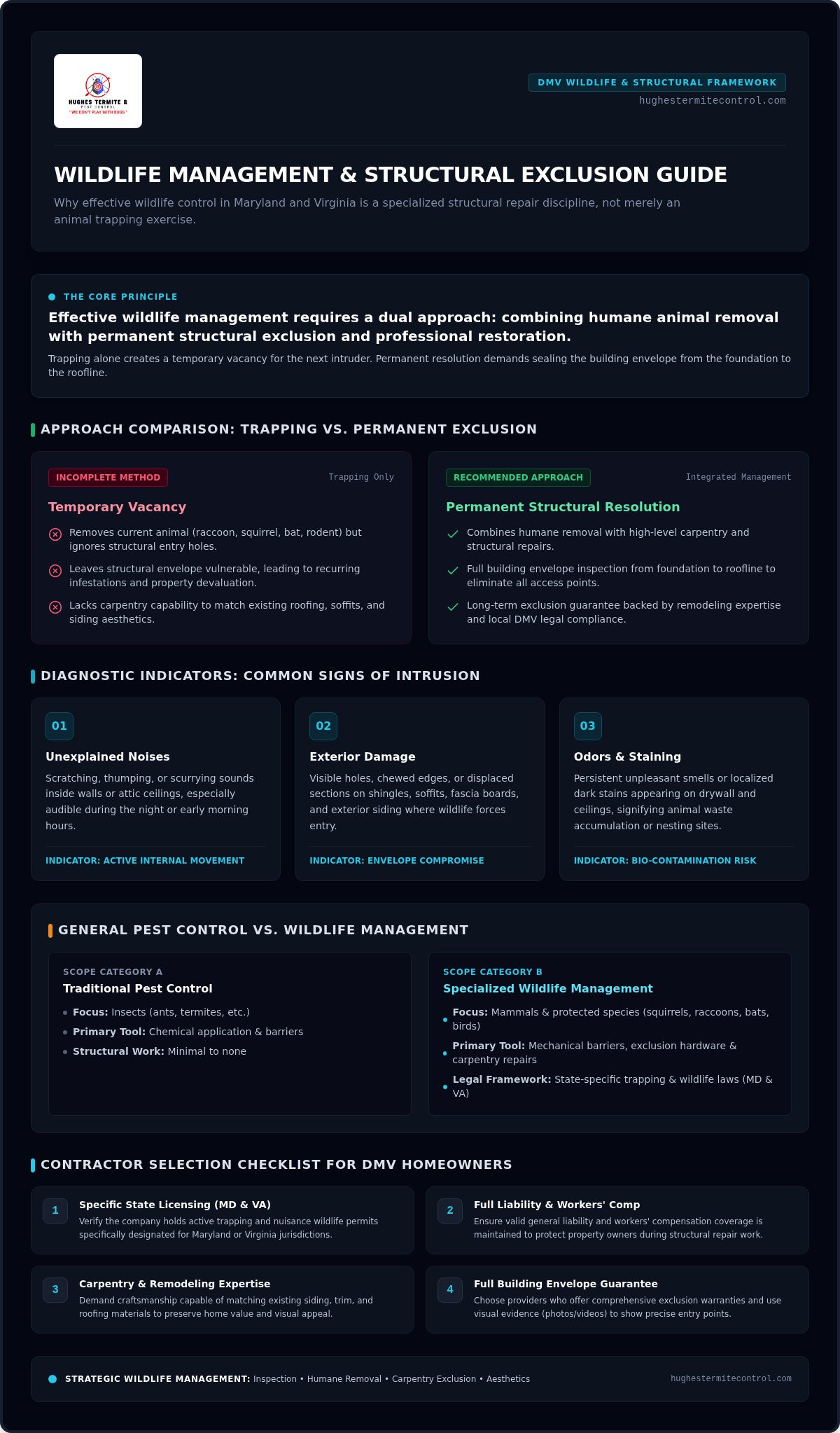
- Effective wildlife management requires a dual approach that combines humane animal removal with permanent structural exclusion and professional restoration.
- When evaluating wildlife control near me, prioritize contractors who can verify specific licensing for the DMV and offer comprehensive guarantees on their repair work.
- Professional intervention is necessary to navigate the complex trapping laws in Maryland and Virginia while avoiding the health risks associated with nuisance animals.
- A successful exclusion process starts with a full inspection of the building envelope to identify vulnerabilities from the foundation to the roofline.
- Combining pest management with professional remodeling expertise ensures that your home’s aesthetics and structural integrity are maintained after an infestation.
Evaluating Wildlife Control Near Me: What Homeowners in the DmV Need to Know
Professional wildlife control is more than a cage and a truck. It is a comprehensive service that integrates removal, exclusion, and restoration. When homeowners search for wildlife control near me, they are usually looking for a way to stop immediate property damage. In the DMV, our neighborhoods are home to squirrels, raccoons, bats, and rodents that frequently seek shelter in human structures. These animals don't just wander in; they exploit specific weaknesses in your home's envelope.
Relying on "trapping only" provides a false sense of security. It's a temporary fix. Removing one raccoon without sealing the entry point simply creates a vacancy for the next one. True resolution requires a focus on structural integrity. If a hole in the roof or a gap in the siding remains, the cycle of infestation continues. Finding effective wildlife control near me means finding a partner who understands both animal behavior and home construction.
Common Signs You Need Professional Assistance
Animals are experts at staying hidden, but they leave evidence of their presence. If you suspect an intruder, look for these specific indicators:
- Unexplained Noises: Scratching, thumping, or scurrying sounds in walls or ceilings, particularly at night or early morning.
- Exterior Damage: Visible holes or chewed edges on shingles, soffits, and siding where animals force their way inside.
- Odors and Staining: Unpleasant smells or dark stains on drywall that suggest waste accumulation or nesting sites.
The Difference Between General Pest Control and Wildlife Management
Many people confuse insects with larger animals. While traditional pest control focuses on chemical barriers for ants or termites, wildlife management requires specialized mechanical tools and physical barriers. Handling protected species, such as certain bats or birds, involves strict regulatory requirements that vary between Maryland and Virginia.
Most importantly, wildlife control requires high-level carpentry skills. A technician must be able to repair a roof or replace siding to ensure the home is animal-proof. This dual expertise in biology and construction is what separates a professional service from a temporary solution. It ensures that your home remains secure and aesthetically consistent after the animals are gone.
A Homeowner's Checklist for Selecting a Wildlife Control Company
Finding a reliable service provider when searching for wildlife control near me requires looking beyond the first search result. It's a decision that impacts your home's safety and long-term value. A qualified company should act as a trusted advisor, explaining the "why" and "how" of their process rather than just setting traps. You need a partner who understands the intersection of animal biology and residential construction.
Start by verifying local licensing. The DMV has specific regulations; a company must be licensed to trap in the state where your property is located, whether that's Maryland or Virginia. Insurance is equally vital. Ensure the provider carries general liability and workers' compensation to protect you from any accidents during the repair phase. This transparency builds the foundation for a predictable, no-surprises experience.
Next, evaluate their commitment to permanent solutions. A professional should offer a comprehensive exclusion guarantee. This ensures that once the animal is removed, the entry points are sealed with materials that match your home's aesthetics and structural needs. Since nuisance animals often damage sensitive areas like roofing or siding, you need a contractor with legitimate carpentry skills. If you want a team that values integrity and long-term results over quick wins, consider a professional wildlife control inspection to assess your home's vulnerabilities.
Questions to Ask During the Initial Consultation
A transparent professional will welcome your questions. Use the initial walk-through to gauge their expertise and honesty. When looking for wildlife control near me, ask these specific questions during your first meeting:
- "How exactly are the animals entering my home, and can you show me?" A good technician will use photos or videos to show you the exact point of entry.
- "Do you provide a full structural repair to prevent future entry?" Ensure they aren't just using temporary "quick fixes" like spray foam or mesh that doesn't match your home.
- "What is your process for handling animals found inside the home?" They should have a clear, humane plan for removal that follows all local wildlife laws.
Red Flags to Avoid in the Service Industry
Reliable experts rely on facts, not fear. Be wary of companies that use high-pressure "act now" tactics. While common wildlife species near homes can carry diseases, a professional shouldn't use health risks to scare you into a fast sale. Avoid any contractor who refuses to provide a detailed inspection report or offers vague pricing that doesn't clearly separate trapping fees from structural restoration costs. Transparency in financial matters is a hallmark of a professional who values a fair, long-term relationship with the homeowner.
The Risks of DIY Wildlife Removal vs. Professional Intervention
Many homeowners consider handling animal removal themselves to save money. While simple deterrents might work for a garden rabbit, an intruder in your attic is a different matter. Attempting DIY removal poses significant safety risks. Animals like raccoons or bats can be aggressive when cornered and may carry diseases such as rabies or histoplasmosis. Without proper protective gear and training, you risk exposure to pathogens found in nesting materials and waste.
Searching for wildlife control near me isn't just about finding someone with a cage; it's about navigating the legal landscape. Maryland and Virginia have strict, differing regulations regarding the trapping, relocation, and euthanasia of wildlife. Moving an animal to a local park might seem humane, but it's often illegal and frequently results in the animal's death due to territorial disputes or lack of food. A professional understands these local laws and ensures the process remains compliant.
There is also the "vacuum effect" to consider. Animals leave behind pheromones and scent markers that signal a safe habitat to others. If you remove one squirrel but fail to seal the entry point professionally, another will likely take its place within days. A professional assessment also includes looking for secondary issues. Since many wildlife entry points are near wood structures, a specialized wood-destroying organism (WDO) inspection is often performed to ensure termites or carpenter ants haven't followed the wildlife inside.
The Hidden Costs of Improper Trapping
DIY trapping often leads to unintended consequences. A common mistake is trapping a nursing mother raccoon or squirrel and leaving the young behind in the walls. This creates a secondary crisis as the young perish, leading to difficult-to-locate odors and expensive wall repairs. You also face potential legal fines for mishandling protected species. Additionally, wild animals often carry secondary pests like fleas or mites. A professional ensures these are identified and treated alongside the removal process.
Why Structural Expertise Matters Most
Wildlife problems are essentially structural failures. Animals exploit existing weaknesses in your roofing, siding, or foundation. While a standard trapper might catch the animal, they often lack the skills to perform high-quality repairs. This is where Hughes Termite Control provides a unique advantage. By bridging the gap between pest management and professional renovation, we ensure that the repair matches your home's aesthetics and prevents future entry. A remodeler's eye is necessary to verify that every shingle and soffit is secure.
The 4-Step Exclusion and Restoration Process
Resolving a wildlife conflict requires a methodical approach that addresses both the animal and the building. It isn't enough to simply catch an intruder; you must ensure the structure is no longer a target. When you search for wildlife control near me, look for a provider that follows a logical, step-by-step framework to secure your property. Our process focuses on predictability and long-term results.
- Step 1: Comprehensive Inspection. We examine the entire building envelope, from the foundation to the ridge vent. This identifies every current entry point and potential vulnerability.
- Step 2: Humane Removal. We use one-way doors or humane trapping to clear the structure. One-way doors allow animals to leave for food but prevent them from re-entering, which is often the least stressful method for the animal.
- Step 3: Decontamination and Cleanup. Nesting materials, waste, and pheromones are removed. This step is vital because animal waste carries pathogens and scent markers that attract future intruders.
- Step 4: Permanent Structural Exclusion. We seal entry points using professional-grade materials like heavy-gauge steel mesh and custom flashing. This ensures the fix is permanent and matches your home’s construction.
Restoring Your Home’s Exterior Integrity
Wildlife damage often leaves your home’s exterior looking weathered or broken. Animals frequently tear through roofing shingles, soffits, and trim to gain access. Because we have extensive experience in remodeling and siding, we ensure that every repair matches your home’s existing aesthetic. We don't just patch holes; we restore the structural and visual integrity of your property. We also reinforce weak points like gable vents and chimney caps with heavy-gauge mesh to prevent future breaches. If animals have nested in your attic, they've likely compressed your insulation, which reduces energy efficiency. We address these environmental impacts to return your home to its original state.
Structural damage isn't always visible from the outside. If you suspect hidden issues, a WDO inspection can identify hidden threats that wildlife may have introduced. For example, the moisture from animal waste can weaken wood and attract other pests like termites. This is why a comprehensive view of home health is so important when dealing with an infestation.
A quiet, secure home starts with a professional assessment. Reach out to our team today to schedule a wildlife exclusion and repair estimate for your property.
Securing Your DmV Property with Hughes Termite Control
Searching for wildlife control near me often leads to a cycle of temporary fixes. Many companies focus solely on the animal in the trap. While that solves the immediate noise in the attic, it doesn't address the structural breach that allowed the animal inside. At Hughes Termite Control, we take a different approach. We view wildlife management as a preservation of your home's structural integrity. By combining pest expertise with professional remodeling, we provide a permanent resolution that one-dimensional trapping services simply can't match.
The long-term value of professional exclusion is clear. When you invest in high-quality wildlife control near me, you're investing in the longevity of your home. We use materials like heavy-gauge mesh and custom flashing that are designed to last. This prevents the repeated costs of future infestations. It also protects your property value by ensuring that repairs to your roofing or siding are handled with the precision of a high-end contractor. We don't believe in quick wins; we believe in doing things the right way the first time.
A Local Expert You Can Trust
With over 20 years of experience serving the DMV, we've seen how local wildlife impacts different home styles. We've built a reputation for fair, transparent pricing and a grounded communication style. You won't encounter high-pressure sales tactics or alarmist language here. Instead, you'll work with a steady professional who values honesty and long-term relationships. We take pride in being the trusted advisor you need when your home's security is at risk. Whether you're dealing with a complex roofline or a vulnerable crawlspace, we have the technical expertise to handle the situation with quiet confidence and predictable results.
Take the First Step Toward a Secure Home
Protecting your home starts with a clear, logical assessment of the situation. Uncertainty often leads to stress, but a professional inspection provides the predictability you need to move forward. We provide a detailed breakdown of the necessary removals and the corresponding structural repairs. This ensures there are no surprises when the work begins. You deserve a quiet, secure home and the peace of mind that comes from a job well done. If you've been looking for a partner who prioritizes craftsmanship over shortcuts, our team is ready to help. Schedule your wildlife inspection with Hughes Termite Control today.
Restoring Your Peace of Mind and Home Security
Effective wildlife management is more than just a temporary fix; it is an investment in your home's long-term health. By prioritizing structural exclusion over repeated trapping, you ensure that nuisance animals remain outside where they belong. A professional approach protects your property value and eliminates the risks associated with DIY attempts or incomplete services. You've learned that a quiet home requires a dual focus on humane removal and high-quality craftsmanship.
When you search for wildlife control near me, you need a partner who understands the unique construction of homes in the DMV. We bring over 20 years of structural expertise to every project, offering comprehensive removal and repair services that restore your home's integrity. Our A+ rated reputation is built on transparency and the quiet confidence that comes from doing the job right. You don't have to live with the stress of an infestation or the worry of recurring damage. Take the first step toward a quiet, secure property today.
Request a Transparent Wildlife Inspection from Hughes Termite Control and let us handle the complexities of restoration for you. Your home is your most significant asset, and keeping it secure is a goal we share.
Frequently Asked Questions
How much does professional wildlife control usually cost in the DmV?
Professional wildlife control costs vary based on the species involved and the specific entry points that need sealing. A transparent estimate usually breaks down the process into two parts: the removal phase and the structural restoration phase. Because every house in the DMV has a unique roofline or foundation, we don't provide flat rates over the phone. A thorough inspection is necessary to evaluate the craftsmanship needed for a permanent solution.
Is wildlife removal covered by my homeowner's insurance policy?
Generally, insurance covers damage caused by wildlife, like a hole in the roof, but not the removal of the animals themselves or the prevention of future entries. Policies vary, so it's best to check your specific coverage. We provide detailed documentation of structural damage that you can submit to your provider. This helps clarify the situation and potentially assists with your repair claims through the insurance company.
What is the most humane way to remove raccoons from an attic?
Using a one-way door system is often the most humane method for clearing an attic. This allows the raccoon to exit the structure to find food but prevents it from getting back inside. If there are young present, the process requires careful timing to ensure the family isn't separated. This method avoids the stress of trapping and relocation while ensuring the animal remains in its established territory near your home.
Can a wildlife control company also fix my damaged roof or siding?
Most can't, but Hughes Termite Control is a dual-specialty company that provides both eradication and professional remodeling. This is a significant advantage when you search for wildlife control near me. We have the carpentry skills to repair roofing, siding, and trim to match your home's original aesthetic. This ensures your property remains secure and visually consistent without needing to hire separate contractors for the animal and the repairs.
How long does the exclusion process typically take?
The timeline depends on the animal's behavior and the complexity of the repairs. Clearing the structure usually takes three to seven days to ensure all animals have exited. Once the building is empty, the permanent structural repairs can often be completed in one or two days. We move at a methodical pace to ensure no animals are trapped inside and that every repair meets our high standards for structural integrity.
What should I do if I find a baby animal in my yard or home?
If you find a baby animal, it's best to leave it alone and observe from a distance. Mothers often leave their young while they forage for food. If the animal is clearly injured or inside your living space, contact a professional to discuss the situation. Don't attempt to handle the animal yourself, as this can cause unnecessary stress or lead to injury for both you and the wildlife found on your property.
Are there specific laws for bat removal in Maryland and Virginia?
Yes, both Maryland and Virginia have strict regulations regarding bat exclusion, particularly during the maternity season. It is often illegal to perform exclusion work when flightless young may be present in the colony. We stay updated on these local requirements to ensure our methods are compliant and humane. Following these laws protects the local ecosystem while ensuring the bats are removed safely from your attic space without causing harm.
How do I know if the scratching sounds are mice or something larger?
The timing and volume of the sounds are key indicators. Mice usually make light, rapid scratching or pitter-patter noises. Larger animals like raccoons or squirrels create much heavier thumps and louder scurrying sounds. When you look for wildlife control near me, a professional inspection can verify the intruder by looking for specific tracks, waste patterns, and the size of the entry points found during a full building envelope assessment.


