

The wall comes first, not the color sample. In Washington, DC, driving rain, humidity, and seasonal temperature changes can affect whether vinyl is a good fit and what preparation the project needs. Before choosing a profile or shade, consider the home’s exposure and check whether hidden moisture or damage could affect the work.
That’s a practical starting point for vinyl siding installation Washington DC homeowners are planning. Assess the existing exterior before deciding whether to cover or remove it. A closer look can reveal problems beneath old siding, while sound preparation gives the new finish a better base.
This guide compares common vinyl profiles, colors, and insulation options, then explains what to look for during inspection, removal, wall preparation, and installation. You’ll also find ways to clarify a project’s scope. Hughes Termite Control provides siding installation and repair as part of its home improvement services, bringing remodeling experience to a practical assessment and preparation process.
Key Takeaways
- Assess the home’s condition, sun exposure, and moisture risks before deciding whether vinyl is the right fit.
- Compare horizontal, vertical, and shake-style profiles based on the home’s architecture and exterior details.
- A sound vinyl siding installation Washington DC project looks beyond the visible surface to assess the substrate and water-management details.
- Plan in stages: review the property, choose siding, and prepare for removal and installation.
- Hughes Termite Control provides siding installation and repair, with remodeling experience to support project assessment and preparation.
Is Vinyl Siding Right for Your Washington, DC Home?
Vinyl can suit many homes, but the right choice depends on more than color or profile. The exterior’s condition, the home’s architectural details, and the installation all matter. For vinyl siding installation Washington DC homeowners are considering, start by assessing the wall and its exposure. Then weigh vinyl’s appearance and maintenance trade-offs against the home’s needs.
Vinyl comes in a range of looks and generally doesn’t require routine painting, which can simplify exterior upkeep. It also moves as temperatures change, so it needs to be fitted according to the selected product’s instructions. The finished appearance depends on careful work around corners, windows, doors, and trim. Like other cladding, siding can’t fix moisture problems or damage beneath the surface. For background on the material’s characteristics and history, see Vinyl Siding.
How DC weather and exposure affect a siding decision
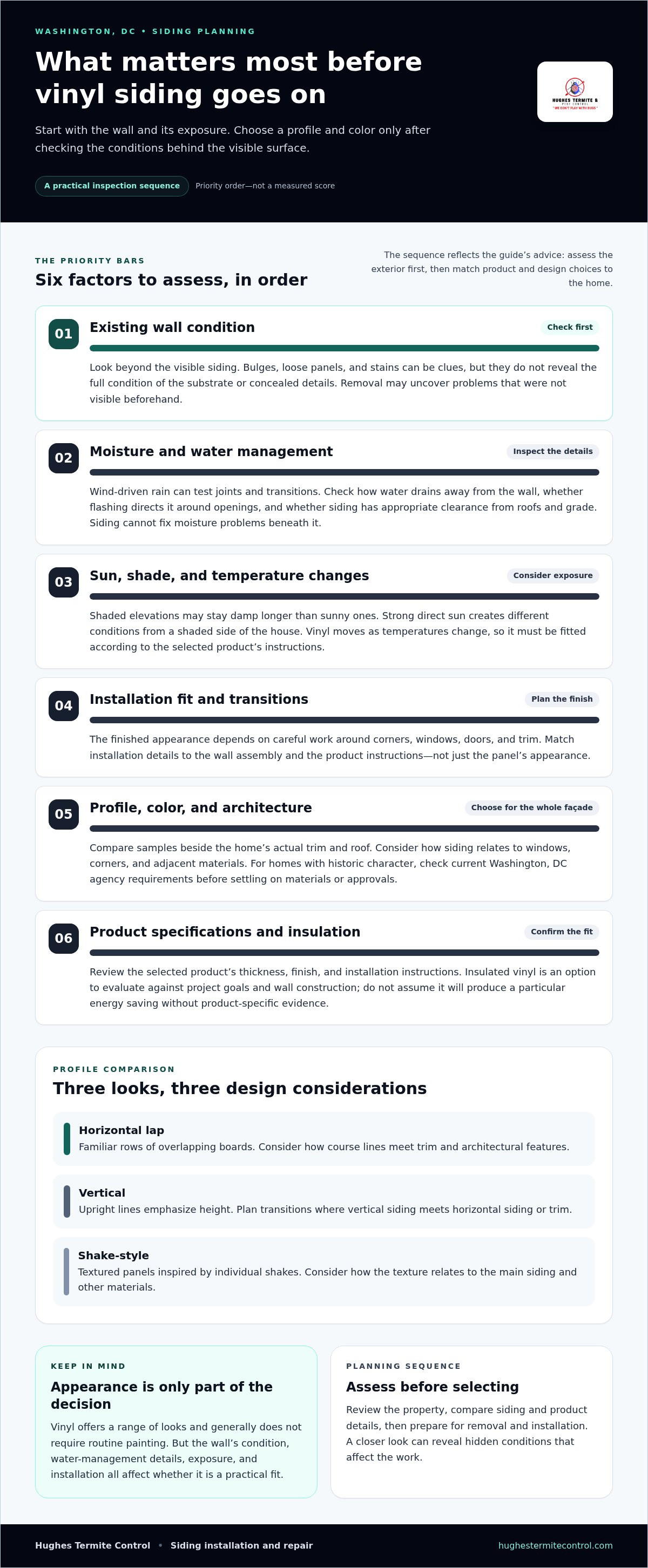
Wind-driven rain can test joints and transitions. Shaded elevations may stay damp longer than sunny ones. As you review the exterior, look at how water drains away from the wall, whether flashing directs it around openings, and whether the siding has appropriate clearance from surfaces such as roofs and grade. These water-management details matter as much as the panels themselves.
Sun exposure is another planning consideration. A wall that gets strong direct sun experiences different conditions from a shaded side of the house, so installation details should allow for vinyl’s movement with temperature changes. No single exposure rules vinyl in or out. The wall’s condition and the way the siding is detailed help determine whether it is a practical choice.
When a home’s architectural character needs closer attention
Profile, reveal (the amount of each course visible), trim, and color all affect how siding looks on a home. Horizontal boards may suit some façades, while vertical or shake-style profiles create a different effect. Trim around windows and corners can help new siding relate to existing architectural features. Compare samples against the house, alongside the actual trim and roof, rather than judging each sample on its own.
Historic character deserves particular care. Review requirements can depend on the property’s location and the proposed work, so the same rules may not apply to every home. Check current Washington, DC agency requirements before settling on materials or planning an approval process.
The visible siding can’t establish whether the wall beneath it is sound. Bulges, loose panels, or stains may be clues, but they don’t show the full condition of the substrate or concealed water-management details. Include an inspection of the wall as part of the project plan, and be prepared for removal to reveal conditions that weren’t visible beforehand. This helps you choose based on the home’s needs, not appearance alone.
Compare Vinyl Siding Profiles, Colors, and Insulation Options
Once vinyl appears suitable for the home, compare profiles and product details as carefully as color. The same shade can look different across broad horizontal courses, vertical lines, or textured shake-style panels. Consider the façade as a whole: siding should relate to the home’s trim, roof, windows, and other exterior materials.
Which vinyl siding profile fits the look of your home?
| Profile | Appearance | Design considerations |
|---|---|---|
| Horizontal lap | Familiar rows of overlapping boards | Can complement a range of home styles; consider how the course lines meet trim and architectural features. |
| Vertical | Upright lines that emphasize height | Creates a distinct look; plan transitions carefully where it meets horizontal siding or trim. |
| Shake-style | Textured panels inspired by individual shakes | Can add visual detail to selected areas; consider how its texture relates to the main siding and other materials. |
Use samples to compare more than color. View them beside the home’s actual trim and roof, and consider how adjacent materials will meet the siding. A profile that looks appealing on a small sample may feel different across a full wall. Ask how corners, window surrounds, and transitions will be handled so the finished design looks intentional.
What to compare beyond color and curb appeal
Review the product specification, including thickness and finish, along with the manufacturer’s installation instructions. Product documentation explains the selected siding’s characteristics and how it should be installed. For vinyl siding installation Washington DC projects, sound installation means matching those instructions to the home’s wall assembly and exterior details, not simply choosing an attractive panel.
Insulated vinyl siding is an option to evaluate, not an automatic solution to energy concerns. Its suitability depends on the project goals and how the wall is constructed. Discuss how it fits with the existing assembly and any planned improvements. Don’t assume it will produce a particular energy saving without product-specific evidence.
There’s no universal best profile or specification. Compare appearance, product documentation, and installation requirements together, then choose the combination that fits the home and project. Hughes Termite Control’s siding installation and repair brings product selection and careful preparation into the same project plan.
What Makes Vinyl Siding Installation in Washington, DC Last?
A sound installation starts with the wall behind the panels. The assessment should include the substrate, the surface the siding attaches to, and the details that manage water around windows, doors, corners, and other transitions. During vinyl siding installation Washington DC homeowners should expect removal and inspection to establish the actual condition of these areas, rather than assume they’re sound based on the visible exterior.
A properly prepared substrate gives siding a stable base and helps the wall’s water-management details work as intended.
What should be inspected beneath existing siding?
After old siding is removed, inspect the sheathing for softness, staining, rot, and other visible damage. Look for signs of moisture intrusion around openings and wall transitions. Flashing should guide water away from vulnerable joints, while drainage details should allow water that gets behind the cladding to move out rather than collect. Related inspection concerns, including signs of pest activity, are covered in this DC home inspection checklist for pest concerns.
What’s found determines the next steps. If removal exposes damaged sheathing or another condition that needs attention, the repair scope should reflect what’s present. A surface-only review can’t establish that scope accurately; the right response depends on the location and extent of the issue. Address observed conditions before covering the wall, so the new work is based on the home’s actual needs.
How installation details affect appearance and performance
Vinyl panels need to be fastened and fitted according to the selected product’s installation instructions, including allowances for movement as temperatures change. Corners, openings, trim, and transitions between siding and other materials require careful detailing. These areas influence both the finished appearance and how water is directed around the wall.
Siding is one part of an exterior assembly, not a stand-alone fix for moisture or insulation problems. Proper installation supports the intended performance of the chosen product, but it doesn’t replace repairs to underlying damage or correct unrelated wall issues. A careful sequence, removal, inspection, needed preparation, then installation, gives the work a sound basis without assuming every home needs the same repairs.
How to Plan a Vinyl Siding Project in Washington, DC
A clear plan connects the home’s condition and design priorities to the work sequence. For vinyl siding installation Washington DC homeowners can organize the project in stages, then adjust the plan if removal reveals conditions that weren’t visible beforehand.
- Set your priorities. Decide what matters most, such as changing the exterior appearance, replacing damaged siding, or coordinating siding with other planned remodeling work. Note preferences for profile, color, and trim, and identify the areas that need attention.
- Review the property. Identify the elevations included in the project, visible exterior conditions, access constraints, and nearby features that could affect setup. Historic-review or permit requirements can depend on the property and proposed work, so verify current requirements with the relevant Washington, DC agencies before work begins.
- Choose the siding specification. Compare profiles, colors, finishes, and any insulation option against the home’s architecture and project goals. Keep product documentation and installation instructions with the project details.
- Define the work and sequence. Establish which areas are included, how removal and installation will proceed, and how site access will be managed. Existing conditions and the project scope influence scheduling and the order of work.
- Prepare for the work area. Clear access to exterior walls where practical. Move outdoor furniture, stored items, and other belongings away from work zones, and discuss how landscaping or other nearby features should be protected.
What to prepare before the siding work begins
Review your exterior priorities before installation starts. Clarify preferred trim details, how different elevations should look, and how the siding work should fit around other planned improvements. Discussing these choices ahead of time helps align the work sequence with the household’s needs. Broader planning principles are covered in this home remodeling guide for 2026.
Removal can expose damage or other conditions hidden by the old siding. If that happens, the work plan may need to change. Base the response on what’s observed, and distinguish any additional repairs from the original siding scope before that work proceeds.
How to make the project scope clear
Document the elevations included, visible existing conditions, selected materials, and work covered by the project. Distinguish siding installation from repairs that may be identified after removal. That gives everyone a shared reference for the agreed work and any adjustments. For broader planning context, see the home improvement contractor vetting guide.
Hughes provides siding installation and repair with an emphasis on assessment and preparation.
Choose Hughes for Vinyl Siding Installation in Washington, DC
Choosing siding is only part of the project. The home’s current condition, the improvements you want, and the installation scope all shape the next steps. Hughes Termite Control provides siding installation and repair as part of its home improvement services. Its remodeling experience supports a practical approach: understand the property, clarify the work, and prepare carefully before installation begins.
The right recommendation depends on the home, not a one-size-fits-all package. A replacement project may involve different considerations from siding repair or work coordinated with other remodeling. For vinyl siding installation Washington DC homeowners can plan with confidence, set clear priorities and keep the scope tied to the property’s needs and the selected siding’s requirements.
What homeowners can expect from a clear siding project
A useful project conversation starts with the home and the work you’re considering. Share which elevations need attention, what you want to change about the exterior, and any concerns such as loose, damaged, or deteriorating siding. Discuss your preferences for profile, color, and trim, as well as how the work should fit around other planned improvements.
Recommendations should reflect the property’s visible condition and the siding selected for the project. If removal uncovers a condition that couldn’t be seen beforehand, the work plan may need to be revisited. A surface review can’t establish what lies behind existing siding. Clear communication about observed conditions and proposed changes helps keep expectations practical and the scope understandable.
When to move from research to a project conversation
If siding is damaged, showing signs of deterioration, or due for replacement, gather a few useful details before discussing the project. Take photos of affected elevations from a safe distance, note where the issue appears, and list your priorities for appearance, repairs, and sequencing. You don’t need to settle every product decision first. What you’ve noticed gives the conversation a concrete starting point.
Hughes can discuss siding installation and repair in relation to the home’s needs and the improvements you have in mind. A clear understanding of the property and the likely work involved helps establish sensible next steps without assuming every home needs the same scope.
Ready to discuss your home’s siding needs? Discuss your siding project with Hughes, starting with the home’s condition and the changes you want to make.
Plan Your Siding Project with the Home in Mind
A sound siding decision starts with the wall and the home’s exposure, then moves to profile, color, and insulation choices. In Washington, DC, careful assessment and preparation matter: visible panels don’t reveal the full condition beneath them, and details around openings, corners, and transitions affect the finished work. A clear project scope keeps decisions grounded in what the property needs.
Hughes Termite Control offers siding installation and repair as part of its home improvement services, along with wood-destroying organism inspections. If you’re considering vinyl siding installation Washington DC, discuss the home’s condition, your appearance goals, and the project scope to clarify practical next steps.
Start with what you’ve noticed and what you’d like to change. With a careful assessment, you can move forward with a plan that fits your home.
Frequently Asked Questions
How much does vinyl siding installation cost in Washington, DC?
The cost depends on the home and the work required, so a general figure may not reflect your project. Factors include the amount of siding, the selected profile and specification, removal and disposal of existing material, trim and flashing details, and repairs found after removal. To define the project scope, assess the exterior and clarify what work is included before installation begins.
How long does vinyl siding installation take on a house?
Installation time varies with the home’s size and layout, site access, the amount of siding being replaced, and the condition of the wall beneath it. Removal may reveal damage that needs attention before installation can continue, changing the work sequence. A project plan should account for preparation, installation, and any identified repairs rather than assume the same timeline for every house.
Is vinyl siding a good choice for a Washington, DC home?
Vinyl can suit a Washington, DC home if its appearance, exposure, and existing wall conditions are a good match. Consider how rain, shaded elevations, sun, and seasonal temperature changes affect exterior details, including drainage, flashing, and clearances. Compare profiles and colors with the home’s trim and architecture. An assessment matters because visible siding alone can’t show whether the wall beneath it is sound.
Can vinyl siding be installed over existing siding?
Sometimes, but covering existing siding isn’t appropriate for every home. Old material may conceal moisture intrusion, rot, or damage, and an uneven surface can affect the finished appearance. Removing existing siding allows the wall and its water-management details to be inspected. Whether installation over the old layer is suitable depends on the home’s condition, the selected product, and its installation instructions.
What goes underneath vinyl siding?
Vinyl siding attaches to a suitable, prepared wall surface. Depending on the existing assembly and project requirements, this may include sound sheathing, a water-resistive barrier, and flashing around openings and transitions. Those layers help manage water, but they must be integrated correctly. Preparation should reflect the wall’s condition and the selected siding’s installation instructions rather than assume every home needs the same assembly.
Do I need a permit to replace siding in Washington, DC?
Yes. Washington, DC requires a building permit for vinyl siding installation, according to the District’s Department of Buildings requirements described in this guide’s research. Permit and review details can depend on the work and property, so verify current requirements with the relevant DC agency before the project starts. Planning for this step early can help align the approval process with product selection and scheduling.
Can vinyl siding be used on a historic home in DC?
It depends on the property and the proposed work. Homes in historic districts may face additional review requirements, and vinyl may not be permitted for some properties. Before choosing a profile or material, check the current requirements that apply to the home with the relevant DC agency. The property’s architectural character and the scope of the exterior changes can affect which options are appropriate.
What should I expect if installers find rot or moisture damage?
If removal reveals rot, moisture intrusion, or damaged sheathing, assess the affected area before covering it with new siding. The repair scope depends on what’s found and where it occurs, so it may differ from the original installation plan. Discuss the observed condition and proposed work before proceeding. Siding replacement alone doesn’t resolve the underlying source of moisture or repair concealed damage.


