

If you’re searching for outdoor deck builders near me, start with a clear plan for the work, not just a polished portfolio. You need to understand what the project includes, how the deck will fit your home and yard, and which conditions could affect the scope or schedule.
Comparing deck proposals can be difficult when materials, framing, repairs, and permit considerations are described differently. A careful site assessment and clear written scope make it easier to understand those differences before installation begins.
This practical DMV guide explains how to compare decking options, what a project plan should cover, and how local permits, inspections, and property requirements fit into the process. You’ll also learn what to clarify about materials, structural details, scope, and timing. Hughes Termite Control provides decking installation and repair, along with wood-destroying organism inspections for concerns about existing wood. The aim is a durable deck that suits your home and how you plan to use it, with a clear path from assessment through installation.
Key Takeaways
- Before searching for outdoor deck builders near me, define whether you need a new deck, a replacement, or a repair.
- Compare proposals by the work and assumptions they spell out, not by the headline total alone.
- Weigh wood and composite decking by appearance and maintenance needs, and review the framing, joists, fasteners, and ledger connection.
- Plan for a sequence from site assessment and scope decisions to applicable approvals, installation, and a final review.
- Hughes Termite Control provides decking installation and repair, as well as other home-improvement services for related project needs.
Outdoor Deck Builders Near Me: Define Your DMV Project Before Comparing Contractors
Searching for outdoor deck builders near me often starts with photos and design ideas. Before comparing proposals, clarify what your home needs. A new deck, a full replacement, and a repair call for different scopes. Defining the project first makes it easier to compare plans on the same terms and prioritize the features that matter to you.
A deck connects outdoor space with the home, so its design should suit its intended use and how it meets the house. For a basic overview of an architectural deck, consider how the platform, materials, and supporting structure work together. Then think through practical details: Will you use the space for dining or relaxing? How will people reach it from inside? What size fits the yard and the home? Access, layout, and the connection to the house all shape the initial plan.
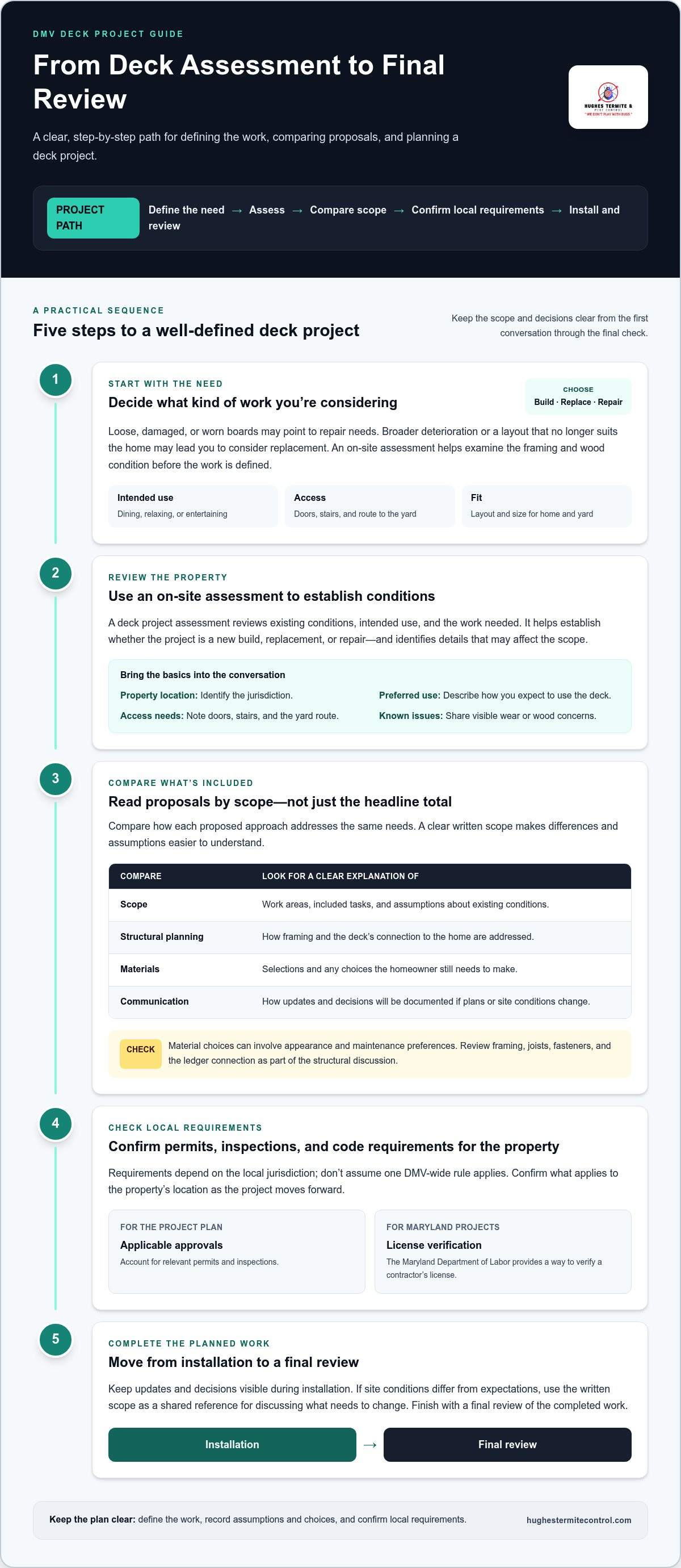
A deck project assessment is an on-site review of existing conditions, intended use, and the work needed. It helps establish whether the project is a new build, replacement, or repair, and identifies details that may affect the scope.
New deck, replacement, or repair: identify the work you need
Loose, damaged, or worn boards may indicate repair needs. Broader deterioration or a layout that no longer suits the home may lead you to consider replacement. These signs alone don’t determine the right solution. An on-site assessment can examine the framing and wood condition before the work is defined.
Start with your priorities. If you entertain, you may want room for seating and dining. If easier access is important, focus on the route between the house and yard. Maintenance preferences can also influence material and scope decisions. Hughes Termite Control provides decking installation and repair, with wood-destroying organism inspections for concerns about existing wood.
What DMV homeowners should establish at the outset
Prepare a few basic details to make project planning more focused:
- Property location: Identify the jurisdiction where the home is located.
- Preferred use: Describe how you expect to use the deck.
- Access needs: Note doors, stairs, and the route to the yard.
- Known issues: Share visible damage, wear, or concerns about existing wood.
Permits, inspections, and code requirements depend on the local jurisdiction, so don’t assume one DMV-wide rule applies. Confirm the requirements for your property’s location as the project moves forward. For a broader look at organizing a home project, see this home remodeling planning guide. A clear starting scope gives project planning a practical foundation.
How to Compare Outdoor Deck Builders Near You in the DMV
Once you’ve defined the project, compare how each proposed approach addresses the same needs. A headline total won’t show whether two proposals include the same work. Look for a clear scope, structural planning, material details, and a communication process that keeps decisions visible.
| What to compare | What a clear proposal explains |
|---|---|
| Scope | Work areas, included tasks, and relevant assumptions about existing conditions. |
| Structural planning | How the plan accounts for framing and the deck’s connection to the home. |
| Materials | Material selections and any choices the homeowner still needs to make. |
| Communication | How updates and decisions will be documented if site conditions or plans change. |
What a clear deck proposal should explain
A useful proposal describes the work areas and key project stages in plain language. It distinguishes included tasks from assumptions about existing conditions and identifies homeowner decisions, such as material selection. Site constraints can affect the scope, so documenting known issues creates a shared reference. The proposal should make the boundaries of the work understandable rather than relying on a single total to explain what’s included.
Clear scope and written decisions won’t prevent every change, but they reduce avoidable uncertainty. If site conditions differ from what was expected, both sides can refer to the same record of the planned work and discuss what needs to change.
How to assess workmanship and communication
Photos of completed work and customer reviews can help you understand a contractor’s approach and communication style. Give more weight to examples that resemble your project, while remembering that photos show selected results and reviews describe individual experiences, not guarantees. For Maryland projects, the state’s Department of Labor provides a way to verify your contractor's license. Requirements differ by jurisdiction, so this resource applies specifically to Maryland.
During planning and installation, direct updates matter. If a site condition prompts a scope discussion or a material decision is needed, clear communication helps explain the change and its implications. For broader hiring considerations, read this home improvement contractor vetting guide.
For homeowners comparing outdoor deck builders near me, a well-defined proposal offers a practical basis for evaluating fit. Hughes Termite Control provides decking installation and repair. You can discuss your deck project with Hughes as you work through the scope and next steps.
Deck Materials and Structural Details That Matter for DMV Homes
Material choice affects a deck’s appearance and upkeep, but it’s only one part of a sound project plan. The right fit depends on the site, design, intended use, and how much maintenance you’re comfortable doing. When comparing outdoor deck builders near me, look for a plan that addresses the structure beneath the boards as well as the finished surface.
A deck’s surface material is only one part of its structural performance. Boards sit on a supporting frame, and the frame and its connections need attention alongside the finished appearance.
Wood or composite decking: which fits your priorities?
Wood offers a natural appearance and may appeal to homeowners who prefer its look and feel. It generally calls for ongoing care, though the amount and type depend on the material and conditions. Composite decking has a different appearance and maintenance profile, but it isn’t a universal fit for every design or homeowner.
Compare samples and consider how each option suits your intended use, exposure, and upkeep preferences. Don’t choose on appearance alone. Confirm which materials fit the proposed design and how the selection affects the project scope. Suitability depends on the site and your expectations, so check claims about lifespan, cost, or performance against the specific materials under consideration.
Framing, ledger boards, and existing wood condition
Deck boards are supported by joists, the horizontal framing members beneath the walking surface. A ledger board is the structural member that attaches a deck to the house when the design calls for that connection. Framing, fasteners, and attachment details work together to support the deck, so they belong in project planning, not just in the discussion of surface materials.
For a replacement or repair, visible boards may not show the full condition of the framing. An on-site review can assess the joists, fasteners, ledger connection, and existing wood as part of defining the work. If wood shows concerning damage, a wood-destroying organism inspection can help identify an appropriate next step. Hughes Termite Control offers these inspections alongside decking installation and repair.
Ask for the structural elements to be described in plain language, including which parts are new, retained, or still subject to assessment. That gives you a clearer basis for comparing material options and understanding how the proposed deck will be supported.
What to Expect During a DMV Deck-Building Project
A deck project should move through clear stages, from the first discussion to a review of the completed work. Following the sequence helps you track decisions and understand what needs to happen next, without assuming every project follows the same schedule.
A deck project moves from initial discussion and site assessment to scope decisions, applicable approvals, installation, and final review.
From site assessment to an agreed project scope
Planning starts with your goals and the conditions at the property. The assessment considers access to the work area, how the deck will connect to the home, and the condition of existing structures if they’re part of the project. These details help shape the work, material choices, and scope. If concealed or previously unknown conditions appear later, the plan may need to be discussed again.
Before work begins, document the agreed scope and material selections in clear language. Written decisions distinguish planned work from assumptions and give everyone a reference if questions arise. Include known site constraints, too.
Permits, inspections, and building-code requirements vary by DMV jurisdiction. Applicable rules depend on the property’s location and project details. Confirm requirements with the relevant local authority before work proceeds, and don’t assume guidance for one city or county applies elsewhere.
Installation, communication, and final review
Installation follows the agreed scope and selected materials. Keep communication open throughout the work. If the crew identifies a condition in the existing structure or another issue that could affect the plan, a clear explanation of the finding and its possible impact helps you understand the decision before moving forward.
At the end, a walkthrough gives you an opportunity to review the completed work, raise questions, and discuss care for the materials. It’s a practical final check that the finished deck reflects the agreed project, rather than simply marking the end of installation.
This process keeps expectations grounded: assess the site, record the scope and selections, address local approvals, install to the agreed plan, and review the result. If you’re ready to move from planning to a deck project, discuss decking installation or repair with Hughes.
Plan Your Outdoor Deck Project with Hughes Termite Control
Once you’ve clarified the project scope and the details that matter to your home, Hughes Termite Control can help with decking installation and repair. Whether you’re planning a new deck, replacing an existing one, or addressing a repair, the work can be shaped around the home, intended use, and agreed scope.
When decking work connects to broader home repairs
A deck project can bring nearby exterior or existing-wood concerns into view. An assessment may identify areas that warrant further attention, but a visible concern alone doesn’t establish its cause or the right remedy. If existing wood shows damage, a wood-destroying organism inspection can help inform the next step.
Depending on the home and your plans, related work may involve roofing, siding, flooring, windows, or doors. These are connected options, not automatic additions to a deck project. If you’re coordinating several improvements, the home remodeling guide offers broader planning context.
Prepare for a useful first project conversation
A few details can make an initial discussion more focused. Share the property location, what you want the project to accomplish, how you expect to use the deck, and any known concerns about the existing structure or wood. You can also describe access needs and features that matter to your household. These details help frame the conversation around your priorities.
Project recommendations depend on the home’s conditions and the work included in the agreed scope. Material choices, existing structures, and related repair needs can all shape the plan. Clear discussion helps establish what the project covers and which decisions remain.
If your search for outdoor deck builders near me has brought you to the planning stage, Hughes Termite Control provides decking installation and repair as part of its residential improvement work. Discuss your deck project with Hughes to talk through your goals and next steps.
Take the Next Step Toward a Well-Planned Deck
A successful deck project starts with a clear scope, not just an appealing design. As you compare outdoor deck builders near me, look for proposals that explain the planned work, material choices, structural details, and communication process. Keep local approvals in view, since permit and inspection requirements depend on the property’s jurisdiction.
Hughes Termite Control provides decking installation and repair. If existing wood raises concerns, wood-destroying organism inspections and termite services may also be relevant. A clear conversation about your goals, how you’ll use the space, and any known deck issues can help shape practical next steps for your home.
Ready to discuss your plans? Discuss your deck project with Hughes. With the right scope and a careful plan, you can move forward with greater confidence toward an outdoor space that suits your home.
Frequently Asked Questions
How do I find reliable outdoor deck builders near me in the DMV?
Compare how each proposed plan defines the work, addresses structural details, discusses materials, and handles project decisions. For outdoor deck builders near me, relevant completed project examples and customer reviews can help set expectations, but they don’t guarantee a particular result. Look for a clear explanation of the scope and assumptions. Hughes Termite Control provides decking installation and repair for homeowners planning a deck project in the DMV.
What should an outdoor deck-building proposal include?
A useful proposal should describe the work areas, project stages, selected materials, and relevant assumptions in plain language. It should explain what’s included and identify decisions that remain, such as material selections or layout details. For replacement or repair work, existing conditions may affect the final scope. A clear written description gives you a practical basis for understanding the plan, comparing project details, and discussing proposed changes.
Should I choose wood or composite decking for my home?
Choose based on the appearance you prefer, your maintenance expectations, the site, and how you plan to use the deck. Wood may suit homeowners who want a natural look and are comfortable with its care needs. Composite offers a different appearance and upkeep profile. Neither material is right for every project. Discuss how each option fits your design and document the selection as part of the agreed scope.
Do I need a permit to build or replace a deck in the DMV?
Permit and inspection requirements depend on the property’s jurisdiction and project details, so there isn’t one rule for the entire DMV. Requirements can differ between local authorities, including for new construction and replacement work. Confirm requirements with the relevant city or county before work begins, and account for applicable inspections or property approvals. Don’t rely on a rule that applies to a different jurisdiction.
How long does it take to build an outdoor deck?
There isn’t one timeline that applies to every deck project. The schedule can depend on the scope, site conditions, material selections, and any approvals or inspections required in the property’s jurisdiction. If an existing structure needs further assessment or conditions change the agreed work, that can also affect the process. Discuss the sequence and project-specific expectations during planning rather than relying on a general estimate.
Can a deck builder repair an existing deck instead of replacing it?
Yes, repair may be appropriate for some decks, while others may require more extensive work or replacement. The right scope depends on the condition of the visible boards, framing, connections, and other existing elements. An on-site assessment helps establish suitable work. Photos alone can’t determine the full condition. Hughes Termite Control provides decking repair as well as installation, with the work tailored to the project.
What should I do if I notice wood damage on my existing deck?
Note where the damage appears and share the concern during an on-site assessment. Don’t assume that visible damage reveals its cause or how much of the structure is affected. A wood-destroying organism inspection can help assess concerns about existing wood, and termite services may be relevant if termites are involved. Hughes Termite Control offers these inspections and termite control alongside decking installation and repair.


