

The closest house siding contractor near me isn’t automatically the right choice for your project. Start with your home’s condition: a few damaged sections may call for repair, while widespread wear or underlying problems may make replacement more practical. In the DMV, it helps to find a contractor who can explain the work clearly, define the project scope, and set realistic expectations before work begins.
Hughes Termite Control provides siding repair and installation in the DMV, along with remodeling, termite control, and wood-destroying organism inspections. These related services can be useful when exterior work raises concerns about wood.
This guide explains how to think through repair versus replacement, compare siding materials, and prepare for project details such as access and possible hidden damage. The goal is to help you move from your first conversation to a clear plan based on your home’s condition, not a directory ranking.
Key Takeaways
- Visible wear doesn’t always mean every panel needs replacing. The home’s condition helps determine the right scope.
- Compare siding materials by maintenance needs, appearance, and how well they suit your home.
- When looking for a house siding contractor near me, focus on clear scope, communication, relevant experience, and written project details.
- Prepare the work area, and keep in mind that removing old siding can reveal conditions that affect the project.
- Hughes Termite Control provides siding repair and installation in the DMV, as well as termite control and wood-destroying organism inspections.
House Siding Contractor Near Me: Identify the Right Project for Your DMV Home
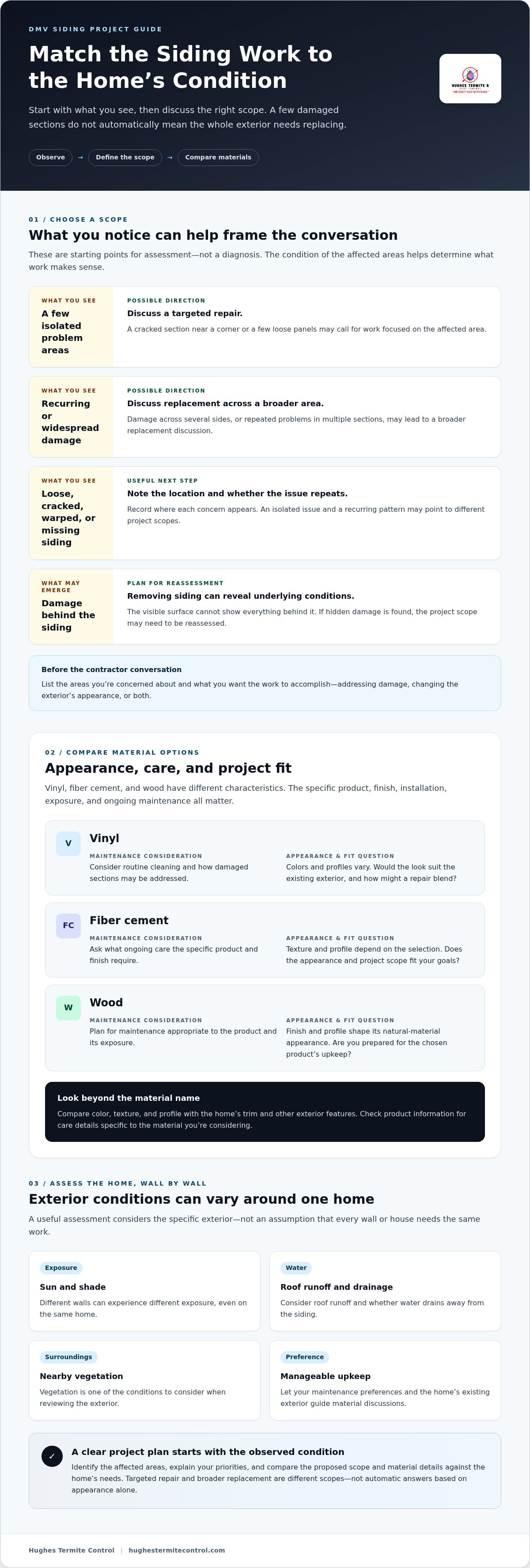
Visible wear doesn’t always mean every siding panel needs replacement. A cracked section near a corner or a few loose panels may call for a focused repair. Damage across several sides of the house could point to a broader project. Before searching for a house siding contractor near me, note what you’ve observed and decide what you want the work to accomplish.
A siding contractor repairs or installs a home’s exterior siding. Siding is part of the building’s exterior and comes in different materials, as outlined in this general overview of Siding (construction). Homeowners may need a localized repair, replacement of failing sections, or a wider update to the exterior. The right scope depends on the home, the existing siding, and the condition of the affected areas.
Weather exposure and home conditions vary across the DMV, and even houses in the same neighborhood can have different siding needs. Sun, shade, roof runoff, and nearby vegetation can affect each wall differently. A useful assessment looks at the specific exterior instead of assuming every house needs the same work.
How to tell whether siding may need repair or replacement
Loose, cracked, warped, or missing siding are reasons to have the affected area assessed. Note where each issue appears and whether it is isolated or repeated across multiple sections. Damage limited to one area may support a targeted repair. Recurring problems across the exterior may call for a broader replacement discussion. The visible surface alone, however, can’t show the condition of materials behind it.
What a siding contractor can help you plan
A project discussion can clarify which areas concern you, whether your priority is addressing damage or changing the exterior’s appearance, and how much work you’re considering. Recommendations should reflect the home’s observed condition and the scope needed to meet your goals. Hughes Termite Control provides siding repair and installation as part of its home improvement and remodeling services.
Targeted siding repair addresses specific damaged areas, while broader replacement renews siding across a larger part or all of the exterior. This distinction helps frame the project, but it isn’t a diagnosis. If removing siding reveals underlying damage, the scope may need to be reassessed based on what’s found. Listing visible concerns and discussing your goals gives you a practical starting point.
Siding Materials and Features: Compare What Fits Your Home
Material choice affects the look of an exterior and the upkeep it may need. There isn’t one siding category that suits every home. The existing exterior, the areas being repaired or replaced, and your maintenance preferences all help shape the decision. This home remodeling planning guide can also help you organize priorities before settling on a project scope.
How siding material affects maintenance and appearance
Vinyl, fiber cement, and wood are common siding categories, but their care needs and appearance differ. Use the table as a starting point for comparing general characteristics. A material’s durability and upkeep depend on the specific product, installation, exposure, and ongoing maintenance. Check product information for details about the material you’re considering.
| Material | Maintenance considerations | Appearance | Project-fit questions |
|---|---|---|---|
| Vinyl | Consider routine cleaning and how damaged sections may be addressed. | Available in varied colors and profiles; the finish shapes the home’s overall look. | Does its appearance suit the existing exterior, and how would a repair blend? |
| Fiber cement | Ask what ongoing care the specific product and finish require. | Can present a more defined surface texture or profile, depending on the selection. | Does the scope and desired appearance fit the home and project goals? |
| Wood | Plan for maintenance appropriate to the product and its exposure. | Offers a natural material appearance, with character shaped by finish and profile. | Are you prepared for the upkeep associated with the chosen product? |
Color, texture, and profile matter alongside material. A smooth surface creates a different effect from a textured finish, while horizontal or vertical lines change how the exterior looks. Compare samples against the home’s trim and other exterior features rather than choosing from a label alone.
Which siding considerations matter for a DMV home
Consider how each wall is exposed, whether water drains away from the siding, and what routine upkeep feels manageable. Conditions can differ from one side of a home to another, so a material that suits one area may not be the right fit elsewhere. Let the existing exterior and your goals guide the material conversation. If you’re searching for a house siding contractor near me, bring those priorities to the discussion.
Material proposals are easier to assess when the work and terms are clear. The Federal Trade Commission’s advice on how to spot a home improvement scam offers broader guidance for home improvement projects. For help planning a siding project alongside other exterior updates, explore Hughes siding repair and installation.
How to Compare a House Siding Contractor Near You
Proximity is only one part of a dependable siding project. The scope, communication, relevant experience, and written details all affect how well you understand the work before it begins. When comparing a house siding contractor near me, consider whether the proposed work matches the areas and goals you’ve identified, rather than relying on a broad service description alone.
What clear siding project scope should explain
Project details are easier to understand when they identify the affected sides or sections of the home, describe the planned work, and state any exclusions. This helps distinguish a repair to specific areas from replacement across a larger portion of the exterior. A written description also gives you a reference for reviewing what was discussed. The format may vary, but the scope should be clear enough to align expectations.
Compare the proposed work, not just the labels used for it. “Repair” and “replacement” can describe different amounts of work depending on the home. If material selection is part of your decision, a guide to house siding options can offer general background. The home’s existing exterior and condition should guide project-specific choices.
How to assess communication and relevant experience
Clear communication means the observed condition and proposed work are explained in plain language, including what the scope does and doesn’t address. Relevant experience should match the work involved, such as repairing localized damage, installing siding for a broader exterior update, or both. Hughes Termite Control provides siding repair and installation as part of its home improvement and remodeling services.
A clear scope makes contractor comparisons more meaningful because it shows what work is proposed, where it will happen, and what is outside the plan. As you review the project details, note how the plan accounts for concealed conditions that could affect the work. This helps set expectations without assuming every visible issue calls for full replacement.
For more guidance on evaluating home improvement work, read the home improvement contractor vetting guide. To explore siding work for your home, see Hughes siding repair and installation.
Plan a Siding Project: Inspection, Preparation, and Possible Hidden Damage
A clear plan helps you anticipate siding work. Start by noting visible concerns, then discuss the affected areas and your goals. Before work begins, prepare access around the home. Afterward, review the completed areas against the agreed scope. The details and schedule depend on the home and the work involved, so don’t assume every project follows the same timeline.
What homeowners can do before siding work begins
Before discussing the project, write down where you’ve noticed loose, cracked, or missing siding and what you want the work to address. Photos can help you track locations, but they can’t establish what is happening behind the siding. Point out access needs, such as gates or areas where outdoor items are stored. When practical, move furniture, planters, and other belongings away from the work area. The contractor can clarify preparation needs for the agreed scope.
What happens if siding removal reveals wood concerns
Some underlying conditions only become visible after siding is removed. If the exposed area shows signs of wood damage or another concern, discuss the findings and how they may affect the scope before deciding on next steps. A photograph or surface symptom alone can’t confirm the cause or extent, so treat an early visual clue as a reason to assess, not a diagnosis.
Hughes Termite Control provides siding repair and installation, as well as termite control and wood-destroying organism inspections. These services can address both remodeling needs and pest-related concerns involving wood when they arise. Not every siding project includes pest treatment or an inspection. The appropriate work depends on what is observed and the project’s needs.
Use this sequence to keep the project organized:
- Define concerns: Note the locations and issues you want addressed.
- Discuss scope: Review which areas are included and how the planned work meets your goals.
- Prepare access: Clear belongings from the work area where practical and clarify any project-specific preparations.
- Review completed work: Look over the finished areas in relation to the agreed scope and discuss any remaining questions.
If concealed damage changes the work, pause to understand what was found and how it affects the plan. Clear communication helps connect your initial concern to the work ultimately completed, especially when searching for a house siding contractor near me. For siding repair or installation planning, discuss your siding project with Hughes Termite Control.
Choose Hughes Termite Control for Local Siding Repair and Installation
A siding project may start with a few damaged panels or a plan to update a larger part of the exterior. Hughes Termite Control serves homeowners in the DMV with siding repair and installation as part of its home improvement and remodeling services. The project scope is based on the home and the work discussed, whether the concern is localized damage or a broader exterior update.
When siding work and wood concerns overlap
Removing or repairing siding can expose areas that weren’t visible from the outside. If underlying wood raises concern, the next step is to understand what was observed and what work the home may need. Surface symptoms or photographs alone don’t establish the cause or extent of a problem.
Hughes Termite Control also provides termite control and wood-destroying organism inspections. These services are relevant when exterior improvements uncover concerns involving wood. Siding work doesn’t automatically include pest treatment or an inspection; those are separate services, and the appropriate scope depends on the situation.
Having remodeling and pest-related services available through the same company can be useful when a home improvement project raises a related concern about wood. It provides a connection between the exterior work and relevant pest services without assuming every siding project involves pests or concealed damage. The focus remains on the condition observed and the work that makes sense for the home.
What to include in a first project conversation
Start with a straightforward description of what you’ve noticed and what you’d like to change. Mention where the siding concern appears, whether it seems limited to one area or affects multiple sections, and whether your goal is repair, replacement, or an exterior update. You can also share questions about access or areas near the work zone.
These details help frame the discussion, but they don’t determine the scope on their own. The home’s condition and the work required guide the project plan. Clear explanations of what is included help you understand how the proposed work addresses your goals.
If you’re searching for a house siding contractor near me in the DMV, Hughes Termite Control provides siding repair and installation for local homes. Start a conversation about the areas you’re concerned about and what you hope to accomplish through the Hughes Termite Control website.
Take the Next Step Toward a Clear Siding Plan
A good siding decision starts with your home’s condition, not a search ranking. Distinguish isolated damage from issues affecting larger areas, then weigh material upkeep and appearance against the project’s purpose. A clear scope and communication also help set practical expectations, especially if removing siding reveals concealed wood concerns.
If you’re looking for a house siding contractor near me, Hughes Termite Control provides siding repair and installation for home improvement projects in the DMV. The company also provides termite control and wood-destroying organism inspections for situations where exterior work raises concerns about wood.
Start with the areas you’ve noticed and what you hope to accomplish. Discuss your siding project with Hughes Termite Control and take a practical first step toward a plan that fits your home.
Frequently Asked Questions
How do I find a reliable house siding contractor near me in the DMV?
Compare how clearly the proposed work addresses your home’s siding concerns. Look for a defined scope, plain-language explanations of observed conditions, and relevant experience with the work you need, such as localized repair or broader installation. Hughes Termite Control serves DMV homeowners with siding repair and installation. Describe the affected areas and your goals to keep the project discussion focused on your home and the work involved.
How do I know if my house siding needs repair or replacement?
Loose, cracked, warped, or missing siding are reasons to assess the affected area, but they don’t automatically mean the entire exterior needs replacement. Damage confined to one section may be addressed with targeted repair, while problems across multiple areas could prompt a broader replacement discussion. Visible symptoms alone can’t reveal the condition behind the siding. The home’s observed condition and your project goals help determine a practical scope.
What siding material is best for a house?
There’s no single best siding material for every home. Vinyl, fiber cement, and wood differ in appearance and maintenance needs, and their performance depends on the product, installation, exposure, and upkeep. Consider the existing exterior, the color and texture you want, and how much routine maintenance you’re prepared to handle. Choose based on the home’s condition and project goals rather than a universal ranking.
How much does siding replacement cost in the DMV?
Siding replacement costs depend on the home and the agreed project scope, so a general figure may not reflect your project. The amount of siding involved, the work required, material choices, and conditions uncovered during removal can all affect the overall plan. A clear project estimate should explain what work is included and identify relevant assumptions or exclusions. Hughes Termite Control tailors siding installation and repair to the home and scope.
What should a siding contractor include in a project estimate?
A useful estimate should make the proposed work understandable. Look for the areas or sides of the home involved, whether the plan covers repair or replacement, the materials specified if applicable, and any stated exclusions. It should also explain how newly discovered conditions could affect the scope. Clear written project details help you compare the proposed work and understand what to expect before siding work begins.
Can siding removal reveal termite or wood damage?
Yes. Removing siding can expose wood or other underlying areas that weren’t visible beforehand, including conditions that may need further attention. A photograph or surface symptom alone can’t confirm the cause or extent of damage. Hughes Termite Control provides termite control and wood-destroying organism inspections for situations where siding work raises concerns about wood. These services aren’t automatically part of every siding project.
How long does a siding project take?
The schedule depends on the home and the agreed scope of work. The amount of siding involved, preparation needs, and any underlying conditions revealed during removal can affect how the project proceeds. A limited repair may take a different amount of time than a broader installation. Discuss the expected sequence and timing for your home, and keep in mind that newly uncovered conditions can change the work plan.


