

A roof can be storm-damaged even when no water is coming inside. A professional inspection may reveal hail bruising, lost shingle granules, or wind damage that isn’t obvious from the ground. For storm damage roof replacement in the DMV, the extent of the damage and whether repairs can restore the roof’s protection help determine if replacement is appropriate.
It’s easy to look for a leak or missing shingles after a storm and assume the roof is fine if you see neither. But hail can weaken shingles before a leak appears. An inspection helps clarify the damage and what work is appropriate.
This article explains what inspectors look for, how storm and hail damage can affect a roof, and what may influence a repair-versus-replacement decision. You’ll also learn how insurance considerations fit into the process and which DMV communities are served, so you can better understand the next steps for your home.
Key Takeaways
- Document visible storm damage from the ground and arrange a professional inspection to understand what the roof needs.
- Hail can weaken shingles before a leak appears, so a dry ceiling doesn’t rule out roof damage.
- An inspection helps distinguish damage that may be repairable from damage that could call for replacement.
- Insurance coverage depends on your policy, deductible, and the cause of the damage; claim timelines vary by insurer.
- Learn how storm-related roofing needs are addressed across Washington, D.C., Maryland, and Northern Virginia.
How do I know if my roof has storm damage?
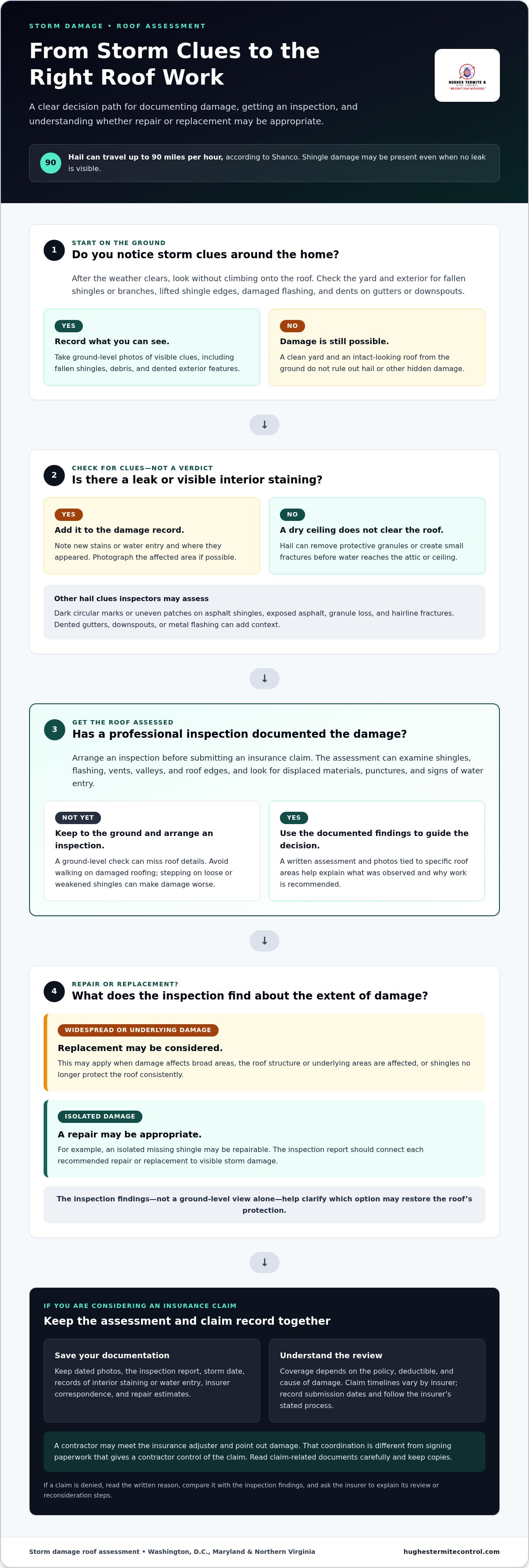
Common signs include missing shingles, exposed underlayment, dents, and wind-damaged flashing. Replacement may be considered when damage affects broad areas or the roof structure. Isolated damage may be addressed with a repair.
Storm Damage Signs and Replacement Needs
Start with a ground-level check after the weather clears. Look for shingles in the yard, lifted edges, damaged flashing, fallen branches, and dents on gutters or downspouts. These clues may indicate wind or hail damage, but they don’t establish the roof’s full condition.
Hail can travel up to 90 miles per hour, according to Shanco. On asphalt shingles, hail may leave dark circular marks where granules have come off and exposed the asphalt. Granule loss or small fractures can weaken shingles before a leak appears, so inspect ceilings and attic spaces for new stains, too.
Replacement is more likely to be considered when damage is widespread, shingles no longer protect the roof consistently, or underlying areas are affected. An isolated missing shingle, by contrast, may be repairable. The inspection report should connect each recommended repair or replacement to visible storm damage.
Roof Inspection and Claim Coordination
Arrange a professional roof inspection before filing an insurance claim. A written assessment and dated photographs help you understand the damage and describe it accurately. Take your own ground-level photos, note the storm date, and save records of any interior staining or water entry. If severe weather leads to active leaks or indoor flooding, contacting a professional team like Droplet Restoration can help stabilize and mitigate water damage right away.
It’s normal for a roofing contractor to meet the insurance adjuster at the property and point out damage. That coordination is different from signing a document that gives a contractor control of your insurance claim. Read claim-related paperwork carefully and keep copies of your inspection report, photographs, insurer correspondence, and repair estimates.
Coverage depends on your homeowners policy, deductible, and the cause of damage. Claim timelines also vary by insurer, so record submission dates and follow the insurer’s stated process. If a claim is denied, read the written reason, compare it with the inspection findings, and ask the insurer to explain its review or reconsideration steps. Keep related communications and photos together.
- Photograph visible damage from the ground, including fallen shingles and dented gutters.
- Book an inspection before submitting an insurance claim, then retain its findings.
- Compare the adjuster’s assessment with the contractor’s documented observations.
Can hail damage affect my roof without visible leaks?
Yes. Hail can damage asphalt shingles before water reaches the attic or ceiling. A roof assessment looks for surface changes and weakened areas, helping determine whether restoration calls for repairs or broader work.
Identifying Hail Damage on Roofs
Look for dark, circular dents on asphalt shingles where hail has knocked away protective granules. Exposed asphalt and uneven patches may indicate impact damage, even if the roof still sheds rain. A ground-level view may miss details, so a contractor’s assessment can examine the affected surfaces closely and document examples for comparison.
A hail damage assessment should distinguish storm impacts from ordinary wear. The inspector can document locations, visible marks, and the condition of nearby shingles. Photos tied to specific roof areas provide a clearer record for planning restoration and discussing an insurance claim. Avoid walking on damaged roofing, since stepping on loose or weakened shingles can worsen the damage.
Hidden Hail Damage and Roof Signs
Granule loss and hairline fractures may weaken shingles before a leak develops. A dry ceiling doesn’t tell you everything about the roof’s condition. Check attic sheathing and ceilings for new discoloration, then note whether stains appeared after the storm. These interior signs can help connect possible water entry with roof areas that need closer assessment.
Check the home’s exterior for clues, too. Dented gutters, downspouts, or metal flashing can support a record of hail impacts, while loose or damaged siding may point to broader exposure. Debris on the ground may include shingle pieces, but a clean yard doesn’t rule out roof damage. Record what you observe without climbing onto the roof.
Hail and Wind Damage Assessment
Hail and wind can affect different parts of a roof during the same storm. Hail may remove granules or fracture shingles; wind can lift edges, loosen materials, and weaken the roof. An assessment should map both types of damage rather than treat every mark as the same problem. That distinction helps guide repair or restoration decisions.
After the weather clears, note displaced shingles, lifted flashing, branches, and debris near the house. Wind-related openings can allow water intrusion later, even if no leak appears immediately. A contractor can compare exterior observations with roof findings and explain which areas need attention. If hail also affects siding, a siding assessment can address damage to that part of the home’s exterior.
Why is a professional roof inspection important after storms?
After a storm, photograph visible damage from the ground, contact your insurer, and arrange a professional roof inspection. A thorough assessment can identify damage that a yard-level view or indoor check may miss.
Post-Storm Damage Assessment
A roof inspection checks shingles, flashing, vents, valleys, and roof edges for storm damage. It also looks for displaced materials, punctures, and signs of water entry. Dented gutters and downspouts, or shingle granules collected in them, can provide useful context about impacts.
Stay on the ground during your first inspection. Photograph visible debris, fallen branches, and damage to exterior features without climbing onto the roof. Inside, record new ceiling stains or attic moisture, then note where each appears. These details may help connect an interior symptom with a possible roof location.
Organize your documentation by date and area. A useful photo report pairs wide shots of each roof slope with close views of specific damage. Include gutters, flashing, and nearby siding when they show impact marks. Label images by location, such as “front slope” or “rear gutter,” so the insurer and inspector can follow the evidence.
Restoration Estimates from Roof Inspections
An inspection report can explain which materials are damaged and where. That detail supports a restoration estimate by distinguishing roof repair from work involving several areas. For example, a few displaced shingles may call for localized repair, while damage across multiple slopes may require broader restoration.
Ask for an estimate that connects each recommended task to an observed condition. It should distinguish storm-related damage from unrelated wear and identify affected components. Clear descriptions make it easier to compare inspection findings with an insurance claim and understand the proposed scope.
Severe weather can leave visible damage as well as less obvious concerns. A professional assessment records the findings before repair work changes the roof’s condition. Keep the written report, photos, insurer correspondence, and estimate together. Claim timelines vary by insurer, so note submission dates and follow the instructions provided for your claim.
- Save dated photos and the inspection report with your claim records.
- Compare the estimate’s listed work with the documented roof findings.
- Record interior stains and exterior damage by location.
Service area in Washington, D.C., Maryland, and Northern Virginia
The DMV includes Washington, D.C., Maryland, and Northern Virginia, where storm patterns and local requirements vary. For roofing work, identify the property’s jurisdiction first, then match the project scope and contractor credentials to that location.
Roofing Across the DMV
A storm can affect homes across the region, but every roofing assessment starts at the property. Record the street address, visible damage, and storm date before discussing inspection or restoration needs. These details help keep photos, estimates, and insurance correspondence tied to the correct home.
Washington, D.C., Maryland, and Northern Virginia are distinct jurisdictions, not one permitting area. A roof replacement in Arlington, for example, follows Virginia’s rules, while a home in Montgomery County falls under Maryland’s. For a D.C. property, make sure the District address and project scope are clearly identified in the inspection and written proposal.
Severe weather can affect nearby communities differently. One home may have fallen branches and wind damage, while another has hail impacts or lifted shingles. A local inspection should describe the roof’s actual condition rather than assume damage based only on a regional storm report.
Check Licensing by Project Location
Licensing requirements differ across the DMV. In Virginia, contracting work costing more than $1,000 on a single job requires a license from the Board for Contractors. In Maryland, residential home improvement work requires a license from the Maryland Home Improvement Commission.
Use the property address and project scope when reviewing credentials. A Virginia roofing job and a Maryland roof replacement may fall under different licensing rules, even when the homes are close together. Keep the contractor’s license details with the proposal and project records. For a Washington, D.C., address, review the applicable local credential information for the specific work.
Prepare for a Local Roofing Assessment
Before scheduling roofing work, gather the storm date, property address, and photos of visible damage. Include images of gutters, siding, and fallen debris when they help show the storm’s effects. A clear record can help distinguish roof damage from damage to other exterior areas.
Ask for written findings that identify the affected roof sections and recommended work. If an insurance claim is involved, keep the inspection report and estimate with insurer correspondence. Claim timelines vary by insurer, so note submission dates and follow the instructions for your claim.
- Identify whether the property is in D.C., Maryland, or Virginia.
- Match Virginia and Maryland license checks to the project address and scope.
- Keep damage photos and roofing documents organized by property.
Storm damage roof replacement
Storm damage roof replacement in the DMV may be appropriate when impacts affect broad roof areas, weaken several sections, or compromise protection. Permit and code requirements depend on the property’s jurisdiction and project scope, so identify local requirements before installation begins.
Replacement isn’t automatic after hail or wind. A few damaged shingles may call for repair, while widespread impact marks or lifted materials can point to a larger problem. The inspection findings should explain which areas are affected and why repair or replacement fits the observed conditions. This evidence helps determine whether storm damage roof replacement in the DMV is the right scope.
What Replacement Involves
A replacement plan starts with a documented scope: affected slopes, damaged flashing, and roof components needing attention. During installation, crews remove damaged materials, inspect the exposed surface, and install the specified shingles and related components. Established residential contractors such as SW Roofing & Construction LLC emphasize that the written scope should clearly describe the work, including debris handling and cleanup.
Homeowners policies often cover storm-related roof damage from wind, hail, and fallen debris. Coverage depends on the policy, deductible, and cause of damage. Keep the inspection report, insurer assessment, and written installation scope as separate records. Compare their descriptions of the damage before work proceeds.
Permits, Code, and Written Terms
Permit steps vary across Washington, D.C., Maryland, and Virginia. The property address and project scope determine which local building department’s requirements apply. Ask for permit responsibilities and applicable code requirements to be included in the project documents. A full replacement may involve different review steps than a limited shingle repair.
Licensing rules also differ by jurisdiction. In Virginia, contracting work costing more than $1,000 on a single job requires a license from the Board for Contractors. In Maryland, residential home improvement work requires a license from the Maryland Home Improvement Commission. Match credentials to the property address and project scope.
In March 2026, Fannie Mae and Freddie Mac stopped requiring roofs to be insured at full replacement cost. This mortgage rule did not change homeowners’ existing insurance policies. Review your policy terms to understand how coverage applies to a storm claim.
Before Work Begins
Review the proposal for material descriptions, installation tasks, cleanup, permit responsibilities, and warranty terms. Compare these details with inspection findings and claim documents. If the estimate lists replacement but the report identifies isolated damage, ask for an explanation connecting the broader scope to documented roof conditions.
Keep the signed agreement, permit records, dated photographs, and completion documents together. For a written roofing scope and replacement plan, request a roof replacement estimate.
Hughes Termite Control: Termite Control
Hughes Termite Control provides termite control for homeowners dealing with termite concerns, a separate issue from storm-related roof damage. Roof repairs address weather exposure; damaged wood or suspected termite activity calls for attention to the pest concern itself.
Once roof damage has been assessed, keep any pest observations separate from roofing records. Note where you’ve seen signs and which wood components are affected. Hughes Termite Control also offers bed bug control, wildlife control, and decking for homeowners with those specific needs.
If you have a termite concern, visit Hughes Termite Control online.
Take the Next Step Toward a Protected Home
Planning storm damage roof replacement in the DMV is an opportunity to make a clear, documented decision about your home’s protection. Use the inspection findings to define the work scope, keep the written agreement and claim records together, and understand what the installation will address before work begins. That preparation gives you a practical reference during the project and after the roof is complete.
For roofing work in the DMV, Hughes Termite Control can help move your project from assessment toward a defined scope. Its other services address separate household concerns: termite control, bed bug control, and wildlife control. Keeping each need distinct helps you choose the right next step without confusing pest issues with storm repairs.
If you’re ready to discuss roofing or another home concern, contact Hughes Termite Control. A clear conversation can help you decide how to proceed with confidence.
Frequently Asked Questions
How Can I Make Sure a DMV Roofing Contractor is Not a Scammer?
Review the written proposal, business identity, and license information before signing. Check that the contract names the property, describes the work, and explains payment terms. Don’t sign a document with blank spaces or give a contractor control of your insurance claim without understanding the agreement. The DC Attorney General advises customers not to sign contracts with blank spaces. Keep copies of every signed document and payment record.
How do I check a roofer’s license in Maryland, Virginia or DC?
Start with the property’s jurisdiction and the project scope. Virginia requires a Board for Contractors license for contracting work costing more than $1,000 on a single job. Maryland residential home improvement work requires a Maryland Home Improvement Commission license. In D.C., the Attorney General says only licensed contractors may take payment before the project is finished. Keep the license details with the proposal and project paperwork.
How long does the insurance claim process usually take?
There isn’t one standard timeline for every storm claim. The insurer, the documentation submitted, the inspection schedule, and any request for additional information can affect the pace. American Custom Contractors states that storm-damage claim timelines vary by insurer. Record when you submit each document, save claim correspondence, and follow the insurer’s instructions for status updates. If a decision is delayed, ask which specific review step remains open.
Is it legal for a roofer to waive my insurance deductible?
Maryland law makes it a fraudulent insurance act for a contractor repairing a damaged home to offer to pay any part of an insured homeowner’s deductible with intent to defraud the insurer when policy proceeds pay for the work. The provision is § 27-407.2. Don’t treat a promised deductible credit as a routine discount. Review the written estimate and ask the insurer how the deductible applies to your claim.
Searching for the right storm damage restoration team Near you?
Choose based on the home’s location and documented work, not just a broad “DMV” label. A property in Fairfax County falls under Virginia rules, while one in Prince George’s County falls under Maryland rules. Confirm the proposal identifies the correct address, describes the roof work, and assigns permit responsibilities. Hughes Termite Control offers roofing services for DMV homeowners.
What areas are included in the DMV for storm-damaged roof replacement?
DMV commonly refers to the District of Columbia, Maryland, and Northern Virginia. The specific community matters because licensing and local building requirements depend on the property’s jurisdiction. For example, a home in Washington, D.C., is subject to District requirements, while a home in Virginia follows Virginia requirements. Put the complete property address on inspection records and proposals so the correct local rules guide the project.
Does homeowners insurance cover roof replacement after wind, hail, or storm damage?
Homeowners policies may cover storm-related roof damage from wind, hail, and fallen debris, but coverage depends on the policy, deductible, and cause of damage. A replacement isn’t automatic simply because a storm occurred. For example, the insurer’s assessment may distinguish sudden storm impacts from other roof conditions. Review your policy documents and compare the insurer’s decision with the recorded damage and proposed work.
How can I document storm damage to support a roof insurance claim?
Build a dated record that shows what changed after the storm. Save original photos, label each image by location, and note the storm date and any interior symptoms. For example, pair a wide view of the back roof slope with close-ups of visible damage and a photo of a related ceiling stain. Keep copies of inspection reports, insurer messages, and repair estimates together.


