

A roof leak doesn’t automatically mean a day of upheaval. Roof leak repair in Bethesda, MD may be a focused fix or a more involved job, depending on where water is entering and whether materials beneath the roof are damaged. Most work happens outside, though an inspection may require brief access to the attic or affected rooms.
It’s reasonable to want a clear idea of how long repairs may take and what to expect at home. Timing depends on the leak’s location, the extent of damage, roof access, and weather. Rain or unsafe conditions can interrupt outdoor work.
This article explains how roof leak detection and repair typically proceed, what affects the schedule, and how disruption differs for emergency leaks, shingles, flashing, skylights, chimneys, and vents. You’ll also learn which signs may point to hidden roof damage and what repairs can involve.
Key Takeaways
- After severe weather, look for lifted shingles and signs of water in the attic; ceiling stains, dampness, or musty smells can also point to roof trouble.
- Missing shingles can expose roof seams, while failed flashing can let water in around chimneys, skylights, vents, and rooftop equipment.
- Skylight upkeep matters: clearing twigs, leaves, and ice helps limit water pooling around the unit.
- A sound repair starts by tracing the leak to its source, since the spot where water appears indoors may not be where it enters the roof.
- Recurring leaks or visible wear across several roof components can signal broader deterioration, not just an isolated repair.
How Long Will A Typical Roof Repair in Bethesda Take & How Disruptive Is It?
Repair time depends on the leak’s source, the damaged area, roof access, and weather. A localized shingle repair usually involves less work than replacing damaged decking or correcting several failed roof components. The process starts by locating the entry point and assessing the materials beneath it. Rain or unsafe roof conditions can delay exterior work. Most disruption comes from ladder access, tools, and brief attic or room inspections.
Indoors, look for ceiling or wall stains, damp attic insulation, peeling paint, or musty odors. Water can travel along rafters, so a stain may appear away from the roof opening. Outside, check for lifted or missing shingles, damaged flashing, and debris buildup. After severe weather, look for visible changes from the ground; don’t climb onto a wet or damaged roof. Bethesda’s heavy rain, strong storms, and winter freeze-thaw cycles can stress shingles, flashing, and flat roof areas.
Document storm damage before moving or discarding affected materials. Photograph ceiling stains, fallen branches, lifted shingles, and visible water entry from several angles. Record when the damage appeared and keep receipts for temporary protective measures. These records may support an insurance claim, but coverage depends on the policy and circumstances. Ask your insurer how to submit evidence before permanent repairs alter the damaged area.
Commercial roofs have different warning signs. Ponding water on a flat roof, open seams, and leaks around flashing at vents or equipment can signal failure. Increased energy bills may also prompt an inspection. For commercial buildings, inspections assess roof condition and identify problem areas; routine maintenance can help prevent damage and delay replacement.
Permit requirements depend on the project’s scope in Bethesda and Montgomery County. Classify the work as a localized repair, structural work, or roof replacement, then follow the county’s applicable permitting process.
There’s no single average cost for a Bethesda roof leak repair. The price depends on the case and is given after a quote request; roofing material, access, leak location, and damage severity shape the estimate.
Angi lists an average homeowner rating of 4.5 for roofing services in Bethesda, Maryland. That figure describes the service category, not the rating of every company serving the area.
Before hiring a roof repair contractor, review the written estimate and scope. Check that it identifies the leak source, affected materials, proposed repair, and cleanup. Ask how the crew will protect landscaping and indoor spaces and document completed work. For roof leak repair in Bethesda, MD, a clear diagnosis matters: replacing visible shingles alone won’t solve a leak caused by failed flashing or damaged underlayment.
Emergency roof repairs
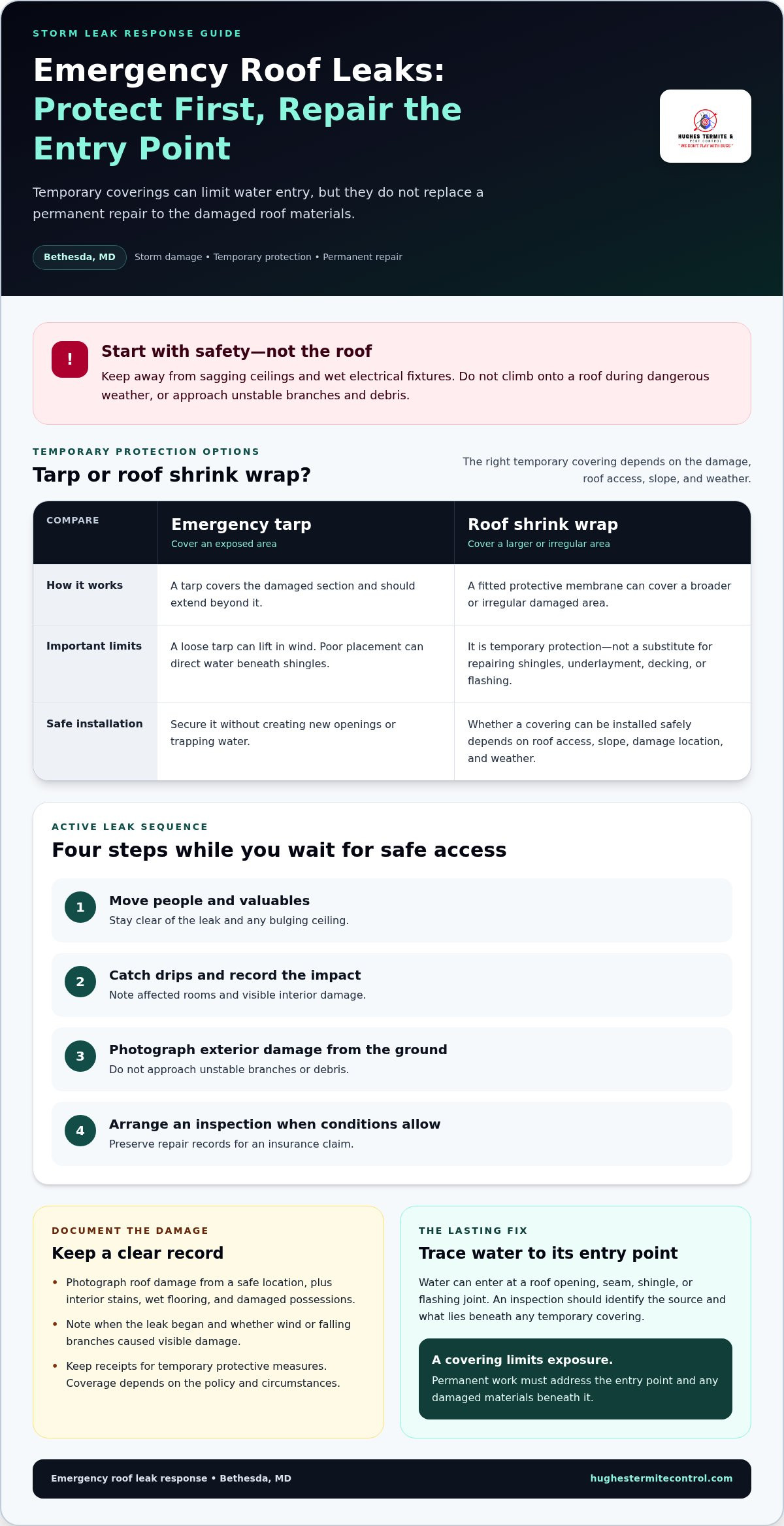
A storm-damaged roof calls for two priorities: limit water entry and protect people indoors. In Maryland, wind-driven rain can push through lifted shingles, damaged flashing, or an exposed roof opening. If water is entering, move belongings away and place a container beneath active drips. Keep away from sagging ceilings and wet electrical fixtures, and don’t climb onto a roof during dangerous weather.
Once conditions allow, document the damage from a safe location. Photograph the roof from the ground, along with interior stains, wet flooring, and damaged possessions. If water spreads beyond an isolated drip, property recovery teams like TBC Restoration can assist with drying out structural materials and mitigating interior damage. Note when the leak began and whether wind or falling branches caused visible damage. An inspection can trace the water path and distinguish a damaged shingle from a failed roof seam or flashing. A gutter clogged with leaves may worsen overflow, but clearing it won’t fix a roof opening.
Emergency tarping can cover an exposed area until permanent repairs are possible. The tarp should extend beyond the damaged section and be secured without creating new openings or trapping water. A loose cover can lift in wind, while a poorly placed tarp can direct water beneath shingles. Roof access, slope, damage location, and weather determine whether temporary covering can be installed safely.
Roof shrink wrap is another temporary covering method. A fitted protective membrane can cover a larger or irregular area, such as damage around a roof addition or a storm-opened section. It provides temporary protection, not a substitute for repairing shingles, underlayment, decking, or flashing. The inspection should identify what lies beneath the covering and what permanent work remains.
After a storm, use this sequence to manage an active leak:
- Move people and valuables away from the leak and any bulging ceiling.
- Catch drips, then record the affected rooms and visible damage.
- Take exterior photographs from the ground, without approaching unstable branches or debris.
- Arrange a roof inspection when weather and access allow, and preserve repair records for an insurance claim.
Temporary measures reduce exposure, but the final repair must address the entry point. A tarp over missing shingles won’t correct failed flashing at a chimney, and a sealed seam won’t repair soaked decking. The roofer should explain which materials need replacement and how the finished repair will be checked. For permanent work after temporary protection, explore roofing services suited to the damage and roof condition.
Sloped-roof shingle, flashing, and chimney repairs
On a sloped roof, leaks often trace to exposed seams, damaged shingles, or flashing joints. A careful inspection identifies the entry point before repair materials are installed.
Missing Shingles and Roof Valleys
A missing shingle can expose seams that should remain covered, creating a path for water. Check surrounding shingles for lifting, cracks, or displaced edges, not just the bare patch. Wind or falling branches can damage several shingles while leaving the roof deck’s condition unclear from the ground.
Roof valleys channel runoff where two slopes meet, so an underlayment or shingle defect there can affect a wider area. Many U.S. building codes require specially designed underlayments in valleys, although some older properties may lack them. During an inspection, note whether water stains align with a valley and whether repairs need to extend beyond the visibly missing shingles.
Flashing and Chimney Repairs
Flashing seals roof transitions, including where shingles meet a chimney. A loose edge, failed seal, or damaged section can let water behind the roofing system. Look for interior stains near the chimney and exterior gaps where metal meets masonry; water may travel before appearing indoors.
A lasting repair addresses the failed connection, not just the visible stain. The roofer may need to remove nearby shingles, inspect the material beneath, and reset or replace affected flashing. Chimney repairs should preserve the overlap between flashing and shingles so runoff sheds down the slope instead of entering the joint.
Asphalt shingle roof repair begins by matching the work to the damage. The installer removes affected shingles carefully, checks the exposed roof surface, and replaces compromised layers before installing new shingles. If only a few shingles are missing and the surrounding roofing remains sound, the repair can stay localized. Wet or deteriorated decking calls for broader work.
SBS polymer-modified shingles may be part of an existing roof, so identify the material during inspection. Shingle type, profile, and condition guide the replacement choice and installation method. Incompatible materials can leave uneven coverage or an exposed seam. The estimate should describe the damaged area, materials to be replaced, and whether underlying layers need attention.
After installation, inspect the repaired slope from a safe location. Check that replacement shingles sit flat, cover exposed seams, and meet valley or chimney flashing cleanly. The repaired area should direct water down the roof, not toward an open joint. Keep repair details with your roofing records, especially if the roof later needs larger repairs or replacement.
Roof flashing, skylight, chimney, and vent leaks
Roof openings and transitions need careful inspection because water can enter at one point and appear elsewhere. In Bethesda, heavy rain, strong storms, and winter freeze-thaw cycles can affect flashing, shingles, and flat roof areas. A roofing contractor traces the water path and checks for roof damage around the suspected entry point. Repairs may involve a localized seal, flashing replacement, or work beneath the visible surface.
At a skylight, inspect the frame, flashing, and the shingles where they meet. Twigs, leaves, and ice on top of the skylight can hold water during heavy rain. Clearing debris can reduce pooling, but it won’t correct a damaged seal or loose flashing. If water stains appear below the skylight, note their location and compare them with the roof opening. Water may travel along framing before reaching the ceiling.
Chimneys and vents create separate roof openings, each with flashing that must direct water onto the roofing surface. A lifted flashing edge near a chimney or a gap around a vent can direct runoff beneath shingles. A contractor should examine surrounding materials and the connection between flashing and roof surface. Sealing an indoor stain or covering a visible gap may leave the underlying entry route open.
Commercial roofs have additional leak points. Flat roofs can hold ponding water, while seams and joints can separate and admit moisture. Leaks may also develop around flashing at vents and rooftop equipment. During an inspection, check seams, flashing, ballast condition, and signs of UV aging. Water near equipment can move beneath a membrane before appearing inside, so a wet ceiling may not be directly below the defect.
To narrow down the source, record the affected room, weather conditions, and nearby roof features. Compare those details with visible changes around skylights, chimneys, vents, or commercial roof seams. This can help distinguish a single failed connection from broader roof damage. A repair plan should identify the entry point and specify which materials need resealing or replacement.
- Skylight: Clear loose debris, then check the frame and flashing for gaps.
- Chimney: Look for separated flashing or damaged shingles along the chimney base.
- Vent: Inspect the flashing collar and adjacent roofing for lifted edges.
- Commercial roof: Check ponding areas, seams, joints, and flashing around equipment.
After repairs, review the completed area for continuous coverage and properly directed runoff. On a commercial roof, confirm that the repaired seam or opening is sealed and functioning properly. The roofing contractor should explain whether the work addressed only the leak source or also damaged materials beneath it. That distinction helps clarify whether a focused repair is sufficient or broader replacement deserves consideration.
Roof leak detection and repair
A ceiling stain marks where water appeared, not necessarily where it entered. For roof leak repair in Bethesda, MD, detection means tracing moisture back through the roof assembly. Water may travel along rafters, beneath underlayment, or across decking before reaching a room. A focused inspection compares indoor evidence with roof features above and nearby.
Start with a simple record. Note which room is affected, when the stain grows, and whether rain or wind preceded it. Photograph the stain and any damp attic areas. A musty smell or wet insulation can reveal concealed moisture. These details help an inspector connect the timing and location of water intrusion with possible roof damage.
Outside, a professional inspection looks for damaged or lifted materials, failed flashing, and storm impacts that aren’t visible from indoors. After severe weather, hidden damage can remain even when shingles appear intact from the ground. An inspection can identify those problem areas and help assess how much reliable service the roof may have remaining. A Bethesda home with a roof over 15 years old is a reason to arrange an inspection.
Diagnosis should follow the evidence, not just the stain’s location. For example, a bedroom ceiling below a chimney may point to the chimney flashing, while water near an exterior wall may involve a roof-to-wall transition. Siding and roofing meet at some of these transitions, so note any nearby gaps, stains, or loose sections. Document visible damage before opening ceilings.
A practical detection and repair sequence keeps the work focused:
- Record interior stains, damp attic areas, and the weather associated with each leak.
- Inspect the roof surface, penetrations, valleys, and wall transitions for likely entry points.
- Trace the moisture path and check the materials beneath the suspected opening.
- Repair the cause, then review the affected area for complete coverage and proper drainage.
That diagnosis also helps distinguish a localized repair from broader deterioration. Repeated leaks or wear across several roof components can indicate the roof is nearing the end of its service life. A professional assessment considers the condition of shingles, flashing, underlayment, and decking together. The written estimate should link observed damage to the proposed repair, rather than listing materials without explaining the leak source.
At a roof edge or wall junction, water can affect both roofing and exterior cladding. If the inspection identifies damaged siding as part of the water-entry path, schedule an exterior siding assessment to address that portion of the property.
Hughes Termite Control: Termite Control
Hughes Termite Control provides termite control when an inspection reveals signs of termite activity around a home. Termites don’t cause roof leaks, so treatment is separate from repairing damaged shingles, flashing, or underlayment. Still, roof and attic work can expose wood that warrants closer attention, such as damaged framing or discarded wings near a window.
Water damage and termite damage can look different, but both warrant careful assessment. Soft or deteriorated wood may result from moisture, while termite activity can leave tunnels or weakened wood. Identifying the cause helps homeowners choose the right next step instead of treating a roof leak as a pest problem.
If you’ve noticed signs of termite activity during roof work, contact Hughes Termite Control to discuss termite control for your home.
Make the Next Repair Decision with a Clear Plan
A roof repair can also provide a useful baseline for caring for your property. Keep the written scope, material details, and completion notes with your home records. If another issue appears later, those documents can help distinguish a new problem from a change in the repaired area.
When arranging roof leak repair in Bethesda, MD, describe what changed inside and outside the home, then review how the proposed work addresses the cause. A clear scope makes it easier to understand what the repair covers and what falls outside its limits. That clarity helps you plan the next step without guessing.
A roofing professional can help homeowners assess roof concerns. Contact Hughes Termite Control today to discuss your roofing needs and take a practical step toward protecting your home.
Frequently Asked Questions
How can I tell if my Bethesda, MD home is a good candidate for roofing projects?
A home is a good candidate for roofing work when its structure can support the planned project and the work addresses a clear need. For example, a localized leak may call for a repair, while a remodel involving rooflines may require broader planning. Note the roof material, visible wear, and any interior moisture before discussing options. In the DmV, consider how local storms and seasonal weather affect the timing and scope of exterior work.
How do I know if my roof needs replacement?
Replacement becomes more likely when wear affects several roof components or repairs keep recurring across different areas. A roof’s described life expectancy is 15-20 years, but age alone doesn’t establish its condition. Look at the combined state of shingles, flashing, underlayment, and decking. For example, repeated leaks alongside widespread shingle deterioration suggest a broader issue than one isolated opening. An assessment can compare repair needs with the roof’s remaining service potential.
How quickly can Bethesda roofers respond to an active leak?
Response timing depends on the leak’s severity, current weather, roof access, and the roofer’s schedule. For roof leak repair in Bethesda, MD, describe whether water is actively entering, which rooms are affected, and whether the ceiling is sagging. Those details help communicate urgency. While waiting, move belongings away from the leak, contain drips indoors, and keep people clear of wet electrical fixtures or unstable ceiling areas.
What are common causes of roof leaks in Bethesda homes?
Common sources include storm-displaced shingles, deteriorated flashing, and failed seals around skylights, chimneys, or vents. Bethesda’s heavy rain and freeze-thaw cycles can stress roof joints and materials. Tree branches may scrape shingles, while leaves and twigs can obstruct drainage and encourage water buildup. On a flat roof, ponding water or separated seams can let moisture beneath the surface. The indoor stain may appear away from the actual entry point.
How can homeowners temporarily stop a roof leak safely?
Start indoors: place a container beneath drips, move furniture, and stay clear of bulging ceilings and wet electrical equipment. Take photos and note where water appears. Don’t climb onto a wet, steep, or storm-damaged roof to apply a tarp. Temporary exterior covering requires stable access and secure placement; a loose tarp can catch wind or direct water beneath roofing materials. Arrange an inspection so the underlying opening receives a permanent repair.
When does a roof leak require repair versus full roof replacement?
A repair is generally appropriate when the leak comes from a limited, identifiable defect and nearby materials remain sound. Consider replacement when damage extends across multiple roof components or repairs keep recurring. For example, one failed vent flashing differs from widespread deterioration involving shingles, underlayment, and decking. The decision should reflect the roof’s overall condition, not just the visible ceiling stain or the age of one damaged section.
Does homeowners insurance cover roof leak repairs in Maryland?
Coverage depends on policy terms, the cause of the leak, and the circumstances surrounding the damage. Review the sections describing covered events, exclusions, deductibles, and claim procedures before assuming a repair qualifies. Keep photos, dates, and receipts for temporary protection, and record damage that appeared after a storm. Those records can help explain the loss when submitting a claim, but the policy determines how the insurer handles it.
How do Bethesda roof repair costs vary by roofing material and damage severity?
Costs depend on the roofing material, leak location, access, and damage severity. A localized shingle repair usually involves less work than replacing damaged decking or correcting several failed components.


