

A siding repair project can address more than the siding itself. In Alexandria, siding, trim, gutters, windows, and doors can be coordinated as one exterior project. If you’re planning exterior siding repair in Alexandria, VA, this approach can create a cohesive finish while addressing related weatherproofing concerns. Properties in regulated historic districts may have design-review requirements before exterior changes.
It makes sense to want repairs that solve the visible problem without overlooking connected parts of the exterior. The challenge is deciding what needs attention now, which siding material suits your home, and how to sequence the work. This guide explains how to compare common siding types and contractor proposals, assess repair needs, and plan coordinated exterior work. You’ll also learn what to consider when scheduling around Alexandria’s seasonal conditions, so you can make decisions in a clear order instead of treating every repair as a separate project.
Key Takeaways
- Compare siding materials by maintenance needs, appearance, and how they suit your home before choosing a repair or replacement approach.
- Look for a clear project scope that explains how damaged siding, trim, and nearby exterior details will be handled together.
- Use visible signs such as loose siding, warped panels, or deteriorated trim to decide when the exterior needs a closer evaluation.
- Plan coordinated work on siding, gutters, windows, and doors to create a consistent finish and address related weatherproofing needs.
- If your home is in a regulated historic district, account for applicable design-review requirements before making exterior changes.
How do I choose Exterior and Siding Contractors in Alexandria, VA near me?
Start by defining the scope: repair, partial replacement, or complete siding replacement. For siding work in Alexandria, the scope should identify materials, damaged areas, trim, and any connected exterior work.
Repair or Full Replacement
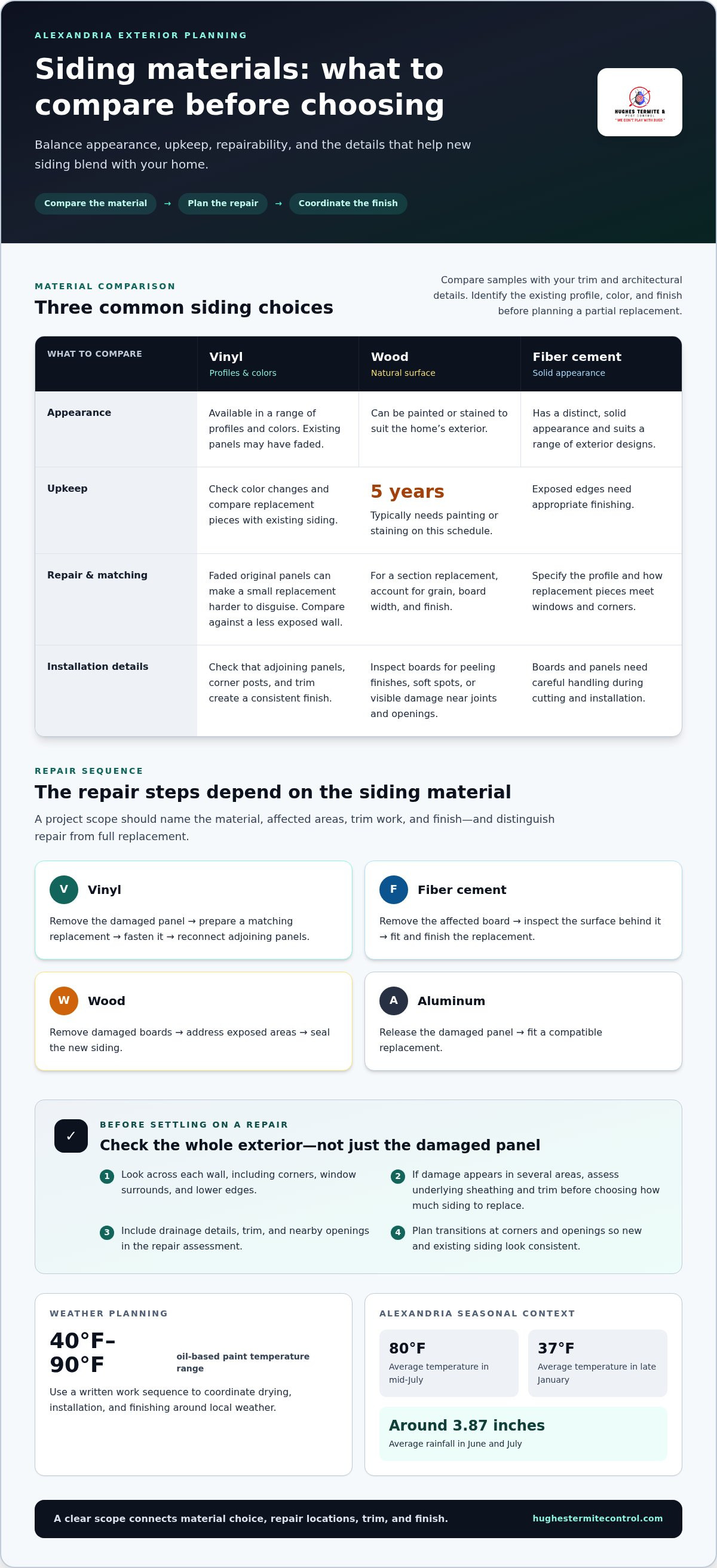
Localized damage often points to a repair, while widespread cracking, warping, loose panels, or recurring moisture problems can indicate a broader issue. Check each wall, including corners, window surrounds, and lower edges. If damage appears in several areas, assess whether the underlying sheathing or trim also needs attention before deciding how much siding to replace.
A material-specific repair follows a practical sequence. For vinyl, remove the damaged panel, prepare a matching replacement, fasten it, and reconnect the adjoining panels. For fiber cement, remove the affected board, inspect the surface behind it, then fit and finish the replacement. For wood, remove damaged boards, address exposed areas, and seal the new siding. For aluminum, release the damaged panel and fit a compatible replacement.
A useful project scope describes repair locations, siding material, trim work, and finish. It should distinguish repairs from complete replacement and explain how transitions between old and new siding will be handled. For example, replacing panels on one wall may require a plan for corners and openings so the finished installation looks consistent, not patched.
Consider roof replacement alongside siding only when both systems need work. Roof edges, flashing, and siding meet at vulnerable transitions, so sequencing the tasks can help coordinate the exterior details. A clear plan identifies which work comes first and how the roof and siding will meet around eaves, windows, and other openings.
Climate and Moisture Effects
Alexandria’s seasonal conditions influence when crews can repair, install, and finish siding. The average temperature reaches 80°F in mid-July and falls to 37°F in late January. The area receives around 3.87 inches of rain on average in June and July. Heat, rain, wind, winter freezes, and seasonal storms can all expose weak seams or damaged panels.
Moisture behind cracked or warped siding can affect wall materials, while loose panels may admit wind-driven rain. Include drainage details, trim, and nearby openings in the repair assessment, not just the visible panel. If a project includes oil-based paint, schedule that work within the 40°F to 90°F temperature range. A written sequence helps coordinate drying, installation, and finishing around local weather.
Siding types, including vinyl, wood, and fiber cement
Choosing siding means balancing appearance, upkeep, repairability, and suitability for a Virginia home. Vinyl, wood, and fiber cement differ in texture, finish, and maintenance needs. Compare samples with your home’s trim and architectural details, then consider the repairs each material may need over time. A clear project scope should identify the existing material and explain how replacement pieces will blend with it.
Vinyl siding comes in a range of profiles and colors, but repairs can be harder to disguise when the original panels have faded. For a small damaged area, compare replacement panels with siding on a less exposed wall, where color changes may be less pronounced. Partial replacement can preserve sound sections while addressing localized damage. Check that adjoining panels, corner posts, and trim create a consistent finish rather than treating the damaged panel as an isolated piece.
Wood siding offers a natural surface that can be painted or stained to suit a home’s exterior. It needs regular care: wood siding typically needs painting or staining every five years. Inspect boards for peeling finishes, soft spots, or visible damage, especially near joints and openings. When replacing only a section, account for differences in grain, board width, and finish. Matching these details helps the repaired area sit naturally beside existing boards, and homeowners can turn to Pro Painter USA for professional exterior painting to ensure new and existing sections blend seamlessly.
Fiber cement contains cement and has a distinct, solid appearance that suits a range of exterior designs. Its boards and panels need careful handling during cutting and installation, and exposed edges need appropriate finishing. Before choosing fiber cement, consider the siding profile, your home’s trim details, and how replacement pieces will meet windows and corners. A clear material specification helps keep the installation consistent across walls and prevents mismatched details at transitions.
Compare materials beyond the front elevation. A shaded wall may retain moisture differently from a sunny wall, while an exposed corner can show wear sooner. Vinyl, wood, and fiber cement each need a repair plan suited to their construction and finish. For example, replacing faded vinyl on one wall may look different from repairing a painted wood section. Note the existing profile, color, and finish before settling on a partial replacement.
Ask for a written scope that names the material, affected elevations, trim details, and finish work. This makes it easier to compare proposals based on the same work rather than broad labels such as “quality work.” If siding is part of a wider exterior update, review siding project options while planning the material and repair scope.
Contractor reviews and customer experiences
Use reviews to understand how a contractor handles siding details, not just whether customers liked the finished appearance. Compare comments about scheduling, communication, cleanup, and responses to problems. For example, a review describing how a crew handled a damaged trim board may offer more insight than a brief rating without project details. Look for repeated, specific descriptions across separate customer experiences.
Past projects can show whether a contractor has worked with siding similar to yours. Compare examples by material, profile, and exterior features, such as a home with wood lap siding and detailed window trim. Check whether project photos show corners, transitions, and repaired sections, not just a wide front view. These details help you judge whether the work suits your home’s style and practical needs.
Ratings can help narrow your search, but read the written feedback behind them. Separate comments about communication from those about installation quality, and note whether the review describes a repair or full replacement. A homeowner’s account of a clear work plan and well-finished repair gives more context than a rating alone. Treat unusually broad praise or criticism as a reason to read other specific experiences.
Use a consistent process to compare siding contractors in Alexandria. Review each proposed scope for the same items: siding material, affected walls, trim, surface preparation, and cleanup. Then compare those details with reviews and project examples. If a past project shows a similar home but no close views of windows or corner boards, ask how those transitions would be handled in your project. This keeps the decision grounded in comparable details.
Historic-district status matters when reviewing a contractor’s experience. Siding replacement in Alexandria does not require a permit unless the property is in one of the city’s historic districts. Homeowners in a regulated historic district should account for applicable design-review requirements before exterior changes. Look for project examples that show care for the home’s existing character, such as matching siding profiles and preserving distinctive trim details.
Keep a short comparison record as you assess each contractor: note the project scope, material, relevant past work, and patterns in customer feedback. Alexandria has 121 local siding and exterior professionals listed in the research, so a focused checklist can make the options easier to compare. Prioritize evidence tied to your specific project, such as a similar siding repair, rather than choosing on a broad rating alone.
Siding repair in Alexandria, Virginia
Alexandria has 121 listed siding and exterior professionals serving local homeowners. Ratings vary across review platforms, so compare comments about projects similar to yours, such as replacing warped panels or repairing siding around windows. Reviews that explain the project scope, communication, and follow-through offer more context than a score alone. For a search such as “exterior siding repair Alexandria VA,” look for feedback that describes the actual work rather than broad praise.
Use a consistent process to assess siding professionals. First, identify affected walls, trim, windows, and gutters. Next, compare written scopes for materials, preparation, repairs, and cleanup. Then review examples of completed work on homes with similar siding. This helps distinguish a focused repair from a broader exterior renovation. If a proposal describes only general siding work, check whether it addresses the specific damage you recorded.
In Virginia, cracks, warped panels, and loose siding can let moisture reach materials behind the exterior. A durable repair addresses the point of entry, not just the visible mark. For example, if water appears near a window, include the siding joint, trim, and nearby flashing in the inspection. If gutters overflow beside a damaged wall, consider whether drainage contributes to the recurring wet area.
Homeowners insurance coverage for siding damage in Virginia depends on the policy wording and documented cause. Review the policy’s covered causes, exclusions, deductible, and claim procedures. For example, record the location and appearance of storm damage, then keep photographs and repair estimates with the claim records. Wear from age or maintenance issues can be treated differently from sudden damage, so the cause and policy terms matter.
Coordinate related exterior renovations when the same elevation needs attention. A siding repair beside a window replacement should account for how new trim meets the existing cladding. If gutters are also being replaced, consider their placement alongside the roof edge and siding details. For homeowners comparing “exterior siding repair Alexandria VA” options, a written sequence can clarify how each part of the exterior work fits together.
Before work begins, record affected areas, visible symptoms, and nearby exterior features. A wall-by-wall checklist can note loose boards, cracked panels, deteriorated trim, and water marks. Share those observations when comparing scopes, then use the same checklist to review the completed work. This practical record keeps the repair focused and helps you see whether the agreed areas received attention.
Alexandria has 121 listed siding and exterior professionals, and their ratings vary across review platforms. Compare reviews describing similar repair work, including project scope, communication, and follow-through.
Planning siding projects in Alexandria
Plan siding work as part of the whole exterior, not as an isolated surface repair. In Alexandria, siding, trim, gutters, windows, and doors can be coordinated to create a cohesive appearance and address related weatherproofing concerns. Start with a wall-by-wall scope identifying damaged areas and connected details. For example, note whether loose siding meets a window surround or a gutter downspout.
Set the work sequence before installation begins. First, identify exterior components that need repair or replacement. Next, decide how their connections will be handled. If a window is being replaced beside damaged siding, plan how the new trim will meet the siding edge. If roofing work is included, account for the roofline transition before crews close in adjoining surfaces. This sequence helps prevent one finished component from blocking access to another.
Historic status is an important planning factor in Alexandria. Siding replacement does not require a permit unless the property is in one of the city’s historic districts. Homeowners in a regulated historic district should account for applicable design-review requirements before making exterior changes. Include this step early, especially if the plan changes the home’s visible siding profile, trim, or window details.
Choose materials and finishes with the full elevation in view. A replacement panel beside older siding may differ in color or texture, while new trim can change the visual line around windows and doors. Compare samples with the home’s existing features and record decisions in the project scope. For example, specify which elevations receive new siding and how corners, openings, and transitions should look.
Weather also affects project sequencing. Alexandria homes experience summer heat, heavy rain, wind, winter freezes, and seasonal storms. Build a practical schedule that accounts for exterior work and finishing steps instead of planning each trade independently. For example, coordinate gutter placement with finished siding edges so drainage directs water away from vulnerable joints. Keep materials protected and work areas organized between stages.
Before work starts, put the shared plan in writing. List each component, the order of work, material choices, and the areas that need protection. This makes it easier to see whether roofing, siding, and other home improvement tasks fit together. For a coordinated exterior project, plan your siding and roofing work with the full scope in view.
Hughes Termite Control: Termite Control
Hughes Termite Control provides termite control for homeowners who notice signs of termite activity while planning exterior repairs. Damaged or deteriorated wood around siding and trim can warrant closer attention, especially if repairs expose previously concealed areas. Keep pest concerns and siding decisions distinct: address the siding damage as planned, and seek termite control when there are signs of an infestation.
Termite control is the relevant next step when suspected activity raises concerns about wood in or around your home. For unrelated siding wear, such as a cracked panel without signs of pests, focus on the exterior repair plan instead. Contact Hughes Termite Control to discuss termite control for your home.
Move Forward With a Clear Exterior Plan
Before starting exterior siding repair in Alexandria, VA, turn your decisions into a practical project brief. Record the areas you want addressed, the materials you’re considering, and any exterior work that may affect the sequence. This gives you a useful reference as plans develop and helps keep your home’s long-term upkeep in view.
Exterior work can also reveal concerns beyond siding. If you notice signs of termite activity, Hughes Termite Control offers termite control and wood-destroying organism inspections. The company also offers bed bug control and wildlife control for separate pest concerns. Each service addresses a different issue, so focus on the one that matches what you’ve observed.
A considered next step is better than rushing into a larger project. Use your project brief to describe the work and identify the concern you want addressed. For pest-related concerns, contact Hughes Termite Control today. A clear starting point can help you move ahead with confidence.
Frequently Asked Questions
Can siding, trim, gutters, windows, and doors be coordinated in one project?
Yes. Coordinating these exterior elements can create a cohesive appearance and help address connected weatherproofing concerns. For example, replacing a window while repairing nearby siding lets you plan the trim and siding transition together. Include gutters in the overall plan so their placement works with the finished exterior. A single project outline can identify which elements are changing and how their edges and connections should meet.
Can you work on older Alexandria homes?
Yes. Siding work can be planned around an older home’s existing materials, trim, and architectural details. For example, a repair may need to preserve a distinctive siding profile or align replacement boards with original window surrounds. If the property is in a regulated historic district, account for applicable design-review requirements before exterior changes. The home’s condition and the scope of work guide the repair approach.
Do You Need a Permit for Siding Replacement in Alexandria, VA?
Alexandria siding replacement does not require a permit unless the property is in one of the city’s historic districts. For a home in a regulated historic district, consider applicable design-review requirements before making exterior changes. This distinction matters even when the project focuses on appearance, such as changing siding profiles or visible trim. Identify the property’s historic-district status early in your planning.
Need a pro for your siding service project in Alexandria, VA?
Hughes Termite Control offers siding as part of its home improvement services. If your project involves damaged panels, an exterior update, or siding alongside other renovation work, define the areas and materials you want addressed. That gives you a clear starting point for discussing the project. For Alexandria homeowners, consider how siding connects with nearby windows, doors, and trim when outlining the work.
What siding materials are common in Alexandria homes, and how do repair methods differ?
Vinyl, wood, and fiber cement are common siding options to compare. Vinyl repairs typically involve removing a damaged panel and fitting a compatible replacement. Wood repairs may require replacing a board and restoring its painted or stained finish. Fiber cement repairs involve removing and fitting boards carefully around edges and adjoining trim. The material, finish, and existing profile determine which repair approach suits the home.
Do siding repairs in Alexandria require a building permit or HOA approval?
Siding replacement in Alexandria does not require a permit unless the property is in one of the city’s historic districts. If a home is in a regulated historic district, consider applicable design-review requirements before exterior changes. HOA approval is a separate matter governed by the community’s rules and documents. Review those requirements before changing visible features such as siding color, profile, or trim.
What should homeowners check before hiring a siding repair contractor in Alexandria?
Compare the proposed scope, material, affected areas, and treatment of transitions around windows and trim. Check that the plan addresses the specific damage instead of describing only general siding work. Review relevant project examples and customer feedback for details about communication and finished work. For homes in a regulated historic district, include design-review needs in the project plan before exterior changes begin.


