

A roof inspection is useful when you know what the inspector examined and what the findings mean. If you’re searching for a local roof inspection near me in the DmV area, ask which areas the inspection covers, how findings will be documented, and which repairs need attention now versus monitoring. Clear answers help you decide what to do without guessing about your roof’s condition.
It’s reasonable to want a straightforward process, especially after a storm or when you’ve noticed a leak, missing shingles, or another visible change. This guide explains what a roof inspection can cover in the DmV area, when to arrange one, and what to ask before work begins.
You’ll also learn what can shape repair recommendations and how to interpret inspection findings. The goal is to help you understand your roof’s condition and choose a sensible next step.
Key Takeaways
- Ask what the roof inspection covers and how the findings will be documented so you can understand the condition of your roof.
- Use the inspection report to distinguish repairs that need attention from issues to monitor, and clarify the reasoning behind each recommendation.
- Consider an inspection after a major storm, before buying or selling a home, or when the roof is more than 15 years old.
- When speaking with a roofing contractor, ask about the inspection process, the report, and how proposed work relates to the findings.
- If your concern is termites rather than roof condition, Hughes Termite Control offers termite control.
Roof inspections in Salt Lake City and nearby areas
A search for a local roof inspection near me should lead to clear information about location, inspection scope, and findings. In the DmV area, homes vary in roof design, materials, and maintenance history. Those differences affect what an inspector examines and how the findings apply to your property.
Before arranging an inspection, provide the property address and confirm that the visit covers it. Ask which roof areas the inspection will assess and what it includes. Across the DmV area, distance, roof access, and the reason for the inspection can shape the appointment plan.
Local conditions matter, but an inspection starts with the roof itself. The inspector may assess visible shingles or other roofing material, flashing, roof edges, drainage, and areas around roof penetrations. A steep roof, limited access, or signs of water entry can affect how the inspection proceeds. Ask whether accessible attic areas are included.
Roof inspection versus roof certification: An inspection documents observed conditions. A certification states whether a roof meets specified criteria for a particular purpose or period. Ask what the document covers and what evidence supports its conclusions, since the terms aren't interchangeable.
Requirements for insurance claims and home sales: Ask the insurer or the people handling the sale which records are required for that transaction. An inspection report can describe visible roof conditions, but the policy or sale agreement determines which documents are needed.
How much does a roof inspection cost in this area? The price depends on the property and inspection scope. Request a quote from Hughes Termite Control, noting that roof size, pitch, access, and requested documentation affect the work involved.
Before scheduling, gather the property address and note any visible issue, such as a ceiling stain or damaged gutter. Share when the concern appeared and whether it followed a storm. These details help focus the inspection without assuming the cause.
When comparing quotes, ask each roofing company the same practical questions:
- Which roof components and accessible areas are included?
- Will findings include photographs and written explanations?
- Does the inspection address a specific concern or provide a broader condition review?
- What additional work, if any, would require separate approval?
Consistent questions make quotes easier to compare. One may cover a narrower inspection, while another includes more documentation. Compare the work described, not just the total.
For an older home in the DmV area, ask how the report distinguishes urgent defects from routine maintenance observations. For a home sale, explain the documentation needs before the visit. A clear scope makes the inspection more useful to owners, buyers, and insurance claim discussions.
Use the property address, roof access, and reason for the inspection to define the task. A written scope and clear findings give you a practical basis for deciding what to address next.
Roof inspection process and reports
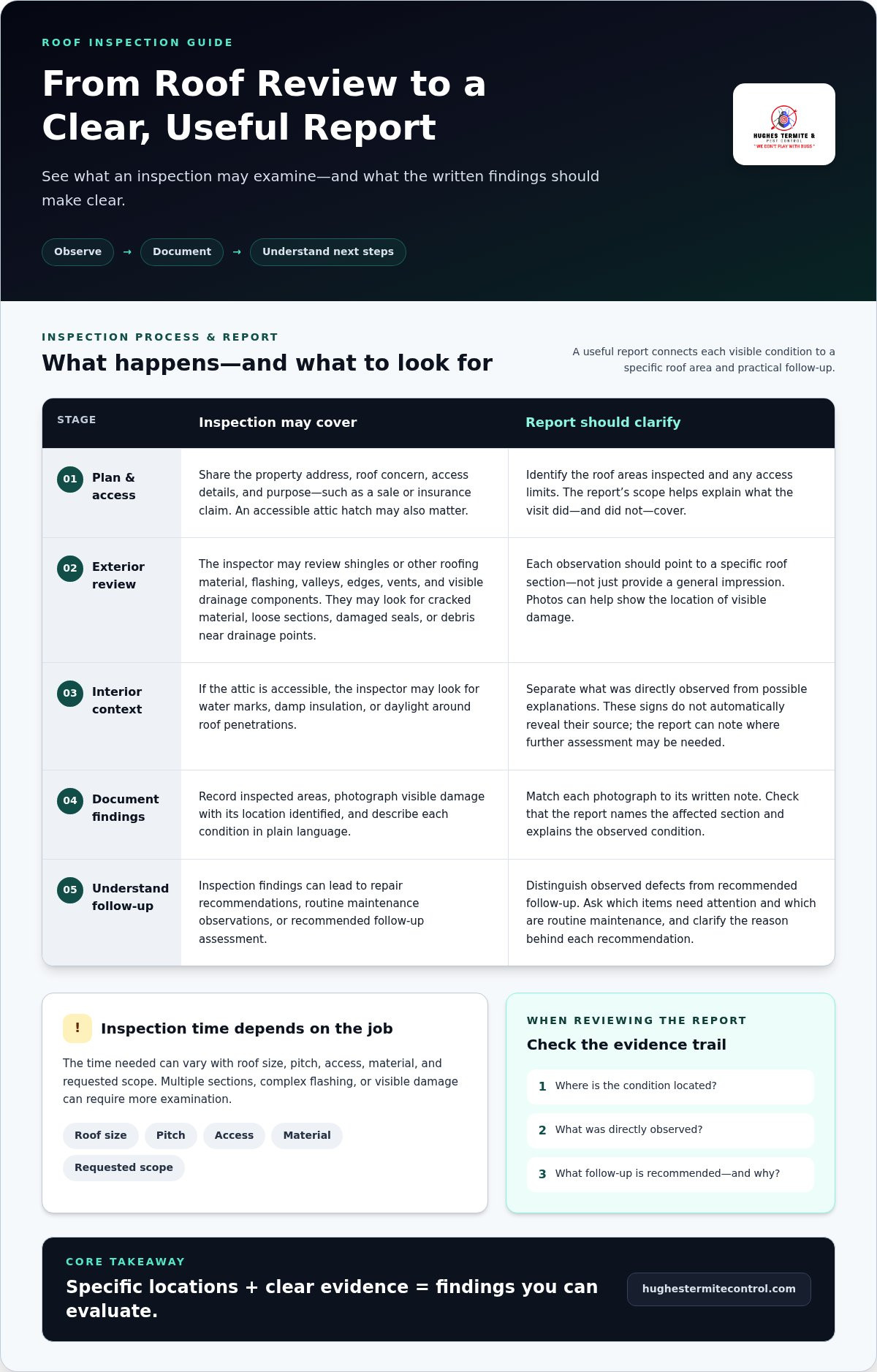
A clear inspection follows a defined process, from access planning to written findings. The report should connect visible conditions, such as lifted shingles, to specific locations and practical next steps.
Inspection Duration
Inspection time depends on roof size, pitch, access, material, and requested scope. A simple roof with clear access takes less examination than one with multiple sections, complex flashing, or visible damage. Ask what the time estimate includes, such as an exterior review, accessible attic checks, photographs, and report preparation. Those details clarify what the appointment covers.
Scheduling an Inspection
When scheduling, share the property address, roof concern, and access details. For example, mention a ceiling stain, missing shingle, or recent roofing work. Make sure the inspector can reach relevant areas, including an accessible attic hatch. If the inspection is for a sale or insurance claim, explain that purpose early so the report can address it.
How long does a roof inspection take, and when can it be scheduled? Duration depends on roof complexity, accessibility, and the requested review. Coordinate property access and explain the inspection’s purpose when arranging an appointment. The date depends on the roofing company’s calendar.
A careful inspection starts with the exterior. The inspector reviews shingles or other roofing material, flashing, valleys, edges, vents, and visible drainage components. They look for cracked material, loose sections, damaged seals, or debris collecting near drainage points. Each observation should identify a specific roof area, not just give a general impression.
Interior observations can add context when the attic is accessible. The inspector may look for water marks, damp insulation, or daylight around roof penetrations. These signs don’t automatically reveal the source, so ask how the report distinguishes direct observations from possible explanations. A sound report states what was seen and where further assessment may be needed.
A useful process keeps inspection findings traceable from start to finish:
- Record the roof areas inspected and any access limits.
- Photograph visible damage, with the location identified.
- Describe each condition in plain language.
- Separate observed defects from recommended follow-up.
When you receive the report, match each photograph to its written note. Check whether it identifies the affected section, explains the observed condition, and separates repair recommendations from routine maintenance. If a note says “flashing concern,” ask which roof penetration or edge it refers to. Specific locations make follow-up discussions more productive.
Keep the report with your property records, along with related photographs and roofing invoices. If a later inspection identifies a change, those documents help show what was observed before. A useful report is a record to refer to, not simply a list of repairs.
When to inspect an older or storm-damaged roof
Roof age and storm exposure are practical reasons to arrange an inspection. Consider a review after a major storm, before buying or selling a home, or when the roof is more than 15 years old. These situations make a documented review useful: it can identify visible conditions and help you decide what to address next.
Pay attention to changes on an older roof, such as curling shingles, lifted edges, exposed fasteners, or granules collecting near downspouts. One sign alone doesn’t establish the roof’s overall condition. Ask the roofer to identify the location, describe the observation, and explain whether it affects nearby flashing, roof edges, or drainage.
After a storm, look from the ground for displaced shingles, debris, dented metal, or a damaged gutter. Inside, note new ceiling stains or damp areas, and record the room and when you first saw them. Don’t climb onto a wet or damaged roof. Share your observations so the inspector can focus on affected areas.
An inspection is especially useful when several signs appear together. For example, a ceiling mark beneath a roof valley and nearby shingle damage give the inspector specific locations to assess. Ask for photographs and notes connecting each observation to a roof section. This helps distinguish visible storm effects from older wear.
If you’re preparing to sell a home, schedule the inspection early enough to review the findings before deciding about repairs. If you’re buying, use the report to understand the observed roof condition and clarify which items need attention. Sellers can keep the report with roofing invoices and maintenance records to give buyers a clearer timeline.
For an insurance claim, read your policy and contact your insurance representative about required documentation and claim steps. Keep the inspection report, dated photographs, and storm or leak records together. An inspection describes observed conditions; the policy and claim process determine how those records are used.
Use this short preparation list before the appointment:
- Write down when the storm, leak, or visible change occurred.
- Photograph ground-level damage and interior stains from safe locations.
- Point out the affected room, roof section, or gutter to the inspector.
- Gather prior inspection reports and roofing invoices, if available.
These steps give the inspection a clear starting point. For a roof over 15 years old, a post-storm concern, or a home sale, share the reason for the review when scheduling. Then compare the written findings with your photographs and records before deciding which follow-up deserves priority.
Benefits of regular roof inspections
Homeowners can use inspections to track changes before choosing maintenance or repairs. Roofing Utah recommends an inspection after a major storm, before buying or selling a home, or when the roof is more than 15 years old. These situations offer clear reasons to review roof condition.
How often should homeowners get a roof inspection? Arrange one after a major storm, before a home sale or purchase, or once the roof is more than 15 years old, as Roofing Utah recommends. Between those points, respond to visible changes such as a stain, loose shingle, or gutter overflow.
A roof inspection can reveal conditions that aren't obvious from the ground. For example, the inspector may notice a lifted shingle near flashing or debris blocking a roof valley. Knowing the location helps you track the area and understand the report’s recommendations.
Inspection records also help you compare roof conditions over time. Keep each report with its date, photographs, and repair notes. If a later report shows a change near the same vent or roof edge, you can see what shifted instead of relying on memory.
Drainage is another practical focus. A clogged gutter can leave water sitting near the roof edge, while a sagging or separated section may signal a maintenance concern. Ask the inspector to identify the area and explain whether the report recommends cleaning, repair, or further review.
Regular reviews make maintenance planning more specific. Rather than treating every observation as equally urgent, sort report notes into immediate concerns, routine upkeep, and items to monitor. A damaged shingle and accumulated leaves, for example, call for different next steps.
Use inspection notes to prepare for a conversation about roofing work. Match each proposed repair to a report photograph or location, then ask which condition the work addresses. This keeps the discussion tied to observed findings instead of broad statements such as “the roof needs attention.”
Reports can also inform property decisions. Buyers can use documented roof conditions to plan follow-up questions. Sellers can organize inspection records and invoices before listing, making it easier to discuss past maintenance accurately.
To get practical value from each review, homeowners can:
- Save dated reports and roof photographs together.
- Note leaks, ceiling marks, or gutter changes as they appear.
- Compare new observations with earlier report locations.
- Ask which findings need action and which are maintenance notes.
These steps turn an inspection into a useful property record. A storm, a sale, a purchase, or a roof older than 15 years gives homeowners a clear point to arrange a review. Between those triggers, visible changes can guide the next decision.
Finding local roof inspectors
Choose an inspection that fits your reason for arranging it. A storm review, home purchase, and routine condition check may call for different documentation. Before comparing options, write down the property address, roof concern, and purpose. This gives each roofing company the same starting point and makes its proposed scope easier to assess.
Ask what the inspection includes and look for specific answers. A useful scope identifies roofing materials, flashing, valleys, edges, drainage, and any accessible interior areas. If you’re concerned about a leak near a chimney, ask whether the inspector will examine that roof junction. The answer should explain the inspection, not jump straight to installation or repair work.
Compare written quotes by scope, not price alone. One may include exterior observations and photographs; another may also cover accessible attic areas and a written report. Ask what each quote includes, what it excludes, and whether follow-up work is separate. A clear breakdown helps you compare equivalent services.
Use these questions during the initial conversation:
- Which roof areas and components will the inspection cover?
- Will the report include dated photographs and locations?
- How will the inspector distinguish observed damage from possible causes?
- What findings would prompt a recommendation for further evaluation?
- Will you receive the report in writing, and what does it explain?
Look for explanations grounded in observable details. “Damage near the north roof edge,” for example, is more useful than “the roof needs work.” Ask the inspector to connect each recommendation to a photograph, location, or visible condition. You should understand what was observed before considering a repair.
References can provide context, but ask about comparable work rather than relying on general praise. A homeowner may recommend a contractor for roof replacement, but that experience doesn’t explain the inspection process. Ask about report clarity, communication, and whether recommendations matched documented findings.
Keep the conversation focused on evidence and scope. If repair or installation is recommended, ask which finding supports the work and what alternatives were considered. A sound recommendation describes the problem, its location, and the proposed next step in plain language.
After reviewing quotes, compare the inspection scope, report detail, access plan, and follow-up recommendations. Reputable regional contractors such as Rescue Roofing Tulsa illustrate how professional evaluations and clear reporting help homeowners make informed repair decisions. Choose the option that clearly addresses your reason for the inspection. Keep the written scope with the final report so you can see what was covered and refer to the findings later.
Hughes Termite Control: Termite Control
Hughes Termite Control provides termite control for concerns separate from roof damage. A roof inspection may identify damaged wood or areas with moisture, but those observations alone don't establish termite activity. If you notice suspected signs, such as damaged wood near an attic or roof structure, treat them separately from shingle, flashing, or drainage repairs.
Keep the roof report and any photographs available when discussing the concern. This helps distinguish observed roof conditions from signs that may need pest attention. Hughes Termite Control also offers bed bug control, wildlife control, and decking, for concerns within those service areas.
For termite concerns, contact Hughes Termite Control to discuss termite control.
Take the Next Step With Confidence
A roof inspection report can help you decide what needs attention next. Keep it with your home records and use the findings to guide maintenance or repair discussions. If you’re searching for a local roof inspection near me, prioritize clear documentation and recommendations tied to specific roof conditions.
Some home concerns are separate from roofing. Hughes Termite Control provides termite control, bed bug control, and wildlife control. If you’re dealing with one of these issues, choose a next step that addresses the problem rather than treating it as a roof defect.
For pest-related concerns, contact Hughes Termite Control to discuss the appropriate service. A clear understanding of the issue is a practical place to begin, and you can move forward one decision at a time.
Frequently Asked Questions
What questions should I ask a roofing contractor?
Ask who will conduct the inspection, what the written report includes, and how conditions will be documented. In the DmV area, explain whether you need the review for a leak, a planned sale, or another purpose. Ask how the inspector separates findings from repair proposals. If roof replacement is recommended, request an explanation of why repair would not address the documented concern.
How can I assess roof inspection companies near me with reviews and ratings?
Use reviews as context, not as proof of roof condition. For Salt Lake City contractors, look for detailed feedback about communication, report clarity, and whether recommendations matched the customer’s stated concern. A short rating alone can’t show how an inspection was performed. Compare review details with the company’s written scope and sample report, then focus on whether its process answers your needs.
What is included in a professional roof inspection?
A professional inspection generally reviews visible roofing materials, flashing, roof-to-wall transitions, penetrations, and drainage. The inspector may also review accessible interior areas for signs that help explain a concern. Ask whether the written report identifies inspected sections and access limitations. For example, a report about a leak near a vent should distinguish the observed condition from a suspected cause.
How do I find a licensed and insured roof inspector near me?
Licensing requirements for roofers can vary by location. For property owners seeking a licensed roofing contractor in the San Diego area, higherlevelsroofing.com provides an example of verified credentials and professional roofing standards. In your area, ask the contractor which credential applies to the work and request current documentation. Also ask for proof of insurance and confirm that its details match the contractor performing the inspection. Keep copies with the inspection agreement and report, so you can identify who performed the work.
What signs mean a roof needs immediate inspection or repair?
Arrange prompt attention for an active leak, a visibly sagging roof section, missing or displaced shingles, or storm debris that has damaged roof components. A new ceiling stain beneath a roof valley is also a reason to document the location and seek an assessment. Don’t climb onto a damaged roof. Note what you can see safely from inside or at ground level.
What should I watch for with a free roof inspection near me?
Before scheduling, ask what the visit includes, whether you’ll receive written findings, and whether any repair estimate is separate. Be cautious of pressure to approve work before you’ve reviewed the inspection evidence. A useful assessment should explain the observed condition and connect recommendations to specific roof areas. In the Salt Lake City area, get the agreed scope in writing before the inspection begins.
how much does a roof inspection cost in my area
The cost depends on the property and inspection scope. Roof size, pitch, access, and requested documentation affect the work involved. Request a quote for pricing.


