
A general home inspection may not answer the termite questions that matter at closing. A real estate termite inspection Washington DC buyers and sellers arrange is a focused check for wood-destroying organisms and related damage, with scope and report requirements that may depend on the contract or lender.
It’s useful to clarify early who is arranging the inspection, which areas need access, and where the report must go. A standard home inspection may not include a focused check for termites or other wood-destroying organisms, so don’t assume it meets a transaction’s separate documentation requirements.
This checklist explains what an inspection typically covers, how to prepare the property and gather relevant records, and what to look for in the report. It also covers practical next steps if the inspector finds evidence of activity or damage. Hughes Termite Control provides wood-destroying organism inspections and termite control in the DMV.
Key Takeaways
- Review the transaction’s inspection instructions, access arrangements, and report delivery requirements before scheduling.
- A real estate termite inspection Washington DC transaction participants arrange focuses on wood-destroying organisms and related damage. A general home inspection serves a different purpose.
- Prepare by clearing safe access to areas that can be inspected and gathering relevant treatment records.
- Distinguish documented observations from conclusions about concealed damage or repair costs.
- If findings indicate termite activity, follow the transaction instructions and use the report to determine appropriate next steps, including whether treatment is relevant.
Why a Real Estate Termite Inspection Matters in Washington, DC
A termite inspection for a property sale focuses on evidence of wood-destroying insects and related damage in areas the inspector can access. The written report records what was observed, giving buyers, sellers, and other transaction participants information to consider alongside the rest of the property records.
A termite inspection is different from a full home inspection. It focuses on wood-destroying organisms and signs of their activity, while a general home inspection assesses a broader range of visible systems and components. The inspections serve different purposes, so one should not be assumed to include the other’s scope.
In Washington, DC, buyers may want information about possible insect activity, sellers may need to share relevant property records, and agents may coordinate access and paperwork. A lender may also specify an inspection or report for the transaction. Requirements vary, so use the purchase agreement and financing instructions to identify what is needed instead of assuming one form or process applies to every sale.
Inspection notes let transaction participants discuss documented observations rather than rely on guesswork. The report may also prompt questions about prevention. For background, a termite barrier is a physical or chemical measure intended to help block termite access to a structure. Whether such a measure is relevant depends on the property and its circumstances.
Who may request or rely on the inspection?
The purchase agreement and financing instructions determine how the inspection fits into a particular transaction. A buyer may request one under the agreement, or a seller may arrange one while preparing property information. An agent may coordinate access and document delivery, and lender instructions may specify whether an inspection or particular report is needed.
Before scheduling, review the written requirements and note who is responsible for arranging the inspection, who needs the report, and any deadline. Resolve conflicting instructions through the transaction process before booking. For a real estate termite inspection Washington DC buyers and sellers can use effectively, getting the requested scope and report destination clear at the outset helps prevent avoidable delays.
What does a termite finding mean for a sale?
A report may describe signs consistent with current activity, visible wood damage, or older evidence in previously affected areas. These observations are different. Signs of activity may raise questions about whether insects are present now. Visible damage documents what can be seen, but may not show how far the damage extends behind finished surfaces.
A finding is a reason to review the report, not an automatic failed sale. The buyer, seller, agent, and lender can follow the transaction’s written instructions and use the documented observations to determine whether clarification or follow-up is appropriate. Negotiations, repairs, and financing outcomes depend on the contract and circumstances. Keep decisions tied to the report instead of treating an observation as proof of a problem beyond what the inspector could see.
How a Washington, DC Real Estate Termite Inspection Works
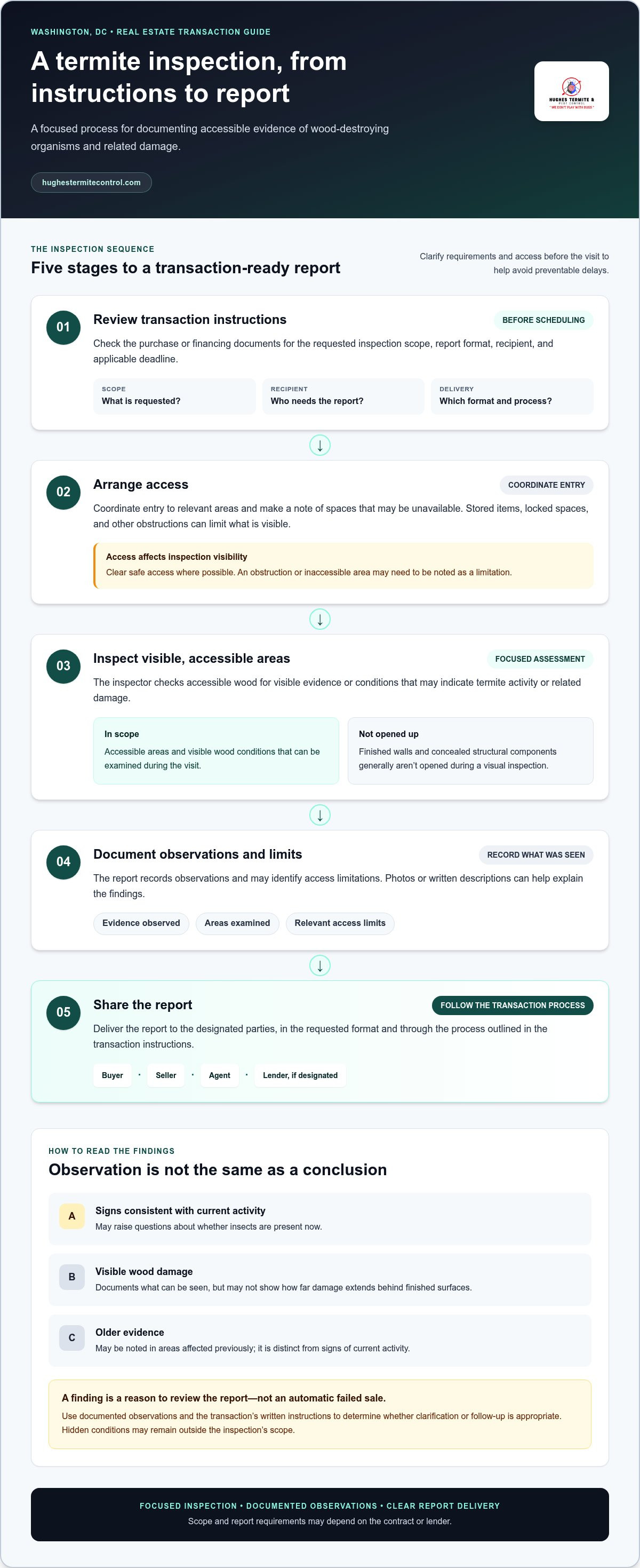
A real estate termite inspection Washington DC transaction participants arrange typically follows a straightforward sequence: review the transaction instructions, arrange access, inspect accessible areas, document observations and limitations, and share the report with the designated parties. Confirm the requested report format and delivery details before the visit so the inspection can address the transaction’s stated needs.
The inspection is a focused assessment, not an opening-up of the property. Its scope depends on the home, the agreed inspection conditions, and which areas the inspector can safely access. Stored items, locked spaces, finished surfaces, and other obstructions can limit visibility. The report should identify relevant access limits rather than suggest that every part of the structure was examined.
- Review transaction instructions. Identify the requested scope, report format, recipient, and applicable deadline in the purchase or financing documents.
- Arrange access. Coordinate entry and access to relevant areas. Make a note of any spaces that may be unavailable.
- Inspect visible areas. The inspector checks accessible wood for evidence or conditions that may indicate termite activity or related damage.
- Document observations. The report records what was observed and may note access limitations. Photos or written descriptions can help explain the findings.
- Share the report. Deliver it to the designated parties in the format and through the process outlined in the transaction instructions.
What areas and evidence may be examined?
The inspector may examine accessible wood for visible damage or other conditions consistent with termite activity. The areas that can be checked depend on the property and access during the visit. For example, stored belongings may block a clear view of wood in a storage area. Finished walls and concealed structural components generally aren’t opened during a visual inspection, so hidden conditions may remain outside its scope.
What information should the report communicate?
A useful report describes the evidence observed, the areas examined, and relevant access limitations. Photos and clear notes help buyers, sellers, agents, and lenders understand what the inspector saw without implying that unseen areas were assessed. The report documents observations; it isn’t a guarantee about concealed damage or a repair estimate. Compare the requested format with the contract and lender instructions because report expectations can differ by transaction.
Hughes Termite Control provides wood-destroying organism inspections in the DMV. For a transaction-focused wood-destroying organism inspection, clear instructions and access details help align the report with the property and the sale’s documentation needs.
Termite Inspection vs. Home Inspection: What Each One Can Tell You
A general home inspection and a termite inspection have different purposes. A home inspection provides a broader review of visible property systems and components; a termite-focused inspection looks for evidence of wood-destroying insects and related conditions. For a real estate termite inspection Washington DC buyers or sellers arrange, check the report’s stated scope. Don’t assume another inspection answers the same questions.
| Comparison point | General home inspection | Termite or WDO inspection |
|---|---|---|
| Purpose | Provide a broad overview of visible property condition. | Document observations related to wood-destroying insects and, when included, other wood-destroying organisms. |
| Focus | Visible home systems and components, as defined by the inspection agreement. | Accessible wood, visible evidence, and conditions relevant to the agreed inspection scope. |
| Report | Summarizes observations within the general inspection’s defined scope. | Records relevant findings and may identify areas that could not be accessed. |
| Limitations | Doesn’t establish the condition of every concealed area or predict future problems. | Doesn’t necessarily reveal hidden damage or address conditions beyond its stated scope. |
What a general home inspection may cover
A general inspection considers a range of visible systems and components. Its exact scope depends on the inspection agreement and access to the property. It can identify concerns beyond insects, but that broader review isn’t the same as a focused search for termite evidence. Read the scope rather than treating a general home inspection as a substitute for a separate termite assessment.
What a termite or WDO inspection adds
A termite inspection focuses on accessible areas and signs of termite activity. “WDO,” or wood-destroying organism, is a broader category when the inspection includes organisms beyond termites. The report should identify what it covers. For more context on property-focused pest checks, use the Washington, DC pest inspection checklist and the wood-destroying organism inspection guide.
Neither report guarantees that every hidden condition has been found or that no issue will develop later. Both describe observations made under specific conditions, and inaccessible areas limit what an inspector can assess. If one report notes a concern outside its focus, use that observation to identify the next question rather than assuming the other inspection answered it.
For a property sale, compare reports by purpose, scope, and limitations. A general home inspection informs a broad review of visible condition; a termite or WDO inspection adds focused observations about wood-destroying organisms. Use the transaction documents to determine which report is requested and how it should be delivered.
Washington, DC Closing Checklist: Prepare for the Termite Inspection
A little preparation can keep access and paperwork from becoming closing-day surprises. Separate practical preparation from transaction requirements: making an area accessible is useful, but it doesn’t determine which inspection or report the contract or lender requires. Buyers and sellers should follow the written instructions for their transaction.
Buyer checklist before the inspection
Before arranging the inspection, review the purchase agreement and financing instructions. Confirm who is responsible for ordering it, what report or form is requested, when it’s due, and who must receive it. Requirements vary, so rely on the written terms rather than assumptions about standard forms or deadlines.
- Review written requirements. Compare the contract and lender instructions for requested scope, report format, and deadline.
- Confirm logistics. Coordinate property access and identify who will provide entry, particularly if a specific area needs separate arrangements.
- Document delivery details. Record who should receive the report and how it will be delivered.
- Keep the request consistent. Make sure the inspection request and any required form match the transaction documents.
These steps organize the request; they don’t replace legal, contract, or lender guidance. If documents conflict or leave a question unanswered, resolve the issue through the transaction process before proceeding. For a real estate termite inspection Washington DC buyers arrange, matching the request to the written instructions can reduce avoidable back-and-forth.
Seller checklist for access and records
Sellers can make the visit more efficient by providing access to relevant areas and gathering records that may explain the property’s history. Preparation should make observations easier, not conceal conditions. Because an inspection is limited to what can be safely accessed, identify known restrictions rather than assuming every area can be examined.
- Clear safe access. Move stored items away from accessible areas that may need to be viewed, without creating hazards or disturbing building materials.
- Note access limits. Identify locked or obstructed spaces and explain any known reason they aren’t accessible.
- Gather relevant records. Collect prior termite inspection or treatment records, if available, to share with the appropriate transaction parties.
- Leave evidence visible. Avoid covering suspected signs or making changes that could obscure what the inspector may observe.
Records provide context, but they don’t replace a current inspection or determine its findings. When reviewing the inspection process, keep prior treatment or prevention information alongside the current report and its documented observations.
Hughes Termite Control provides wood-destroying organism inspections in the DMV. Learn about a wood-destroying organism inspection and the accessible findings it can document for a property sale.
After the Inspection: Hughes Termite Control’s Washington, DC Next Steps
A report is a record to guide decisions, not a verdict on the sale. Read each finding closely, note its location and type, and follow the transaction’s written instructions. If the wording is unclear, clarify what was observed and what the report can establish. Then share it with the parties named in the contract or financing instructions.
Use a consistent sequence to keep next steps focused:
- Review the report. Note the specific observations, their locations, and any access limitations.
- Clarify what is documented. Separate visible evidence from assumptions about areas the inspector couldn’t see.
- Follow transaction instructions. Send the report to the correct parties and use the contract’s process for addressing findings.
- Consider follow-up when appropriate. Base treatment decisions on the evidence, property conditions, and transaction terms.
This approach applies whether the report identifies a concern or not. A clear report describes observations within the inspection’s scope. It doesn’t guarantee that concealed areas are free of damage or that conditions can’t change later.
If the report identifies termite evidence
Start with the report’s wording and the location of the finding. Evidence of activity, visible damage, and older signs describe different observations. A reported sign doesn’t establish how far concealed damage extends, whether repairs are needed, or what repairs would involve. An inspection report records observations; it isn’t automatically a complete structural assessment or repair estimate.
If a finding raises questions, use the report to identify what needs clarification and follow the transaction’s written process. Treatment or repair decisions depend on the findings, the property, and the terms of the sale. An inspection alone doesn’t determine the full extent of concealed damage or dictate a particular negotiation or financing outcome.
Arrange a local inspection with Hughes Termite Control
Hughes Termite Control provides wood-destroying organism inspections and termite control in the DMV. An inspection can document accessible observations relevant to a property sale; termite treatment may be a next step when findings support it. For a real estate termite inspection Washington DC transaction participants can plan around, provide the property and transaction details when requesting an inspection.
Use the report as a practical record and let its documented observations guide the next conversation. Arrange a Washington, DC termite inspection.
Keep the Closing Record Clear
Keep inspection paperwork as part of the property’s ongoing record, not just as a closing task. File the final report with follow-up notes, treatment documentation, or decisions made by the parties. A clear record helps future owners understand what was observed and what action, if any, followed, without turning an inspection note into a broader claim about the home.
If you’re coordinating a real estate termite inspection Washington DC sale, tie each decision to the written findings and the transaction’s instructions. That keeps conversations focused, supports an orderly handoff, and limits assumptions in the property record. If findings call for further review, keep the relevant parties aligned on what the report says and what remains outside its scope.
Hughes Termite Control provides termite inspections in the DMV. Arrange a Washington, DC termite inspection and keep the property record clear as closing moves forward.
Frequently Asked Questions
Is a termite inspection required when buying a home in Washington, DC?
Not automatically for every purchase. An inspection may be requested by the purchase agreement or financing instructions, and requirements vary by transaction and loan program. Review the written terms to identify whether an inspection is required, who arranges it, and when the report is due. This helps distinguish a contract condition from a lender’s documentation request.
Can a general home inspection replace a termite inspection?
No, a general home inspection doesn’t necessarily include a focused assessment for termites. Its scope is broader and depends on the inspection agreement. If the sale requires termite-related documentation, make sure the separate inspection request addresses it. For a real estate termite inspection Washington DC transaction, this distinction matters even when a home inspector notes visible wood damage, since that observation may not provide the focused findings required for the sale.
How long is a real estate termite inspection report valid?
There isn’t one validity period for every real estate transaction. The purchase agreement, lender instructions, or report requirements may specify how recent the inspection must be. Identify the applicable date requirement before scheduling, especially if a report already exists. An older report may provide useful property history, but don’t assume it satisfies current transaction instructions unless the written terms say so.
What happens if the termite inspection finds evidence of activity?
Review the wording and location of the reported evidence, then follow the process set out in the transaction documents. A finding doesn’t automatically cancel a sale or establish the full extent of damage. For example, visible evidence near an accessible beam doesn’t show what may be concealed behind a finished surface. The parties can use the documented observation to decide whether clarification or further action is appropriate under their agreement.
Should the buyer or seller arrange the termite inspection?
Either party may arrange it, depending on the purchase agreement and financing instructions. The documents may assign responsibility, identify who pays, or specify who receives the report. Before booking, make sure the person arranging the inspection has the correct property details and report destination. If responsibilities aren’t clear, resolve them through the transaction process so the inspection request and paperwork follow the agreed procedure.
Does a termite inspection report identify all wood damage?
No. A report documents observations within the inspection’s scope and the areas that were accessible. It may note visible damage, but concealed wood behind walls, flooring, or stored items may not be observable. Treat a reported concern as a documented observation, not a complete repair estimate. The report can help identify questions for follow-up, but it can’t establish the condition of every hidden component.
What should I do before a termite inspection at a Washington, DC property?
Confirm access arrangements and make relevant, safe-to-reach areas viewable. Sellers can gather available records of earlier inspections or treatments and avoid covering suspected evidence before the visit. Buyers should make sure the requested report format, recipient, and deadline match the transaction instructions. Share known access restrictions, such as a locked storage space, so the report can accurately reflect what was visible during the inspection.


