
What if the first step toward solving a pest problem isn’t choosing a treatment, but working out what the signs may indicate? Droppings, damaged wood, or scratching in a wall can leave you unsure what’s happening and whether you need professional help. Searching for pest management near me should lead to clear answers, not more guesswork.
Different property concerns call for different services, and an inspection is not the same as treatment or repair. Hughes Termite Control serves DMV homeowners with termite control, bed bug control, wildlife control, and wood-destroying organism inspections. When a concern involves damage, separating the pest issue from any repair needs helps you understand what each step addresses.
This guide explains which concerns match Hughes’s local pest services, what details to gather before arranging help, and what to expect as you take the next step. You’ll also find practical guidance on describing your property concern and distinguishing an inspection from treatment. The goal is to help you move from uncertain signs to a clear, property-focused plan.
Key Takeaways
- Match the signs you’ve noticed to the pest concern and property area before deciding what kind of help fits.
- A search for pest management near me is more useful when you can describe the suspected pest, evidence, and affected rooms or exterior areas.
- Termite control and a wood-destroying organism inspection serve different purposes; knowing the difference can clarify your next step.
- Sharing clear observations when arranging help makes it easier to focus the conversation on your property concern.
- Hughes serves DMV property owners with termite, bed bug, and wildlife control, as well as wood-destroying organism inspections.
Pest Management in the DMV: Matching Concerns to Help
Searching for pest management near me can feel uncertain when you haven’t identified the pest or the source of damage. A sighting or mark raises a concern, but it doesn’t always reveal what caused it or which service is relevant. Start by noting three things: what you observed, where it’s happening, and whether the concern involves a pest, possible wood damage, or both.
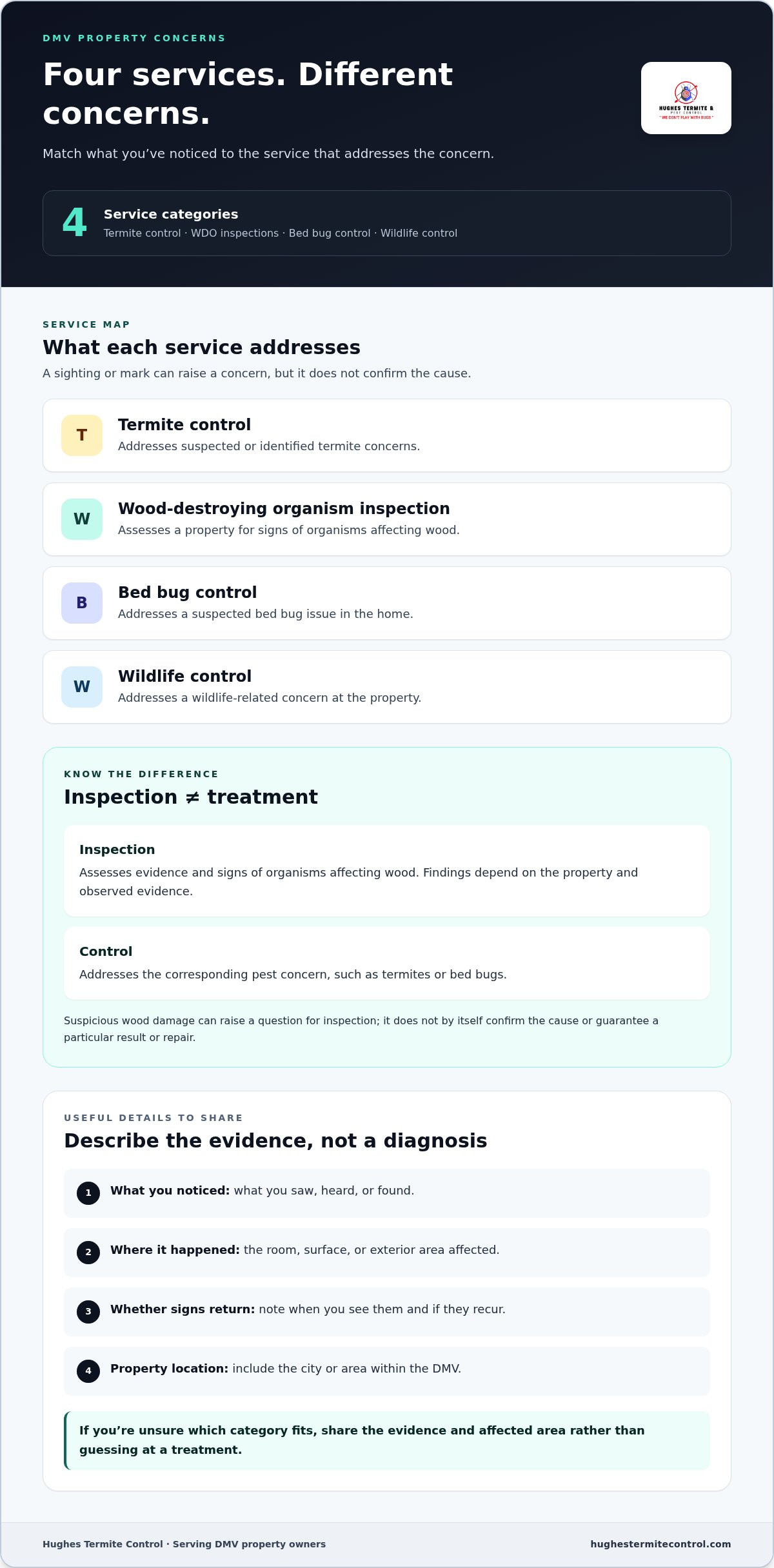
Hughes Termite Control serves DMV property owners with termite control, bed bug control, wildlife control, and wood-destroying organism inspections. These services address different concerns. Termite control addresses termite problems, while a wood-destroying organism inspection assesses a property for signs of organisms affecting wood. An inspection and treatment are distinct steps, so describing the concern helps clarify which service applies.
Which signs suggest a pest issue needs professional attention?
Repeated sightings, suspected termite activity, or unexplained damage can be reasons to seek a closer assessment. For example, recurring signs in a room may point to a pest concern, while damage to wood raises a separate question about wood-destroying organisms. A mark or sighting alone doesn’t confirm the cause. Note where and when you see signs, which surfaces are affected, and whether the signs return. That context can help distinguish a recurring pest issue from a possible concern involving the property’s wood.
Does local pest management cover every type of pest?
No single service category covers every pest concern. Services depend on the pest and property issue. Hughes’ pest services include termite control, bed bug control, wildlife control, and wood-destroying organism inspections. If you’re unsure which category fits, describe the evidence and affected area rather than guessing at a treatment. For broader context on how pest identification and control choices can work together, see this overview of Integrated Pest Management (IPM).
Location is important, too. The DMV spans multiple jurisdictions, so include your property’s city or area when arranging help. You don’t need to diagnose the issue before asking about it. Clear observations, such as the room, surface, or exterior area affected, are a practical starting point. This information helps connect the concern to the relevant service without treating every sign as proof of the same problem.
What Local Pest Management Services Address: Termites, Bed Bugs, Wildlife, and Inspections
Once you’ve described what you’re seeing, match the concern to a relevant service. The categories below show how Hughes Termite Control’s pest services differ. They can help you identify where to start, while an inspection’s findings depend on the property and the evidence observed.
| Service | Concern it addresses |
|---|---|
| Termite control | Suspected or identified termite concerns. |
| Wood-destroying organism inspection | Assessing a property for signs of wood-destroying organisms. |
| Bed bug control | A suspected bed bug issue in the home. |
| Wildlife control | A wildlife-related concern at the property. |
When might termite control or a wood-destroying organism inspection help?
Termite control addresses termite concerns. A wood-destroying organism inspection is a separate service that assesses signs of organisms affecting wood. If you notice suspicious wood damage, an inspection can provide information about the observed concern, though findings don’t guarantee a particular result or repair. For more context, read an effective termite control guide and information about WDO inspection coverage and reports.
When are bed bug or wildlife services relevant?
Bed bug control is relevant when you suspect bed bugs, while wildlife control addresses a different type of property concern. Share what you’ve seen and where it occurred. That detail helps distinguish the concern without requiring you to identify it conclusively. For additional background, explore guidance on managing bed bug infestations.
Inspection and treatment aren’t interchangeable. An inspection assesses evidence; termite or bed bug control addresses the corresponding pest concern. If you’re comparing local options, the U.S. Environmental Protection Agency’s Tips for Selecting a Pest Control Service offers general guidance on what homeowners can consider. To see the pest concerns Hughes addresses, review Hughes’ pest services and identify the category that fits your situation.
What Happens After You Request Pest Management Near You?
A useful request doesn’t depend on having the right diagnosis. Start with a clear description of what you’ve noticed and where it’s happening. From there, the concern can be matched to a relevant service category, and the next steps can be discussed in light of the pest issue and property.
Helpful starting point: Describe the signs, share the property location, note the affected area, and mention any related inspection or damage concerns.
- Describe the concern. Explain what you’ve seen, heard, or found.
- Share the location. Provide the property’s location and identify the affected room, area, or exterior space.
- Clarify the service category. If you suspect termites, bed bugs, or wildlife, say so, while making clear that it’s a suspicion rather than a confirmed identification.
- Discuss next steps. The appropriate next step depends on the concern and the property. Don’t assume every request follows the same inspection or treatment process.
What details help explain a pest concern?
Note where signs appeared, when you first noticed them, and whether they’ve returned. A clear description or photograph can help explain what you observed, but it isn’t a diagnosis. If you’ve noticed possible structural damage or have information from an earlier inspection, include that context. These details help explain the concern without asking you to determine the cause yourself.
How is an inspection different from treatment?
An inspection assesses available evidence and can help clarify a property concern. Treatment addresses a pest concern. They’re distinct steps, and the process depends on the service and property. If you’re preparing for a property assessment, the Washington, DC pest inspection checklist can help you organize relevant observations. For general background on how Integrated Pest Management considers pests alongside their conditions and control options, read this university-backed definition of IPM.
Searching for pest management near me can bring up many options, but a useful request is specific about evidence and location without overstating what the signs prove. That gives the conversation a practical starting point and keeps the focus on the property and concern.
What to Clarify Before Scheduling Local Pest Management
A short checklist can make the first conversation more useful, even if you’re not certain what caused the signs. Focus on what you observed and where it occurred. You don’t need to diagnose the pest or decide on a treatment in advance.
What should homeowners note about the property?
Before arranging help, gather a few practical details. These observations help explain the concern and its context:
- Location: Note the room, exterior area, or wood component where you saw signs.
- Frequency: Record when the signs appeared and whether they have returned.
- Visible damage: Describe any changes or damage you’ve noticed, especially if wood may be involved.
- Relevant history: Gather prior inspection documents or service information if you have them.
- Suspected pest: Share what you think you may be seeing, but distinguish a suspicion from a confirmed identification.
For example, “I’ve seen signs near a wooden window frame twice” gives more useful context than a general concern about pests. Photographs may also help communicate what you observed, but they don’t establish a diagnosis on their own.
What should the service conversation make clear?
Clarify which concern the request relates to, such as suspected termites, bed bugs, wildlife, or possible wood-destroying organism activity. Explain whether the signs are inside, outside, or on a particular part of the property. Hughes provides pest management for DMV property owners, and sharing your property location helps frame the request. The next steps depend on the concern and property, so avoid assuming every issue follows the same schedule or process.
Keep three questions in mind: What signs have I observed? Where are they appearing? Is my concern about a pest, possible wood damage, or both? Your answers help focus the conversation on the relevant service category without overstating what the evidence proves.
Once you’ve gathered those details, you can take a clear next step. Share your pest concern with Hughes Termite Control to begin a conversation about the property issue and applicable service.
How Hughes Termite Control Helps DMV Property Owners Take the Next Step
Unclear signs don’t have to lead to guesswork. Hughes Termite Control helps DMV property owners connect specific concerns with relevant pest services, then consider a practical next step based on the property and what’s been observed. A clear description of the signs and their location is a useful place to begin, even if you’re unsure of the cause.
Which Hughes services fit common property concerns?
The right category depends on the concern. Termite control addresses termite concerns, while a wood-destroying organism inspection assesses signs of organisms affecting wood. Suspected bed bugs relate to bed bug control, and wildlife concerns relate to wildlife control. These services address different issues, so describing what you’ve noticed keeps the conversation focused without assuming that every pest problem has the same solution.
If you’ve noticed property damage, keep pest management and repairs distinct. An inspection or pest service may address the pest concern, while remodeling or repair work is a separate step. Hughes also provides home improvement services, including roofing, siding, decking, flooring, and window and door installations. Damage may need its own assessment and repair plan; pest treatment doesn’t automatically include structural repairs.
How can a homeowner take the next step?
Share the property’s location, the area affected, and the signs you’ve observed. Mention whether the concern involves termites, suspected bed bugs, wildlife, or possible wood damage. You don’t need to identify the cause conclusively. These details help frame the request around the relevant service, while the appropriate next step depends on the concern and property.
A local search for pest management near me is most useful when it leads to a service that fits the issue at hand. Hughes’ pest services focus on termite control, bed bug control, wildlife control, and wood-destroying organism inspections. If you’re ready to discuss what you’ve noticed, Contact Hughes Termite Control. A straightforward conversation can help clarify the concern and next step.
Move from Uncertainty to a Clear Next Step
A useful search for pest management near me starts with the concern you’ve observed, not a perfect diagnosis. Note where signs appear, whether they’ve returned, and whether you’re concerned about possible wood damage. These details help frame the conversation and distinguish an inspection from pest control.
Hughes Termite Control is a privately owned and operated local business serving DMV property owners with termite control, bed bug control, wildlife control, and wood-destroying organism inspections. Each service addresses a different concern, so describing the pest you suspect and the affected area can help identify a relevant next step. If pest-related damage also calls for repairs, remember that repair work is separate from pest management.
You don’t need to have every answer before reaching out. Contact Hughes Termite Control to discuss your pest concern and share your property location and observations. A clear conversation is a practical place to start.
Frequently Asked Questions
Is pest management different from pest control?
The terms are often used interchangeably, though “pest management” can describe a broader process of understanding a pest concern and choosing an appropriate response, while “pest control” often refers to controlling the pest itself. The exact meaning depends on context and service provider. For homeowners, the practical question is which concern a service addresses and what the next step involves, such as discussing signs, arranging an inspection, or addressing a specific pest issue.
Can a pest management company help with termites, bed bugs, and wildlife?
Yes. Hughes Termite Control serves DMV property owners with termite control, bed bug control, wildlife control, and wood-destroying organism inspections. These are distinct services: suspected bed bugs, wildlife activity, and termite concerns call for different service categories. Describing what you’ve observed and where it’s happening helps frame which service is relevant without requiring you to identify the cause conclusively.
How do I know which pest service my home needs?
Start with the signs, their location, and whether they’ve appeared more than once. Repeated sightings may suggest a pest concern, while unexplained damage to wood may raise a separate question about wood-destroying organisms. You don’t need to diagnose the issue yourself. Share what you’ve noticed, including any affected rooms or exterior areas, and the suspected pest if you have one. This makes a search for pest management near me more focused.
What happens during a wood-destroying organism inspection?
A wood-destroying organism inspection assesses a property for signs of organisms that can affect wood. It’s distinct from termite control: an inspection evaluates available evidence, while control addresses a termite concern. Findings depend on the property and what is observed, so an inspection shouldn’t be treated as a guaranteed diagnosis of every source of damage. If you have prior inspection information or have noticed specific wood damage, share those details when discussing the concern.
How much does local pest management cost?
The cost depends on the pest concern, the property, and the service involved, so there isn’t one price that applies to every request. An inspection and a pest control service are different, and the work needed can vary with the situation. To understand the scope for your property, describe the suspected pest, where signs appear, and any visible damage. A general estimate may not reflect the cost for a specific home or service.
What should I do before a pest management visit?
Note where signs appear, when you first noticed them, and whether they’ve returned. Identify affected rooms, exterior areas, or wood components, and gather relevant inspection documents or prior service information if available. Photos can help explain what you observed, but they don’t confirm a diagnosis. You don’t need to prepare a treatment plan. A clear account of the concern and property gives the service conversation a practical starting point.
Does Hughes Termite Control serve my area in the DMV?
Hughes Termite Control serves property owners in the DMV with termite control, bed bug control, wildlife control, and wood-destroying organism inspections. Include your property’s city or area when discussing your concern. This location detail helps frame the request alongside the suspected pest and affected part of the property.


