

What if the itchy marks you noticed aren’t enough to confirm bed bugs, but waiting for clearer signs gives them more time to spread? In the DMV, a sound bed bug treatment plan starts with evidence, not guesswork. Bites can have other causes, so look for physical clues such as live insects, shed skins, or dark spotting near mattress seams and bed frames.
It’s reasonable to wonder how disruptive treatment will be, what you’ll need to prepare, and whether nearby rooms or units could be affected. Ask for clear answers before work begins. Hughes Termite Control offers professional bed bug control. Confirm the treatment methods and follow-up options directly when discussing a plan.
This guide explains what signs may warrant an inspection, what to ask about the treatment process, and how to prepare your home and manage follow-up. It also covers practical ways to reduce the chance of spreading bed bugs between rooms or units. You’ll have a clearer basis for choosing a locally relevant plan, from the first inspection through prevention.
Key Takeaways
- Learn how to distinguish possible bed bug evidence from signs that need closer identification.
- See how inspection findings can shape the treatment scope, preparation steps, and follow-up discussion.
- Compare treatment plans by asking about affected areas, communication, and how progress will be evaluated.
- Use provider-specific instructions to prepare, and check before moving, discarding, or treating belongings.
- When considering bed bug treatment DMV options, confirm service availability for your city or jurisdiction and ask which methods and follow-up services are included.
Bed Bug Treatment DMV: Start by Confirming the Signs
A mark on your skin or a small speck near the bed can be unsettling, but neither proves bed bugs are present. Start with a careful visual check. Avoid moving belongings or applying pesticides until you have a clearer picture. Accurate identification can help determine whether an inspection is needed and prevent unnecessary treatment or disposal.
What signs can confirm a bed bug problem?
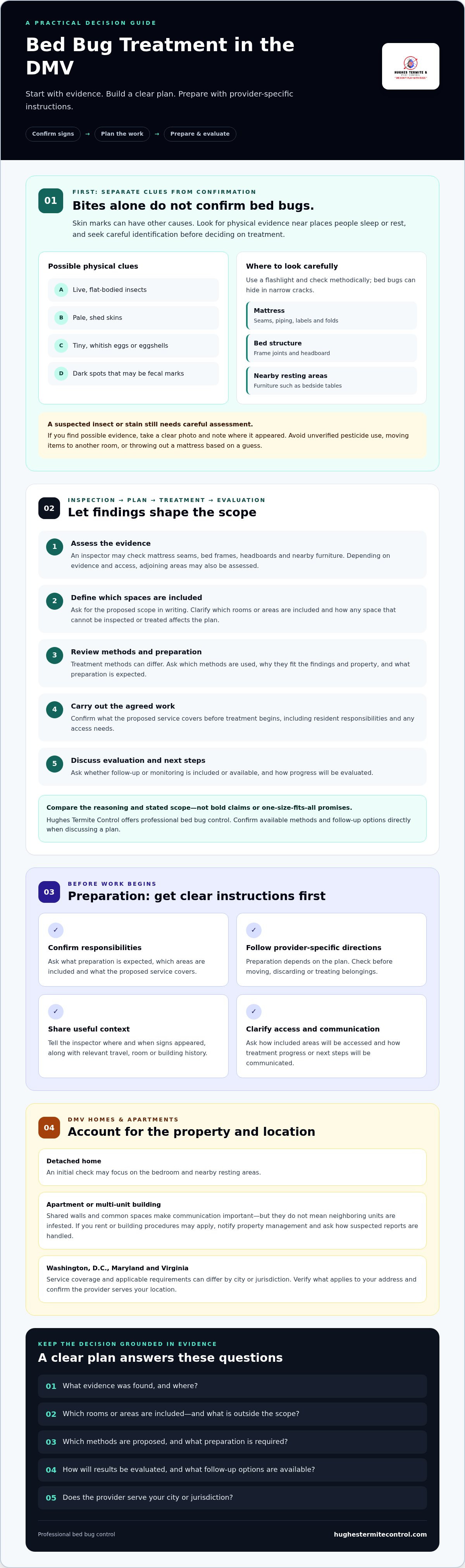
Look for physical evidence close to where people sleep or rest. Check mattress seams, piping, labels, and folds, then inspect bed-frame joints, the headboard, and nearby furniture such as bedside tables. Bed bugs can hide in narrow cracks, so use a flashlight and examine surfaces methodically rather than relying on a quick glance.
Possible clues include live, flat-bodied insects; pale, shed skins; tiny, whitish eggs or eggshells; and dark spots that may be fecal marks. These signs can be difficult to identify confidently, especially when debris or marks have other explanations. The common bed bug has distinct life stages and feeding habits, but a suspected insect or stain still needs careful assessment.
Bites alone can’t confirm bed bugs. Skin reactions vary, and other insects, irritation, or unrelated conditions can cause similar marks. If you find a possible insect or other evidence, take a clear photo and note where it appeared. Avoid unverified do-it-yourself pesticide use, which may expose people or pets and complicate a later assessment. Don’t throw out a mattress or carry items to another room based only on a guess.
Why does the DMV housing setting matter?
In a detached home, an initial check may focus on the bedroom and nearby resting areas. In an apartment or other multi-unit building, shared walls and common spaces make communication important, but they don’t mean neighboring units are infested. If you rent or building procedures may apply, notify property management and ask how suspected bed bug reports are handled before arranging work independently.
Local details matter. Service coverage and applicable requirements can differ between Washington, D.C., Maryland, and Virginia, and the exact city or jurisdiction may affect what steps to take. Verify the rules that apply to your address and confirm that a provider serves your location. For bed bug treatment DMV homeowners and residents, a measured first step is to document the evidence, seek an inspection when signs appear credible, and use its findings to guide decisions.
How Bed Bug Treatment Works: Inspection, Planning, and Follow-Up
Professional bed bug treatment involves a sequence of decisions guided by inspection findings. The goal is to understand where evidence appears, determine which areas need attention, and agree on a plan before treatment begins. A clear process also gives residents a chance to ask about preparation and what to expect afterward.
What happens during a professional inspection?
An inspector may examine likely hiding places, such as mattress seams, bed frames, headboards, and nearby furniture. Depending on the evidence and access, the assessment may extend to adjoining areas. Share where and when you noticed signs, any recent travel, and relevant room or building history. These details can help direct the inspection, but they don’t confirm an infestation on their own.
Before work is scheduled, ask for the scope in writing. It should clarify which rooms or areas are included, what preparation is expected, and what the proposed service covers. If a space can’t be inspected or treated, ask how that affects the plan. The EPA guide to bed bug control also provides general information on managing bed bugs and preparing for treatment.
How does inspection shape the treatment plan?
After assessing the evidence, the provider should explain the affected areas and discuss an approach suited to the findings, property, and access. Methods can differ, so don’t assume a particular treatment is included or appropriate for every home. Ask which methods the company uses, why they fit the situation, and whether the plan includes evaluation afterward.
A practical sequence is:
- Assess the evidence and likely hiding areas.
- Define the spaces included in the proposed work.
- Review preparation instructions and responsibilities.
- Carry out the agreed treatment.
- Evaluate results and discuss any next steps.
For bed bug treatment DMV residents should compare plans by their reasoning and stated scope, not by bold claims or one-size-fits-all promises. Hughes Termite Control offers professional bed bug control. Ask the company which methods and follow-up services are available for your situation.
Why may a treatment plan include follow-up?
Follow-up or monitoring can help assess whether bed bug activity continues after treatment. Whether another visit is needed, and when, depends on the inspection findings and treatment approach. There isn’t one timeline for every property, so ask the provider to explain any method-specific interval and what signs should prompt a check-in.
If you notice new evidence, record where and when you found it and share that information with the provider. Don’t assume every mark or bite means treatment failed. A clear report gives the provider a useful basis for evaluating what’s happening and recommending an appropriate next step.
Bed Bug Treatment Options: How to Compare Plans Without Guesswork
Two homes can show similar signs but need different treatment plans. The right approach depends on inspection findings, the areas involved, the property, and what the provider determines is suitable. A single method doesn’t automatically fit every infestation. Compare the reasoning behind a plan, not just its label or claims that it’s faster or more effective.
For bed bug treatment DMV residents can use these questions to check whether a proposal is clear and grounded in the inspection:
| Plan detail | Question to ask |
|---|---|
| Assessment and scope | What evidence supports the proposed work, and which rooms or areas are included? |
| Approach | Which treatment methods are being considered, and why do they suit these findings? |
| Preparation | What must residents do, and what should they avoid moving or treating? |
| Communication | Who should residents contact with questions before or after service? |
| Follow-up | Is reassessment recommended, and what new information could change the plan? |
What should residents ask a bed bug provider?
Ask the provider to connect each proposed step to the inspection findings. If evidence appears in one room, clarify why other spaces are included or excluded. Request preparation instructions in writing, confirm who is responsible for each task, and ask how to raise concerns if instructions aren’t practical. Also find out what follow-up is recommended and which findings could prompt a revised scope.
How can you assess clear, responsible communication?
A responsible explanation should be specific without promising a guaranteed result or pressuring you to decide before your questions are answered. Ask for written details on the work, preparation, and any relevant product or safety information. Follow the provider’s guidance for your household, and confirm product-specific directions directly rather than relying on assumptions.
For a rental or multi-unit home, ask how communication and access should be coordinated with property management. That helps clarify responsibilities and avoid conflicting instructions. If a plan changes after inspection or treatment, ask what new evidence prompted the change and what it means for the next steps.
Confirm its specific methods and follow-up options directly. A clear plan should leave you knowing what is included, what you need to do, and how progress will be evaluated. If any of those points remain unclear, ask for clarification before agreeing to the work.
Preparing for Bed Bug Treatment in a DMV Home or Apartment
Preparation should follow the instructions for your specific treatment, not a generic checklist found online. The steps may depend on the method, the rooms included, and the belongings that need attention. Before you start, make sure you understand what the provider expects. If directions are unclear or seem to conflict, ask before moving items or making changes.
What should you do before the scheduled service?
Review the written instructions and confirm which rooms, belongings, and access arrangements they cover. For example, ask whether the plan includes a closet or an upholstered chair if those items are near a suspected area. Clarify who needs to be present, how the provider will access the rooms, and what to do with personal items. Don’t assume every treatment requires the same preparation.
Keep the work manageable by asking focused questions. If you’re unsure whether to bag, launder, move, or leave an item in place, check with the provider first. Avoid discarding belongings or applying pesticides on your own unless the provider specifically directs you to do so.
Moving potentially affected belongings into another room can complicate an organized response by changing where items are located and making it harder to follow the planned scope. Keep items where they are until you receive direction. In an apartment, don’t place belongings in shared hallways or common areas as a workaround. Ask property management and the provider how access or building procedures should be handled.
What should residents do after treatment?
Follow the provider’s instructions for re-entry, cleaning, and monitoring. These steps can depend on the treatment used, so don’t rely on general online advice or assume you can return, vacuum, wash, or rearrange items on your own schedule. If the instructions aren’t clear, ask before taking action.
Stay observant without treating every new mark or skin reaction as proof that bed bugs remain. If you find suspected evidence, record where and when you noticed it, take a photo if practical, and share the details with the provider. This gives them useful information to assess the situation and advise you on next steps.
For multi-unit properties, keep property management informed if shared spaces, access, or building procedures may be involved. Coordination can help residents avoid conflicting instructions or moving belongings through common areas unnecessarily. With bed bug treatment DMV residents should get preparation and aftercare expectations in writing so they know what applies to their home and plan.
If you’re considering professional help, you can learn about Hughes bed bug control and ask which treatment methods and preparation instructions apply to your situation.
Choosing Bed Bug Treatment in the DMV: A Clear Next Step
Once you have credible evidence or an inspection finding, the next step is a focused conversation about what the property needs. You don’t have to arrive with a diagnosis or a complete plan. Share what you’ve observed, ask what information the provider needs, and confirm that your address is within its service area before scheduling.
What information helps a provider understand your situation?
A short, factual summary can make the initial discussion more useful. Note when you first saw possible evidence, where you found it, and whether you’ve noticed signs in other rooms. If you live in an apartment or shared building, mention relevant building concerns, such as common areas or instructions from property management.
Photos can help show what you’re seeing, especially if the evidence is no longer present. They don’t always provide enough detail to identify a pest or replace an inspection, so describe the location and context as well. Ask what else the provider needs to confirm service availability and discuss an appropriate scope. Before moving belongings or changing the room, check whether that could affect an inspection.
How can Hughes Termite Control help with bed bugs?
Hughes Termite Control offers professional bed bug control and is a local business focused on the DMV. Confirm directly whether the company serves your specific address, since the DMV includes different cities and jurisdictions.
During an initial conversation, ask whether the company serves your location, what information it needs to assess the situation, and what the next step would be. If service is available, clarify which treatment options and follow-up services are currently offered, what the proposed work would include, and how preparation instructions will be provided. Specific answers help you understand the plan without relying on broad claims or assumptions.
A useful discussion should leave you with a clear next step, whether that’s sharing photos, arranging an inspection, or coordinating with property management. Keep notes so you can compare the proposed scope with your observations and ask about anything that remains unclear. For bed bug treatment DMV residents should verify location coverage and service details before scheduling, rather than treating “DMV” as a single service area.
If you’re seeing possible signs, contact Hughes Termite Control to ask about bed bug control, service availability for your address, and the appropriate next step. There’s no need to decide on a treatment before you understand what the provider recommends and why.
Take the Next Step With a Clear Plan
Bed bug treatment DMV decisions start with reliable evidence, not bites or assumptions. A careful inspection can help identify which areas need attention, while a clear written plan sets expectations for preparation, treatment scope, and any follow-up. Before scheduling, confirm that the provider serves your specific city or jurisdiction and ask which methods and services are available for your situation.
Share what you’ve observed and where you found it, and ask about the next step without assuming a particular treatment or outcome.
Contact Hughes Termite Control to discuss bed bug control and confirm service availability for your property.
Frequently Asked Questions
Can you confirm bed bugs from bites alone?
No. Bites aren’t reliable proof because skin reactions vary and can resemble reactions to other causes. Check for physical evidence near sleeping areas, such as live insects, shed skins, eggs, or dark spotting. If you’re unsure what you’ve found, photograph it and seek an inspection rather than treating a rash as confirmation. Avoid applying pesticides based only on skin marks, since that may create unnecessary exposure or complicate assessment.
How does professional bed bug treatment work?
Professional bed bug treatment DMV residents consider generally begins with an inspection, followed by a plan based on the evidence, affected areas, and property conditions. The provider should explain the proposed work, preparation instructions, and any recommended follow-up. Methods and timing vary, so ask what the approach involves and what to expect before agreeing. Follow written, property-specific instructions instead of relying on a generic online checklist.
How should I prepare for bed bug treatment?
Preparation depends on the provider’s approach and which areas are included, so request written instructions for your property. Confirm what to do with bedding, clothing, furniture, and personal items before moving or discarding anything. Don’t apply additional pesticides unless the provider directs you to. If instructions are unclear or appear to conflict, ask for clarification before service. Moving items without guidance may complicate the planned response.
Can bed bugs spread between apartments?
Bed bugs can move between nearby areas, but evidence in one unit doesn’t automatically mean neighboring homes are infested. If you live in a multi-unit building, inform property management and ask how communication or inspections should be coordinated. Avoid carrying potentially affected belongings through shared spaces without guidance. A provider can assess the evidence and explain which areas may warrant attention, rather than assuming the entire building is affected.
How much does bed bug treatment cost in the DMV?
There’s no single price that applies to every property. The estimate can depend on inspection findings, the areas included, property conditions, and the proposed plan. Ask for a written explanation of what the estimate covers, whether follow-up is included, and what could change the scope. Compare those details as well as the quoted amount. Contact Hughes Termite Control directly to confirm its current pricing for your situation.
What should I do after bed bug treatment?
Follow the provider’s instructions for re-entry, cleaning, and monitoring, since those directions depend on the treatment used. Record any new suspected evidence, including where and when you noticed it, and report it to the provider. Don’t assume a new mark or bite confirms ongoing activity, and avoid applying another product without guidance. Ask what follow-up is recommended and coordinate with property management if shared spaces are relevant.
Does Hughes Termite Control provide bed bug treatment throughout the DMV?
Hughes Termite Control offers bed bug control and focuses on the DMV, but confirm directly which cities or jurisdictions it serves. Check that the company serves your address before scheduling. You can also ask which inspection and treatment steps it currently provides, what preparation is required, and whether follow-up is recommended for your circumstances. Those details help establish a clear scope without assuming availability or a particular method.


