

The siding itself doesn’t set the whole replacement schedule; the scope of work does. For homeowners comparing fiber cement siding installers in the DMV, timing depends on the home’s size, the removal and installation work, and whether crews find damage beneath the existing siding.
It’s reasonable to want a clear timeline before work begins, especially when siding protects your home from the elements and installation affects daily routines. A useful estimate explains what the work includes and what could change the schedule, rather than treating every home as the same job.
This guide explains what affects replacement timing, what to look for in a siding estimate, and how insurance coordination may fit when damage is part of the project. It also covers contractor licensing, workmanship warranties, and practical details of fiber cement installation in the DMV. The goal is to help you understand the process and the decisions that shape it before work gets underway.
Key Takeaways
- Use the work scope, home conditions, and weather exposure to understand what can affect a siding replacement schedule.
- Review a written estimate for clear descriptions of removal, installation, and any repairs that may be needed beneath the existing siding.
- Understand how insurance documentation and contractor coordination fit into the project before work begins.
- Compare licensing details and workmanship warranty terms, then learn what careful fiber cement installation involves in the DMV.
Contractor licensing and workmanship warranty
Before exterior work begins, match the contractor’s credentials and insurance documents to the project address and scope. Maryland contractor licensing and insurance details can be part of that review, alongside any local credentials relevant to the property. Record the contractor’s legal business name and license number, then compare them with the appropriate licensing authority’s current records. If names or numbers differ across the estimate, agreement, and insurance paperwork, get clarification before signing.
Siding contractor licensing and insurance are separate checks. A license record addresses authorization for the stated work; insurance documents describe coverage and its limits. Review the certificate’s named business, policy dates, and coverage types. Confirm it applies to the contractor performing the work, not just another business in the same group. For storm damage repairs that involve removal and replacement, the written scope should identify who handles each task.
- Match the estimate, contract, license record, and insurance certificate by business name.
- Check policy dates against the planned project period and retain the documents.
- Keep written records of inspection findings, approved changes, and completed work.
Contractor certification and insurance serve different purposes. A manufacturer’s certification may relate to product training or installation practices; it does not replace licensing records or insurance documents. Read the wording rather than treating “certified” as a complete credential. The contract should identify the siding material, profiles, removal and installation scope, and who documents concealed damage found during inspection.
Separate the workmanship warranty from the siding manufacturer’s product warranty. The workmanship terms should state the coverage period, what installation defects qualify, exclusions, and how a claim is handled. James Hardie fiber cement siding has a limited warranty of up to 30 years; that product warranty is distinct from coverage for installation work. Keep both documents with the signed scope and final inspection notes.
For fiber cement siding installers in the DMV, this paper trail helps clarify responsibilities if a concern appears after installation. Compare the contract’s warranty language with the work description, including any insulated components or specific profiles. Clear records connect the finished exterior to the agreed scope and distinguish product coverage from workmanship protection.
Siding installation and replacement in Maryland, Virginia, and DC
In the DMV, siding replacement depends on the existing wall condition, chosen material, and project scope. Fiber cement can support a durable exterior upgrade, but the installation details shape the result.
Fiber Cement Installation and Replacement
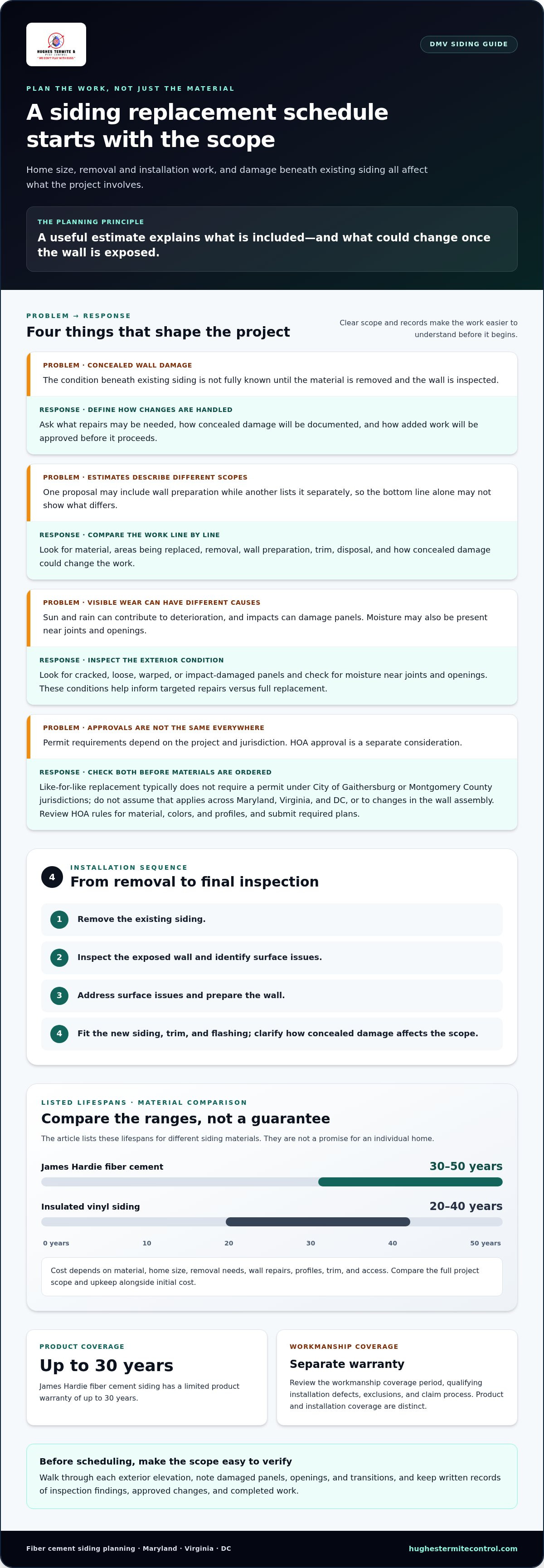
A siding project typically starts with removing the existing material and inspecting the exposed wall. The installer then addresses surface issues, prepares the wall, and fits the new siding, trim, and flashing. Across Maryland, Virginia, and DC, sun and rain can contribute to siding deterioration, while impacts can damage panels too.
James Hardie fiber cement siding is listed with a lifespan of 30-50 years. For comparison, insulated vinyl siding is listed at 20-40 years. These figures describe different siding materials, not a guarantee for an individual home. Cost depends on material, home size, removal needs, wall repairs, profiles, trim, and access. Engineered and natural wood also differ in maintenance needs, so compare the full scope and upkeep alongside initial project cost.
Look for cracked, loose, warped, or impact-damaged panels, and check for moisture near joints and openings. These conditions can help determine whether targeted repairs or full replacement better address the exterior. Properly installed and maintained siding can also support insulation efficiency.
Permits and HOA Approval
Permit requirements depend on the project and jurisdiction. Like-for-like siding replacement typically does not require a permit under City of Gaithersburg or Montgomery County jurisdictions. Do not assume that rule applies everywhere across Maryland, Virginia, and DC, or to work that changes the wall assembly.
HOA approval is separate from permitting. Review the community’s governing documents for rules on siding material, colors, and profiles, then submit required plans before ordering materials. Keep approval records with the project paperwork.
Before scheduling, map the work from removal through final inspection and clarify how concealed wall damage affects the scope. A clearly defined siding project helps align material selection, approvals, and installation details.
Estimates and insurance coordination
A useful estimate connects the visible siding work to the home’s condition and project scope. For weather or storm damage, clear records also help homeowners coordinate an insurance claim.
Project Estimates
A siding replacement estimate should describe the material, areas being replaced, removal, trim, and disposal. It should explain how concealed damage could change the work, too. Compare estimates by scope, not just the bottom line. One proposal, for example, may include wall preparation while another lists it as a separate item.
During a consultation, walk through each exterior elevation and note damaged panels, openings, and transitions. Ask how changes will be documented and approved before additional work proceeds. This makes it easier to compare the estimate with the completed work and final invoice.
Per-Square-Foot Charges
There isn’t one per-square-foot charge for fiber cement siding installers in the DMV. The price depends on the project and is provided after a quote request. Key factors include wall area, removal, access, trim, profiles, and repairs uncovered beneath the existing material.
Ask what the measured area includes and whether corners, openings, and waste are accounted for. A per-square-foot figure alone can hide differences in scope. Compare the written descriptions of labor and materials, not only the rate.
Insurance coordination starts with documentation. Photograph storm damage before removal, record the affected elevations, and keep the estimate and inspection notes together. These records help homeowners describe the damage and compare the proposed repair scope with the insurer’s assessment.
Coverage depends on the policy and the cause of damage. A contractor can document visible conditions and explain the proposed siding work, while the insurer determines claim coverage. Keep communications, photographs, and revised estimates in one file. If the insurer’s decision leaves disputed items, submit relevant documentation through its appeal process.
Weather can affect when exterior work proceeds, especially during removal and installation. Clarify how the schedule handles rain and how exposed wall areas will be protected. Before work begins, put the approved scope, material selection, and any claim-related decisions in writing.
Fiber cement siding installation
Common fiber cement installation problems include poor flashing, incorrect fastening, exposed cut edges, and uneven spacing. Reduce these risks by reviewing product instructions, confirming transitions are addressed, and documenting the completed work.
Before work starts, assess wall condition and plan trim, openings, and water-management details. Fiber cement boards must be installed according to product instructions; rushed cuts or misplaced fasteners can damage edges or create uneven courses. Ask the installer to explain how joints, corners, and window transitions will be finished.
Material selection affects curb appeal and maintenance. James Hardie HardiePlank has a recommended 5.25-inch exposure for Kensington craftsman bungalows. That profile can suit the proportions of that home style, while other elevations may call for a different appearance. Compare color samples outdoors, because daylight changes how colors read against roofing and trim.
Don't treat siding alone as an energy upgrade. Properly installed and maintained siding can act as an efficient insulator, but the wall assembly and existing insulation also shape performance. Fiber cement resists fire, rot, pests, and warping, while vinyl siding has different installation and maintenance characteristics. Choose based on your home's exposure, appearance, and upkeep priorities.
Ask fiber cement siding installers in the DMV to explain their license, installation sequence, and how they assess hidden damage before covering it. A clear walkthrough should identify sheathing condition, flashing, trim, fastening approach, and cleanup. These details make it easier to assess workmanship, not just curb appeal, after completion.
A free estimate should identify the material, scope, and potential exclusions in writing; the word “free” alone doesn't establish what inspection or planning includes. Keep the estimate, product instructions, and photos together. During final inspection, compare completed profiles and transitions with the agreed scope, then record any corrections before sign-off.
Hughes Termite Control: Termite Control
Hughes Termite Control provides termite control when a siding project raises concerns about possible termite activity. Damaged or deteriorated wood can have several causes, so identifying the concern helps determine the appropriate next step before repairs proceed.
If you notice suspected termite activity during exterior work, keep the affected area accessible and arrange appropriate pest management. Termite control addresses that concern; it’s separate from choosing siding material or completing siding installation. Clear coordination helps homeowners distinguish pest work from exterior replacement.
For termite concerns connected with your home, contact Hughes Termite Control to discuss the next step.
Move Forward With a Clear Home Plan
Once you’ve chosen fiber cement siding installers in the DMV, keep the next step focused on your home’s needs beyond the exterior project. Separate siding work from pest concerns so each issue has a clear purpose, scope, and point of contact. This makes decisions easier to organize without mixing unrelated repairs.
Hughes Termite Control offers termite control, bed bug control, and wildlife control. If you notice signs of termites, bed bugs, or wildlife activity, those concerns can be addressed separately from siding selection and installation. A defined next step helps you respond to the issue at hand while keeping home improvement plans on track.
Consider which concern needs attention first, then share the relevant details when you reach out. For help with a pest concern, contact Hughes Termite Control. A thoughtful plan can make the next home project feel more manageable.
Frequently Asked Questions
How long does siding replacement take?
Siding replacement timing depends on the home’s size, access, removal needs, and repairs uncovered during work. A compact, straightforward project involves fewer installation areas than a multi-story home with detailed trim and numerous openings. Weather also affects exterior work. Ask for a schedule that separates preparation, removal, installation, and cleanup so you can see which stages depend on site conditions.
Does new siding improve energy efficiency?
New siding can support energy efficiency as part of a well-prepared wall assembly, but siding alone doesn’t replace insulation. Gaps around windows or damaged wall materials, for example, may affect comfort even after new panels are installed. Discuss air sealing and existing insulation during project planning. The right solution depends on the home’s current exterior, not just the siding product.
Which contractors install fiber cement siding in Washington, DC, Maryland, and Northern Virginia?
Homeowners looking for fiber cement siding installers in the DMV can consider Hughes Termite Control for siding work. Match the project scope to the property’s location across Washington, DC, Maryland, and Northern Virginia. Compare the written descriptions of materials, trim, and installation work. A clear proposal helps establish whether the planned work fits your home and expectations.
How can I compare local fiber cement siding contractors and verify licenses and insurance?
Compare written scopes first, then match each contractor’s business name across the proposal, license record, and insurance certificate. Note whether estimates describe the same wall areas, trim, and removal work. Review insurance policy dates and coverage information, and keep copies with the signed agreement. Consistent business details and clearly described work make side-by-side comparisons more useful.
What warranties do fiber cement siding installers and manufacturers offer?
Manufacturer warranties cover product terms, while workmanship warranties address installation work; they are separate documents. James Hardie fiber cement siding has a limited warranty of up to 30 years. Read the actual warranty language for covered defects, exclusions, claim procedures, and any care requirements. Keep the product warranty, installer’s written workmanship terms, and final project records together.
How long does fiber cement siding installation take, and what steps are involved?
Installation timing depends on the home’s layout, access, removal work, wall preparation, and weather. The sequence generally moves from protecting the work area to removing old siding, assessing exposed surfaces, preparing the wall, installing panels and trim, and reviewing the finished exterior. A home with complex openings or concealed damage may need additional work before installation can proceed.


