

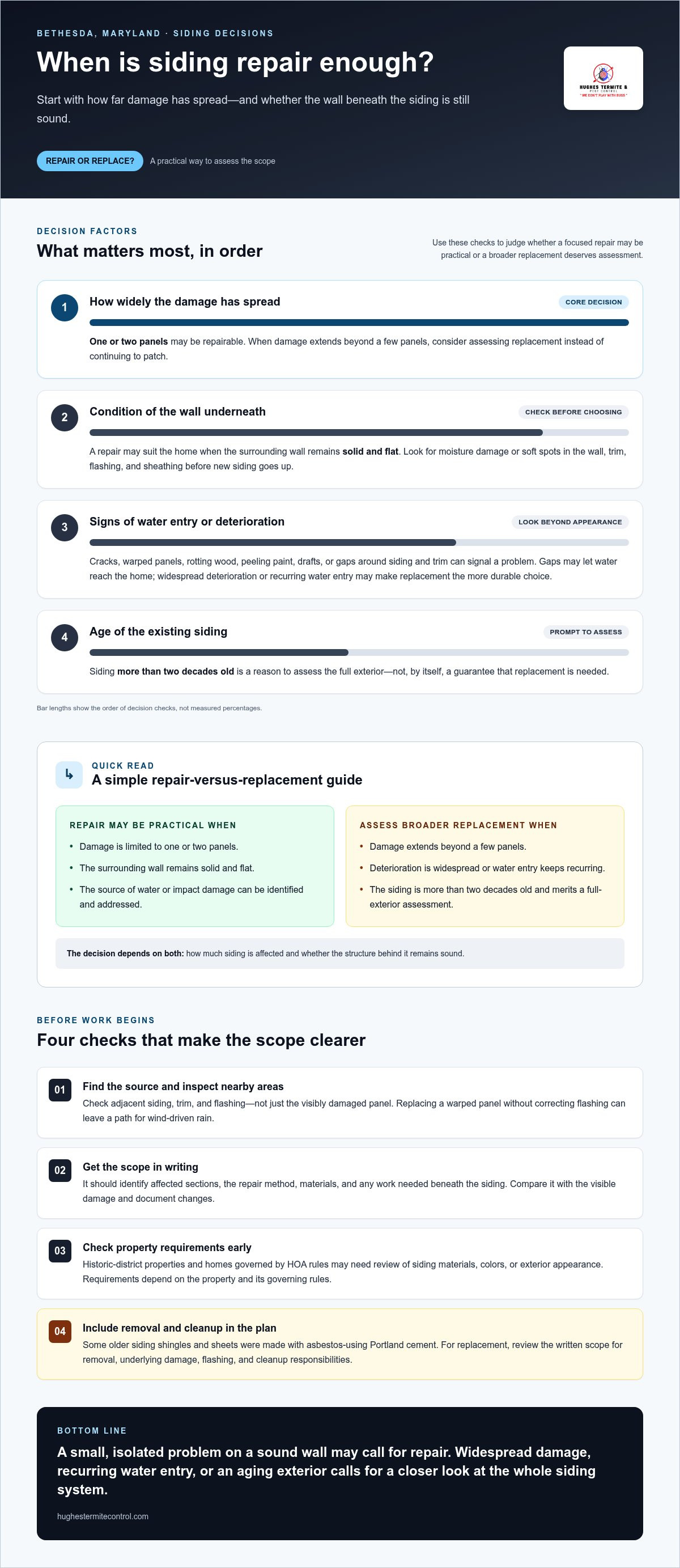
When siding damage spreads beyond a few panels, replacement may make more sense than another patch. For siding replacement in Bethesda, MD, damage to one or two panels may be repairable if the rest of the wall is solid and flat. Siding more than two decades old is another reason to assess the whole exterior.
Weigh the disruption and expense of replacement against the risks of leaving damaged siding in place. Cracks, warping, rot, peeling paint, or new indoor drafts can signal a problem. Gaps around siding or trim may let water reach the home. The right choice depends on how far the damage extends and whether the wall underneath remains sound.
This guide explains when repair may be enough, how common siding materials compare in Bethesda’s climate, and what careful replacement involves. It also covers what customer reviews can tell you about communication and follow-through, helping you decide based on your home’s condition rather than pressure.
Key Takeaways
- Use the spread of damage and the condition of the wall beneath it to judge whether a repair is enough or replacement is the more practical step.
- Compare vinyl, fiber cement, and wood by how each handles Bethesda’s weather and the upkeep you’re prepared to take on.
- Look beyond star ratings in contractor reviews: specific comments about communication, workmanship, and cleanup can offer more useful clues.
- Understand what manufacturer coverage and installation warranties apply, and how their terms differ before choosing materials and a contractor.
Are Siding Repairs Worth It In Bethesda, MD?
Repair is often practical when damage is limited and the surrounding wall remains sound. Widespread deterioration or recurring water entry may make replacement the more durable home improvement.
Signs of Damage and Repair Decisions
Look for cracks, warped panels, rotting wood, peeling paint, and drafts near exterior walls. These signs may indicate damaged siding or trim, not just a cosmetic issue. Damaged areas can let water reach the structure, increasing the risk of rot and mold. The U.S. Environmental Protection Agency warns that mold can return if the moisture problem remains.
In Bethesda, repair may suit damage to one or two panels if the wall remains solid and flat. When damage extends beyond a few panels, consider replacement. Siding more than two decades old is another reason to assess the full exterior. A siding professional can inspect the panels, trim, and visible structural areas before recommending a scope.
Repair Processes and Written Scopes
A sound repair starts with identifying how water or impact damaged the area, then checking adjacent siding, trim, and flashing. A written scope should specify affected sections, the repair method, materials, and any work needed beneath the siding. For example, replacing a warped panel without correcting flashing can leave a gap for wind-driven rain. Finding a close panel match may also affect the start date.
Before work starts, compare the written scope with the visible damage and have any changes documented. Clear descriptions distinguish a panel repair from broader remodeling or replacement work.
Replacement Rules and Project Risks
Historic-district properties and homes governed by HOA rules may require review of siding materials, colors, or exterior appearance. Requirements depend on the property and its governing rules, so review them before choosing materials or starting work.
Delayed repairs can let water reach wall components, turning a small exterior repair into more extensive structural work. According to the U.S. Consumer Product Safety Commission and U.S. Environmental Protection Agency, some older siding shingles and sheets were made with asbestos-using Portland cement. Poor workmanship may show as uneven panel lines, loose edges, open seams, or flashing gaps. For siding replacement in Bethesda, MD, review the written scope for removal, underlying damage, flashing, and cleanup responsibilities.
What types of siding are best for Bethesda's climate?
Maryland’s seasonal weather makes material choice and installation quality important. Vinyl, fiber cement, and wood are common options, each with different maintenance needs.
Spring, summer, and early fall are generally preferred for siding installation in Maryland because milder temperatures may mean fewer weather-related delays. Siding replacement in Bethesda, MD, typically takes from a few days to a couple of weeks. Project size, material selection, weather, and concealed damage all affect the timeline.
Before new siding goes up, inspect the wall, trim, flashing, and sheathing for moisture damage or soft spots. Repair affected areas first to give the new exterior a sound surface. An evaluation should identify visible issues and explain the proposed scope. Treat a free evaluation as free only when its terms clearly say so.
Vinyl, fiber cement, and wood can all suit Maryland homes, but the right choice depends on the home’s exposure, upkeep needs, and desired finish. Fiber cement contains cement and offers a durable exterior option; James Hardie describes its fiber cement siding as lasting upwards of 50 years. The manufacturer also provides a limited lifetime warranty against defects. Adding insulation beneath replacement siding can reduce heating and cooling costs.
Review the manufacturer’s documentation for the exact product, covered defects, exclusions, and maintenance conditions. Keep that warranty separate from any installation warranty, which concerns workmanship and should explain its coverage and duration in writing. A certification applies to a defined product or process, so check its scope rather than treating it as a blanket performance promise.
A clear installation sequence includes inspecting the substrate, correcting damage, fitting siding and flashing, then finishing edges and openings. The final walkthrough should look for aligned panels, secure trim, sealed transitions, and a consistent finish that protects against the elements. For a project assessment, siding installation work can be discussed as part of a home improvement plan.
Siding materials for Bethesda's climate
Maryland homeowners can compare vinyl, fiber cement, and wood by maintenance, appearance, and project scope. The best fit depends on the home’s exposure, existing exterior details, and desired finish. A useful consultation connects those priorities to specific material options rather than treating every house alike.
Vinyl offers a range of appearances, while fiber cement and wood have different textures and finishes. Compare samples beside the existing trim, window frames, and gutters. Check them in daylight, as shade can make a siding color look different across elevations. For a coordinated result, consider panel color and trim together.
Material selection also depends on the scope of work. Replacing a few sections may call for a close match to existing siding, while a full exterior project allows a broader change in color or style. Replacing trim around a window or roofline may help create a consistent edge. Include gutters and exterior transitions in the design discussion so the details work together.
Do siding replacement projects in Bethesda require permits? Permit requirements depend on the project scope and applicable local rules. A material change or broader exterior renovation may be treated differently from a limited repair, so identify the requirements before scheduling installation.
Match the material to the home’s layout and your maintenance preferences. For example, compare how a wood finish suits a traditional exterior with the cleaner panel look of vinyl. Fiber cement offers another option for homeowners weighing appearance and upkeep. In each case, consider how trim, window surrounds, and gutters affect the finished exterior.
Ask for a written materials schedule before work begins. It should identify the siding type, color, trim details, and areas included. Review sample colors alongside the home’s brick, roofing, and nearby exterior finishes. This helps prevent mismatched materials and clarifies what the project will change. Bethesda homeowners can compare options in the context of their home, not a sample viewed in isolation.
Contractor reviews and customer experiences
Customer reviews can reveal how a contractor handles parts of siding work homeowners rarely see. Look for specific examples: Was the estimate clear? Did the crew protect landscaping, explain weather delays, and clean up? Detailed accounts of these steps are more useful than a general rating alone.
Look for recurring themes across reviews, especially about communication and follow-through. One customer reporting a delayed start matters less than several describing missed updates or unresolved concerns. Notice how a contractor responds to criticism, too. A measured reply that addresses the issue offers more insight than a defensive response or a promise without details.
Compare each review with the project you need. Hardie fiber cement installation may involve different handling and finishing than a small vinyl repair. Prioritize experiences involving similar materials, trim work, or full exterior replacement. Roofing reviews may show how a contractor manages weather and job-site communication, but they do not establish siding workmanship on their own.
Use customer experiences as one part of your decision, then compare the written estimate and scope. Look for named materials, work areas, flashing and trim details, cleanup, and how concealed damage will be documented. A review that praises “great service” without an example is less informative than one describing a clear schedule and completed walkthrough.
Before choosing, make a short checklist: read detailed, recent accounts; note recurring concerns; compare project types; and weigh those observations against the proposed scope. This helps distinguish a polished impression from evidence of consistent work. Ask how schedule changes will be communicated if weather interrupts installation and how scope changes will be recorded. Clear answers set expectations before work begins.
For a grounded review of your project details and next steps, talk through your exterior project with us today.
Hughes Termite Control: Termite Control
Hughes Termite Control provides termite control when renovation work reveals possible termite activity in exposed wood. Siding selection and installation address the exterior, while termite treatment addresses an active pest problem. Keeping these needs distinct helps homeowners plan the next step without confusing siding work with pest management.
If a siding project uncovers wood damage or signs of termites, note the affected area and arrange an appropriate assessment before covering it with new materials. Termite control may be relevant when activity is present, but it does not replace evaluating and repairing damaged building materials. Clear coordination helps ensure exterior work does not hide pest concerns.
For questions about termite control, contact Hughes Termite Control to discuss your concern.
Make Your Next Exterior Decision With Confidence
Plan the next step by separating exterior work from any pest concern uncovered during the project. A siding plan should focus on materials, installation, and the home’s condition; pest issues require a different response. This distinction keeps the scope practical and directs each concern to the appropriate service.
Hughes Termite Control offers termite control, bed bug control, and wildlife control. If siding replacement in Bethesda, MD, leads you to notice signs of termite activity or another pest concern, address that issue alongside your broader home plans. The right next step responds to the condition you have actually found.
Contact Hughes Termite Control today to discuss a pest concern. A clear plan can help you move forward with confidence.
Frequently Asked Questions
Why should I replace my siding?
Replace siding when repairs can no longer address the exterior’s condition or performance. Full replacement lets homeowners coordinate siding with trim, window surrounds, and other exterior transitions instead of leaving mismatched sections. For siding replacement in Bethesda, MD, consider how the project can improve the home’s overall exterior envelope and accommodate planned improvements, not just its appearance. That broader view can help shape a cohesive scope.
Which Bethesda ZIP codes do you cover?
Hughes Termite Control focuses on the DMV, and Bethesda is the locality covered in this siding guide. ZIP codes alone do not establish who controls exterior work on every property. For a townhouse or condominium, association documents may assign siding maintenance to the association. Identify who is responsible for the exterior before planning replacement so the right party can coordinate the project.
What is the average cost to replace siding on a house in Bethesda, MD?
There is no single reliable average for every Bethesda home. The price depends on the project’s size, chosen material, and the condition of the siding and underlying areas. You can get a price by requesting a quote. For a useful estimate, define which elevations and trim are included, identify your preferred material, and note any visible damage. These details help clarify the scope behind the quote.
Which siding materials are best for Bethesda, Maryland’s climate?
Vinyl, fiber cement, and wood are common choices for Maryland homes, and each suits different priorities. Compare the upkeep you are comfortable with, the appearance you want, and how the material will work with existing exterior details. Ask for product documentation and review the maintenance requirements for your chosen material. This helps you choose for your property and preferences, rather than appearance alone.
How much does vinyl siding replacement cost per square foot in Bethesda?
The price per square foot depends on the home and work included, so one rate would not describe every project. Factors include the siding area, removal needs, trim details, and any damage beneath existing panels. You can get a price by requesting a quote. A clear estimate identifies the areas included and materials specified, so you can understand exactly what the quoted work covers.
What are the pros and cons of fiber cement, vinyl, and wood siding?
Vinyl offers a range of colors and generally requires less routine upkeep than wood, but damaged panels can be difficult to match exactly. Fiber cement has a different finish and requires careful handling and installation. Wood offers a natural appearance but needs ongoing maintenance to protect its finish. Compare samples, maintenance expectations, and how each material works with your home’s trim before deciding.


