
Removing a squirrel is only half the job. If the access point remains open, another animal may enter the attic, so lasting attic squirrel removal Washington DC homeowners need starts with identifying how squirrels got in. Daytime scurrying, droppings, chewed materials, or a gap near the roofline can suggest activity, but they don’t confirm whether young animals are present or what repairs the home may need.
It’s understandable to worry that trapping alone won’t solve the problem, or that investigating it yourself could put you or an animal at risk. In Washington, DC, wildlife-control work for profit requires a licensed operator, so don’t handle or trap wildlife yourself. A careful inspection can clarify what’s happening and help determine appropriate next steps.
This guide explains how to recognize possible squirrel activity, compare removal approaches, and assess entry-point sealing and related repairs. You’ll also learn what to ask a local provider about inspection, animal handling, exclusion, and prevention, so you can make an informed choice rather than rely on a quick fix.
Key Takeaways
- Learn which attic clues may indicate squirrel activity and why an inspection is more reliable than guessing from sounds alone.
- Understand why lasting attic squirrel removal Washington DC homeowners seek involves identifying entry routes, not just removing an animal.
- Compare safe homeowner observations and prevention steps with work that calls for a qualified wildlife-control provider.
- Know what to ask about the inspection, proposed work, access needs, and follow-up before approving a removal plan.
- See how wildlife-control and home-improvement services may help homeowners discuss removal alongside relevant exterior repairs.
Attic Squirrel Removal in Washington, DC: Signs, Risks, and First Steps
Unexplained scratching or scurrying overhead can be unsettling, especially when you can’t see what’s causing it. Several animals and even building sounds can produce similar clues, so an inspection is more useful than a guess. For attic squirrel removal Washington DC homeowners should first confirm what’s present, then identify access points, arrange appropriate removal, and address routes that could allow re-entry.
What signs may point to squirrels in an attic?
Listen for movement and note when and where it occurs. Eastern gray squirrels are active during the day, but timing alone can’t confirm which animal is in your attic. The overview of Eastern gray squirrel behavior offers background on the species, not a diagnosis of activity in your home.
Other clues may include droppings, gnaw marks on wood or wiring, nesting material, or openings and damage near the roofline. Each can have more than one cause, so don’t treat a single sound or mark as proof. Keep a simple record of the time, location, and type of activity you notice. These details can help a qualified inspector assess the situation without you approaching an animal or entering an unsafe space.
What should Washington, DC homeowners do first?
Keep children and pets away from suspected entry points and attic areas. Don’t corner, touch, or try to catch wildlife. A frightened animal may behave unpredictably, and attic access can involve hazards that aren’t obvious from below. Avoid climbing onto the roof to look for a gap.
Don’t seal a suspected opening before confirming animals are out. Blocking an active route could trap an animal inside or prevent it from reaching its young. Instead, ask a wildlife-control provider to inspect, confirm what animal is present, and explain how they’ll check for animals inside before addressing access points.
Before work begins, ask how the provider will handle the situation safely and in line with current Washington, DC requirements. Clarify what the inspection covers, whether the plan includes addressing re-entry routes, and what further assessment may be needed if signs suggest damage beyond the access point. A clear plan reduces guesswork and helps you decide what to do without handling wildlife yourself.
How Squirrels Enter Attics, and Why Removal Must Include Exclusion
Removing an animal without checking how it entered can leave the main problem unresolved. Squirrels may use vulnerable roofline details, vents, gaps, or damaged exterior materials to get inside. These are places to inspect, not proof of an entry route. The opening and repair needs depend on the home, so ask the provider to explain what they found and how they identified it.
Exclusion means addressing confirmed ways wildlife gets into a structure, after accounting for any animals that may still be inside. It can involve repairs or other measures selected for the specific opening. One repair can’t guarantee that wildlife will never return, so a sound plan should address the known access route and consider whether other vulnerable areas need attention.
Which parts of a home should an inspection check?
A professional may examine roof edges, vents, soffits, fascia, and other visible openings. Gaps or damage in these areas may warrant attention, but every home has different potential vulnerabilities. Ask the inspector to identify the openings they believe are relevant, document them, and explain which repairs they recommend and why.
This record helps you distinguish confirmed access routes from general maintenance concerns. It also gives you a clearer basis for discussing repair scope before work begins. If the inspection identifies exterior damage, ask whether that repair is included in the proposed plan or needs separate attention.
How can homeowners tell removal from exclusion?
Removal addresses the animal. Exclusion addresses confirmed routes into the structure. Both may be needed, but safe sequencing matters: a route shouldn’t be closed while an animal or dependent young may still be inside. Ask how the provider will check that the attic is clear before sealing or repairing an opening, and what they’ll do if activity continues afterward.
In Washington, DC, wildlife-control work for profit requires a licensed operator, and companies must be registered with the District’s Department of Energy & Environment. Review the agency’s Washington, DC wildlife control guidance, and ask the provider to explain how its proposed work fits current requirements. Clear answers about inspection, animal handling, and access repairs can help you compare options without assuming every removal plan includes exclusion.
If you’re considering a local provider, review its wildlife control services and confirm directly whether it currently accepts squirrel-removal work in Washington, DC. Ask what exclusion or related exterior repairs may fall within its scope.
DIY Trapping or Professional Squirrel Removal in Washington, DC?
Catching one squirrel doesn’t necessarily resolve how it entered the attic. Other animals may remain inside, or the opening may still be accessible. Homeowners can safely record activity from a distance and keep people and pets away from affected areas. Inspection, wildlife handling, and work that requires entering an unsafe attic or reaching the roof are better left to a qualified provider.
For attic squirrel removal Washington DC homeowners should compare the full plan, not just whether it removes an animal. Use this framework to clarify what’s included:
When is professional help the more appropriate choice?
Contact a qualified provider if animals may be inside an inaccessible space, you suspect damage, or inspection requires structural access. Don’t corner wildlife, set improvised traps, or enter an attic that may be unsafe. Before work begins, ask how the provider will assess whether animals or dependent young are present and identify access routes. The answers can help you understand whether the proposed sequence accounts for animals inside before any opening is closed.
What should you ask a squirrel-removal provider?
Ask what the inspection covers, how likely entry points will be identified, and which removal and exclusion methods are proposed. Find out how the provider checks that animals are out before sealing an opening. Confirm whether follow-up checks, cleanup, or repairs are included or whether you’ll need another provider. Also ask how the work complies with current District requirements. The Washington, DC wildlife control regulations published by the Department of Energy & Environment are a useful reference. Check with the agency for current guidance rather than assuming a method is permitted.
A Washington, DC Squirrel-Removal Plan: Inspection, Work, and Follow-Up
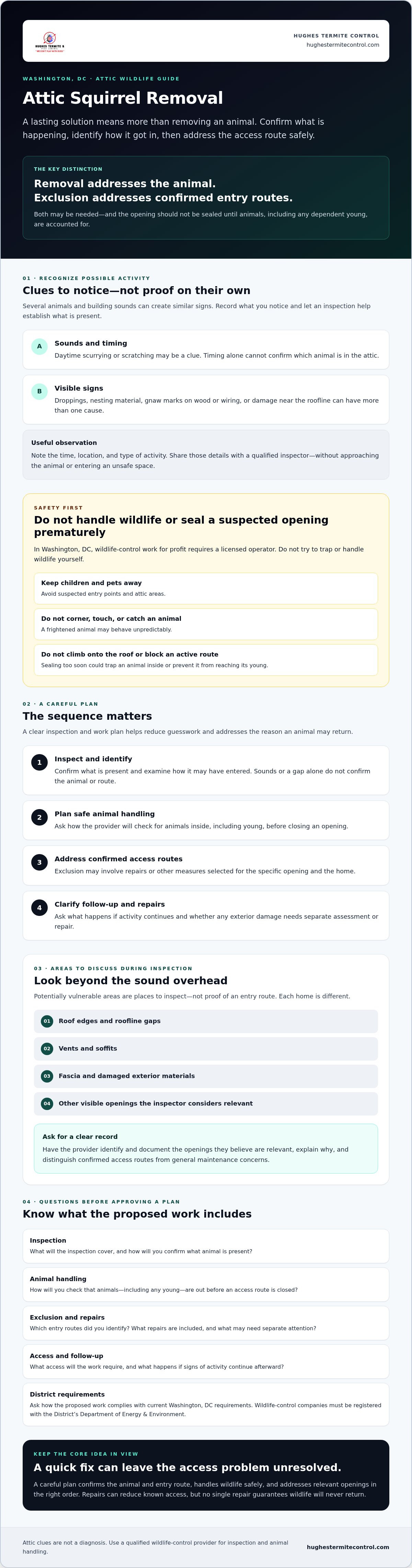
A clear plan should move from observations to inspection, agreed work, and a check of the result. Before work starts, ask the provider to explain the scope, where access is needed, how you should prepare, and what the plan can’t address. This helps you see whether the recommendation covers only animal removal or also confirmed entry routes and related repairs.
- Report what you’ve observed. Share where and when activity occurs, along with any visible damage or suspected openings.
- Arrange an inspection. Confirm which areas the provider will examine and whether you need to prepare anything.
- Review the findings and plan. Ask what the provider confirmed, what remains uncertain, and which tasks are included.
- Approve the work. Make sure access needs, proposed methods, and limitations are clear before work begins.
- Check the result. Find out whether the provider recommends a follow-up visit and how to report continued activity.
Wildlife requirements depend on the jurisdiction. If your property or provider is in Washington, DC, Maryland, or Virginia, verify current requirements with the relevant local authority rather than assuming the rules are the same across the region.
What happens during an attic squirrel inspection?
An inspection may review your reported activity, accessible attic areas, and possible exterior entry routes. Findings should shape a plan for that home, rather than lead to a standard treatment applied without regard to the evidence. Ask what the provider couldn’t inspect or confirm, and whether another specialist may be needed to assess an issue beyond the agreed scope.
Request written documentation of recommended exclusion or repairs. It should identify relevant locations, proposed work, and who is responsible for each task. If repairs, cleanup, or other work aren’t included, ask what next step the provider recommends. This makes it easier to see whether the plan addresses a suspected route back into the home, rather than removal alone.
How do follow-up and repairs help reduce repeat problems?
A follow-up can check completed work and revisit activity you report, but it can’t promise that wildlife will never return. Clarify what the check includes and what happens if you continue to hear or see signs afterward. Confirm whether cleanup, insulation replacement, and structural repairs are included or handled by another provider. These are separate tasks, so don’t assume they’re part of wildlife removal unless the scope says so.
For a practical next step, contact Hughes Termite Control about wildlife control and ask whether it currently accepts squirrel-removal work in Washington, DC. You can also ask what inspection, follow-up, or related repairs it can discuss.
Choosing Hughes Termite Control for Attic Squirrel Removal in Washington, DC
Hughes Termite Control is a privately owned local business serving the DMV, with wildlife-control and home-improvement services that include roofing, siding, windows, and doors. Before considering Hughes for attic squirrel removal Washington DC homeowners should confirm directly that the company currently accepts squirrel cases in the District. Its general service categories don’t establish which squirrel-removal methods, exclusion work, or attic repairs are available for a specific job.
A provider is a good fit when the proposed work is clear. Look for an inspection plan that explains what will be checked, methods described before work starts, and a defined scope that separates animal removal from access repairs or other tasks. If wildlife work and exterior repairs are both needed, ask how the provider coordinates them and who is responsible for each part.
What makes a local provider a good fit?
Compare providers by their answers, not just by whether they offer wildlife control. Ask how they’ll assess animal presence and likely access routes, what the inspection can and can’t confirm, and how they’ll explain the recommended work. Clarify whether follow-up is available and what it covers. Before scheduling, verify that the provider serves your Washington, DC address and handles squirrel cases specifically.
Hughes also offers home-improvement services that may be relevant if an inspection identifies exterior concerns. Ask whether roofing, siding, or window and door work is appropriate for the issue and within the company’s current scope. Don’t assume those services include squirrel exclusion, attic cleanup, insulation work, or general restoration. Confirm each task directly.
What information should you share when requesting service?
Describe where sounds or other signs occur, when they happen, and how often you’ve noticed them. Mention visible openings or damage, along with any previous trapping or repair attempts. You don’t need to inspect the roof or approach wildlife to provide useful details. If you have notes or photos taken safely from a distance, ask whether they would help with an initial discussion.
Before agreeing to work, ask what happens next, what the proposed inspection and work include, and what remains outside the scope. Confirm how the provider plans to assess whether animals are inside before addressing entry routes, and whether additional repair or cleanup work would need a separate provider.
If you’re considering Hughes, describe the attic concern and ask whether it currently accepts squirrel-removal work in Washington, DC. A direct conversation about service availability, inspection, and scope can help you decide on a sensible next step.
Take the Next Step Toward a Protected Attic
Unfamiliar attic sounds don’t confirm squirrels, so start with the evidence: note when and where activity occurs, then ask for an inspection before deciding what work is needed. A lasting plan should account for animals inside and assess confirmed access routes, rather than focus on catching an animal alone. Avoid handling wildlife or sealing a suspected opening before the situation has been checked.
For attic squirrel removal Washington DC homeowners should also ask what the inspection, removal, exclusion, follow-up, and any related repairs include. Hughes Termite Control is a privately owned local business offering wildlife-control and home-improvement services. Confirm directly whether it currently accepts squirrel-removal work in Washington, DC, and whether the repairs your home may need fall within its scope.
Contact Hughes Termite Control to ask about wildlife-control service in Washington, DC. A clear inspection and defined plan can help you make informed decisions about protecting your home.
Frequently Asked Questions
How do I know if squirrels are in my Washington, DC attic?
Scratching or running sounds, droppings, nesting material, and damage near roof openings can point to squirrels, but none confirms the animal by itself. Other wildlife or building conditions may create similar signs. Note where and when you notice activity, and keep people and pets away from the area. For attic squirrel removal Washington DC homeowners should rely on an inspection by a qualified wildlife-control provider, not sound alone.
Can I remove squirrels from my attic myself?
It’s safer to avoid handling wildlife, entering an unsafe attic, or setting improvised traps. An animal may be difficult to identify or reach, and closing an opening before confirming animals are out can create further problems. A qualified provider can assess animal presence, possible young, and access routes. Before work begins, ask which methods are proposed and verify current requirements with the appropriate local authority.
What is the difference between squirrel removal and exclusion?
Removal addresses the animal found in or around the home, while exclusion addresses suitable access routes after the provider accounts for animals that may still be inside. Both may be part of a plan, depending on inspection findings. Ask which openings the provider recommends addressing, how the work will be sequenced, and whether repairs or follow-up checks are included in the agreed scope.
How long does attic squirrel removal take?
There’s no single timeline for every attic. The expected duration can depend on where the animal is, whether dependent young may be present, what access is needed, and whether repairs are recommended. Ask the provider what can happen during the initial visit and what may require another appointment. Weather, access conditions, or material availability may also affect repair timing, so request an estimate after assessment.
How much does attic squirrel removal cost in Washington, DC?
The total depends on the inspection findings, removal approach, access conditions, and any recommended exclusion or separate repairs. No single price applies to every attic. Ask the provider for a written description of the proposed work, any separate charges, and what isn’t included. Compare the scope and follow-up terms as well as the quote, so you understand what the plan covers before approving it.
What should I do if squirrels may have babies in my attic?
Don’t seal an opening or attempt removal before a qualified provider assesses the situation. Dependent young may affect the appropriate timing and approach. Describe the activity you’ve noticed and ask how the provider checks for young animals before recommending work. Wildlife requirements can vary by jurisdiction, so confirm current local guidance with the appropriate authority and ask how the proposed plan accounts for it.
Does Hughes Termite Control remove squirrels in Washington, DC?
Hughes Termite Control offers wildlife control, but you should confirm directly whether it currently accepts squirrel-removal work in Washington, DC. When contacting the privately owned DMV business, describe the attic signs and ask what its inspection covers. Confirm whether squirrel-specific removal, exclusion, follow-up, or related exterior repairs are available within its current service scope. Don’t assume wildlife control includes every repair or attic-related task.


