
A few heavy footsteps above the ceiling at night can leave you wondering whether a raccoon has found its way into the attic. Scratching, damaged vents, or droppings may offer clues, but checking an enclosed space yourself can put you and the animal at risk. Safe raccoon removal DMV homeowners can rely on starts with careful observation, not improvised trapping.
It’s understandable to want to protect your family, pets, and home while getting a clear answer. You can look for signs of raccoon activity without disturbing the animal, reduce immediate risks, and decide when professional wildlife control may be the right next step.
This guide explains what to watch for, how to keep people and pets away from a suspected animal, and why sealing an opening before confirming what’s inside can cause problems. It also covers what to check when comparing wildlife-control options in Washington, D.C., Maryland, and Virginia, where rules and service coverage can differ.
Key Takeaways
- Attic sounds, damaged vents, or outdoor sightings can be clues, but no single sign confirms a raccoon is nesting inside.
- Observe roof edges, vents, and chimneys from a safe distance. Leave suspected nesting spaces undisturbed.
- For raccoon removal DMV homeowners should prioritize safe observation and local rule checks over handling or trapping wildlife themselves.
- When contacting wildlife-control providers, ask whether they cover your community and what inspection, removal, and follow-up may involve.
- Requirements differ across D.C., Maryland, and Virginia. Check current guidance from the relevant local authorities before deciding on next steps.
Raccoon Removal in the DMV: Recognize the Problem Before Acting
Unexplained footsteps overhead or activity outside after dark can be unsettling, especially when you’re unsure whether an animal has entered your home. A raccoon seen in the yard doesn’t confirm it’s nesting in the attic. Treat sounds, sightings, and damage as clues, not proof that an animal is inside.
Raccoons are adaptable and may seek shelter in attics, chimneys, or other enclosed spaces. Learning about the common raccoon can help explain why one may appear near a home, but observation is safer than trying to identify or approach it at close range. For raccoon removal DMV homeowners should first separate what they’ve observed from what they suspect.
What signs may indicate raccoon activity around a home?
Possible clues include nighttime thumping or scratching, overturned outdoor containers, and visible damage around roof edges, vents, or other openings. None confirms raccoon presence on its own. Repeated sounds or activity near the same roofline or attic access point are worth noting, particularly when there’s visible damage nearby. Don’t climb onto the roof or enter an enclosed space to investigate.
Keep a simple record from a safe distance. Note the date and time, where you heard or saw activity, and any visible changes, such as a damaged vent or disturbed container. This can help a qualified local wildlife-control provider assess the situation without requiring you to disturb a possible nesting area.
Why should homeowners avoid approaching a suspected raccoon?
A wild animal may react unpredictably if it feels cornered or disturbed. Keep children and pets away from the animal and any suspected entry point. Don’t touch, trap, block in, or try to drive it out. If a raccoon appears injured, trapped, or inside the structure, contact qualified local help and explain what you observed. Avoid entering a suspected nesting space.
The DMV spans Washington, D.C., Maryland, and Virginia, which have separate local requirements and service boundaries. Don’t assume the same guidance or provider coverage applies across the region. Before arranging help, verify that the provider serves your community and check current requirements with the relevant local authority. A measured assessment can clarify whether the signs point to an animal indoors and what next step may be appropriate.
How Raccoons Enter DMV Homes and What Their Activity Can Mean
Raccoons may use gaps or damaged areas around rooflines, soffits, vents, and chimneys to reach sheltered spaces. An opening is a possible access point, not proof that an animal has entered. Repeated activity near the same part of the home makes that area worth discussing with a wildlife-control professional, particularly if you also notice visible damage.
A sighting means an animal was seen near your home; confirmed wildlife activity inside means there is reliable evidence that an animal has entered the structure. A raccoon in the yard, a noise overhead, or a mark near a vent does not by itself confirm that an animal is nesting indoors.
Which exterior areas are worth observing from the ground?
From a safe location, look toward rooflines, soffits, vents, chimneys, and any screening that appears damaged or out of place. Don’t climb a ladder, get onto the roof, or reach into an opening to check what’s behind it. If you can take photos safely from the ground, share them with a professional. A clear image can show what you noticed without bringing you closer to a possible entry point.
Repeated use of an opening may affect surrounding materials or make existing damage more apparent. Avoid sealing a suspected access point before you know whether an animal is inside. A professional assessment can help determine whether the opening is being used and what next steps are appropriate.
Could noises in a wall or attic be caused by something else?
Yes. Sounds alone can’t reliably identify an animal or pinpoint its location. Scratching or movement overhead may raise a concern, but it doesn’t confirm a raccoon. Note when and where the sounds occur and whether they follow a pattern. Record any visible exterior changes, but don’t open a wall or ceiling to investigate.
If the noises persist or occur alongside visible damage, consider professional confirmation before deciding what to do. The Humane Society of the United States also offers guidance on humane raccoon removal, including situations involving attics and chimneys. For raccoon removal DMV homeowners should seek an assessment based on the specific home rather than assuming one sound or mark tells the whole story.
If you’re considering Hughes Termite Control, ask about its wildlife control services and confirm whether raccoon cases and your community are covered.
DIY Raccoon Removal vs. Professional Wildlife Control in the DMV
Watching from a safe distance and making simple changes around the property are different from trying to capture or drive out a wild animal. If you suspect a raccoon is inside, don’t approach it, handle it, or enter a possible nesting space. You may not know where the animal is, whether others are present, or what local rules apply to removal.
DIY removal may seem quicker, but an improvised trap or blocked opening can create more uncertainty. If an animal remains inside, closing its access point could leave it unable to get out. Rules and permitted methods also differ across Washington, D.C., Maryland, and Virginia, so guidance for one jurisdiction may not apply in another.
What can homeowners safely do before an assessment?
Keep children and pets away from the animal and suspected entry area. Observe from a distance, note activity, and secure accessible food sources, such as pet food or trash, where practical. Don’t block an opening while an animal could still be inside. Avoid poison, improvised traps, or exclusion methods you haven’t verified with a qualified local professional.
When is professional raccoon removal worth considering?
Contact local wildlife control if you suspect an animal is inside the structure, see repeated activity around an opening, or notice damage near a possible entry point. Ask what the assessment includes, which removal methods may be considered, whether exclusion or follow-up is available, and who is responsible for each step. Confirm the provider handles raccoon cases in your community rather than assuming general wildlife control includes that service.
Check credentials against current local requirements. Virginia requires a Department of Wildlife Resources license to trap or hunt raccoons, and commercial nuisance wildlife work may require a separate permit. Maryland requires wildlife damage control operators to hold the relevant Department of Natural Resources permit. In Washington, D.C., wildlife removal activities require a valid wildlife control permit. Requirements and permitted actions can change, so verify them with the relevant authority before work begins.
Professional help is not simply about having someone else set a trap. It can provide a way to assess the animal’s location and the opening before deciding on a response. For raccoon removal DMV homeowners should compare providers by local coverage, applicable credentials, their proposed approach, and a clear explanation of follow-up. If the issue appears limited to outdoor activity and there’s no sign of entry, continue observing from a safe distance rather than attempting removal.
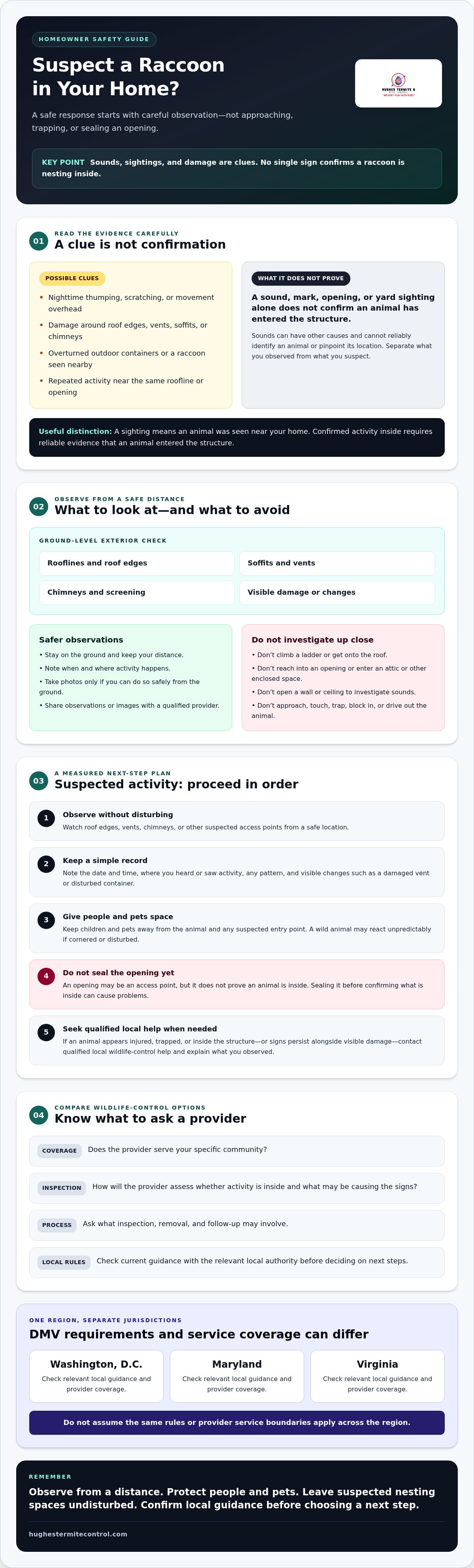
Suspected Raccoon Activity: A Safe Step-by-Step Plan
Start with distance, not a removal attempt. The next step depends on whether you saw an animal outdoors or have reason to think one is inside. Use this plan to protect people and pets while gathering useful information for local help.
- Keep back. Don’t approach, corner, feed, touch, or try to trap the animal. Bring pets indoors and keep children away from it and any suspected entry area.
- Assess from a secure location. If the raccoon is outdoors, observe without blocking its path. Note whether it appears injured or unable to leave. If it seems trapped or poses an immediate danger, contact the appropriate local animal-control or wildlife agency for guidance.
- If you suspect it’s inside, keep the area undisturbed. Keep occupants and pets out of the suspected space. Don’t enter it, open walls or ceilings, or seal an opening that an animal might still be using.
- Record what you observe. Write down the dates, times, and locations of sounds or sightings, along with visible conditions. Photos can help if you can take them from a safe place.
- Contact local wildlife control if indoor activity or repeated access is suspected. Give the provider your property location and ask whether they serve that community. Before arranging work, verify relevant agency advice and current wildlife requirements for your jurisdiction.
What should you ask a provider?
Ask how the provider would assess the situation and what removal methods may be considered. Clarify whether entry-point closure and any resulting repairs are included, handled separately, or left to you. Confirm who is responsible for follow-up and which credentials or permits apply locally. Don’t assume one answer covers the entire DMV: Washington, D.C., Maryland, and Virginia have separate authorities and requirements.
A clear description of the process helps you make a decision without attempting removal yourself. For raccoon removal DMV homeowners should confirm both that the provider serves their community and that raccoon cases are included in its wildlife-control services.
To ask about wildlife control and confirm whether raccoon cases in your community are covered, contact Hughes Termite Control.
Choosing Raccoon Removal Help in the DMV and Planning the Next Step
Once you have a clear record of what you’ve observed, look for help that understands both the property and local requirements. Washington, D.C., Maryland, and Virginia are separate jurisdictions. Don’t assume a provider serves every DMV community or that the same wildlife rules apply across state and district lines. Confirm current guidance with the relevant local authority before work begins.
What should you ask a DMV wildlife-control provider?
Start by checking whether a provider is suited to your situation. Ask whether it serves your exact city or county and handles raccoon cases. Then clarify what happens after you make contact, including:
- What does the assessment include, and how will the provider confirm whether an animal is inside?
- What removal approach may be considered, and how will applicable local requirements be addressed?
- Is exclusion or entry-point closure available, and who handles any property repairs if needed?
- What follow-up, if any, should you expect, and who should you contact with further concerns?
Answers should make the proposed work and responsibilities clear. Ask the provider to explain any permits or credentials that apply, then verify them with current local authorities. This is especially useful if a company works across jurisdictional boundaries.
How can Hughes Termite Control help with a wildlife concern?
Hughes Termite Control lists wildlife control among its services, but confirm directly whether raccoon-specific service is available in your community. If an assessment identifies damage, ask whether relevant work is available through the company’s home improvement services. The appropriate repair depends on what an inspection finds, and availability for a particular raccoon case shouldn’t be assumed.
For raccoon removal DMV homeowners should compare providers based on confirmed coverage, a clear assessment process, the proposed approach, and responsibility for follow-up. Avoid choosing based on broad claims alone. A useful conversation should clarify what the provider can do, what it can’t confirm yet, and whether another local authority or trade may need to be involved.
To ask about wildlife-control services and confirm raccoon case availability and local coverage, contact Hughes Termite Control.
Take the Next Step With a Clear Plan
Unusual sounds or damage can raise concern, but one clue rarely confirms a raccoon is inside. Keep your distance, record what you notice, and avoid handling the animal or disturbing a suspected nesting area. If the signs persist or suggest activity inside the home, a professional assessment can help clarify the situation.
For raccoon removal DMV homeowners should also confirm that a provider serves their specific community and understands the requirements for the relevant jurisdiction. Ask what the assessment and removal approach may involve, and who handles follow-up. Hughes Termite Control lists wildlife control among its services. Confirm raccoon-specific availability and coverage, as well as whether any home repair or improvement work identified during an assessment is available for your case.
Contact Hughes Termite Control to confirm local wildlife-control options and discuss what may be appropriate for your property. Careful observation and verified local guidance can help you choose a sensible next step.
Frequently Asked Questions
Is it safe to remove a raccoon from my attic myself?
No. Don’t approach, trap, or enter a suspected nesting area yourself. You may not know exactly where the animal is, whether it can leave, or how it might react if disturbed. Keep people and pets away, and record sounds or visible signs from a safe distance. Because local requirements can vary across the DMV, contact a qualified wildlife-control provider to assess the situation and explain appropriate next steps.
Can raccoons get into a house through the roof?
Yes, roofline openings, vents, chimneys, or damaged exterior materials may provide access to a home. But an opening alone doesn’t prove a raccoon used it. Observe from the ground and note visible changes, such as damaged screening or activity near a vent. Don’t climb a ladder or reach into an opening to investigate. If you’re concerned, ask a professional to assess the area and confirm whether it may be an entry point.
How do I know if a raccoon is in my attic?
Repeated noises, visible disturbance near a possible entry point, or direct observation may be clues, but none confirms a raccoon is in the attic. Other animals and ordinary building sounds can be difficult to distinguish. Note when and where sounds occur, and keep away from the suspected area. If signs persist or you see related exterior damage, arrange a professional assessment rather than opening a ceiling or entering the attic.
What should I do if I see a raccoon near my home in the DMV?
Stay at a distance, bring pets indoors, and don’t feed, corner, touch, or try to trap the raccoon. Observe from a secure location and note whether it appears trapped or injured. If it seems dangerous or unable to leave, contact appropriate local authorities or qualified wildlife-control help. The right agency or provider may depend on whether your property is in Washington, D.C., Maryland, or Virginia, so confirm the appropriate local contact.
Can I seal a hole if I think a raccoon is inside?
No. Don’t seal a suspected access point until it’s clear no animal remains inside. Closing it prematurely could trap an animal or make the situation harder to resolve. Keep people and pets away from the area, and don’t reach into the opening to check. Ask a qualified wildlife-control provider to assess activity and explain whether entry-point closure or repairs are appropriate once the animal’s presence has been evaluated.
How much does raccoon removal cost in the DMV?
There isn’t one reliable estimate for every raccoon-removal situation, and pricing varies by provider. The scope of work, access to the suspected area, inspection findings, and possible follow-up needs can all affect an estimate. Ask for a written explanation of what’s included and which work may cost extra. Confirm that the provider serves your exact property location, since coverage can differ across DMV communities.
Are raccoon removal rules different in DC, Maryland, and Virginia?
Requirements and responsible agencies can differ between Washington, D.C., Maryland, and Virginia, and guidance may change. Don’t rely on advice intended for another jurisdiction or assume a removal method is permitted where you live. Check with the relevant local or state wildlife authority, and ask any provider how it handles requirements that apply to your property. Confirm the provider’s credentials or permits with current authorities when needed.


