

A sound, well-maintained deck can strengthen a home’s appeal to buyers, but repairs alone don’t guarantee a higher sale price. Wood deck repair and restoration in the DMV can preserve the deck’s usability and address visible or structural damage before it spreads.
If you’ve noticed soft boards, loose railings, raised fasteners, or peeling finish, it can be hard to tell whether a focused repair will do or the deck needs more substantial work. The right choice depends on what’s damaged: surface boards may be replaceable while the framing remains sound, but deeper rot needs attention beyond refinishing.
This guide explains how to spot rot, assess common deck and porch damage, and compare board replacement, structural repairs, and refinishing. You’ll also learn what affects project costs and how to consider the deck’s contribution to your home’s appeal. Use these details to decide what to do next without treating every worn board as a reason for a full rebuild.
Key Takeaways
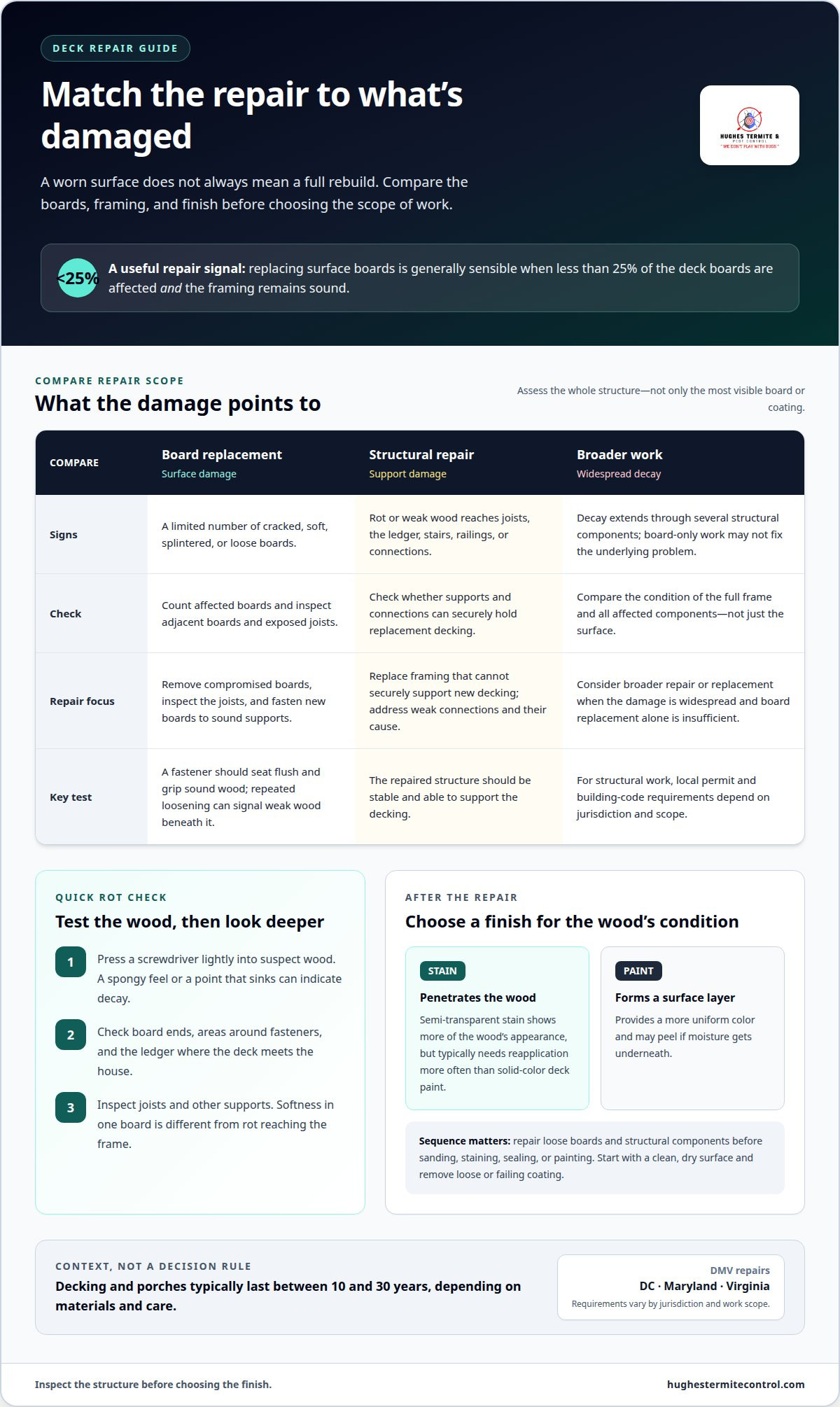
- Press a screwdriver lightly into suspect wood; a spongy feel or sinking point can indicate rot that needs more than a surface finish.
- Replacing damaged boards can preserve a deck when its framing is sound, while widespread soft framing may call for a broader repair.
- Repair loose or damaged boards and structural components before sanding, staining, sealing, or painting.
- Choose a finish based on the wood’s condition and the upkeep it will need; stain penetrates the wood, while paint forms a surface layer.
Identifying rot and deciding whether to replace boards
Start by distinguishing surface wear from decay that reaches the framing. The affected area, board condition, and supports beneath the deck help determine whether a focused repair is suitable or more extensive replacement is needed.
Rot Assessment
Press a screwdriver lightly into suspect wood. A spongy feel or a tool that sinks into the wood can indicate decay. Check board ends, areas around fasteners, and the ledger where the deck meets the house. Softness in one board differs from rot extending into joists or other supports, so inspect beyond the visible surface before choosing a repair.
Pressure-treated wood, cedar, and composite decking each have different repair and maintenance needs. For wood, the surface condition and moisture exposure affect the work; composite boards need materials suited to their construction. Match replacement boards to the existing deck so the repair fits the surrounding surface.
Repair or Replacement Decisions
Assess how many boards are affected, then examine joists, the ledger, stairs, and railings. Surface-board replacement is generally sensible when less than 25 percent of the deck boards are affected and the framing remains sound. If decay extends through several structural components, replacing boards alone may not address the underlying problem. Compare the condition of the whole structure, not just its most visible damage.
For deck repairs in DC, Maryland, and Virginia, permit and building-code requirements depend on the jurisdiction and scope of work. Replacing a surface board differs from changing structural supports or deck dimensions, so the requirements may differ too. Plan structural work with applicable local requirements in view.
Board Replacement and Fastening
Replacing compromised boards can extend a deck’s lifespan without a complete rebuild. Remove damaged boards and inspect the exposed joists. Replace any framing that cannot securely support new decking, then fasten replacement boards to sound joists with fasteners seated flush and aligned consistently. A fastener that loosens again may indicate weak wood beneath it.
When assessing repair versus replacement, consider the extent of decay, the condition of the frame, and whether repairs would leave the deck stable. Decking and porches typically last between 10 and 30 years, depending on materials and care. That range is a general lifespan, not a decision rule for an individual deck.
Common deck damage and structural failures
Damage can affect individual boards, connections, or the frame supporting the deck. After high winds, snow, or heavy rain, inspect the surface and structure before using the outdoor space.
Damaged Boards and Fasteners
Look for cracked boards, splinters, raised nails, loose screws, and widened gaps. A damaged board can move underfoot, while a fastener that repeatedly loosens may point to a weak connection or deteriorated wood beneath it. These problems call for different repairs.
Replace boards that are cracked through or can no longer hold fasteners securely. Check adjacent boards and exposed joists as well, since moisture can damage more than the visible surface. Tightening a fastener helps only if it can grip sound wood. Addressing the cause, not just the symptom, can extend the deck’s useful life.
Sun, Heat, and Rain Damage
Sun and heat can dry exposed wood, contributing to fading, rough grain, and surface cracks. Repeated rain adds moisture, especially where water collects between boards or against the house. Together, these conditions can wear coatings and leave wood vulnerable to further deterioration.
After harsh weather, inspect the deck for new movement, discoloration, and peeling finish. Pay attention to board ends, joints, and shaded areas that dry slowly. A cracked coating can let moisture beneath the surface; applying another coat without addressing the damage may conceal the problem rather than resolve it.
Weather-Damaged Deck Restoration
After unusually high winds, snow, or heavy rain, inspect the deck for loose railings, shifted boards, damaged stairs, and movement at connections. Look beneath the deck, too, for signs of water intrusion or displaced framing. Keep people off areas that feel unstable until the damage is addressed.
For an insurance claim, document the storm date, visible damage, and affected areas with clear notes and photographs. Separate storm-related damage from older wear when describing what needs repair. Restore the structure first, then address surface preparation and coatings. If the repair involves deck repair work, focus the scope on the damaged components and their underlying cause.
Deck sealing, staining, sanding, and painting
A durable finish starts with a clean, dry surface and sound decking. Choose a coating based on the wood’s condition, the look you want, and the upkeep it requires.
Sanding and Deck Finishes
Sanding rough boards removes splinters and sharp edges while preparing the surface for a new finish. Clean away dirt and loose coating before applying stain or paint. The wood must be dry enough for the selected product, so follow its preparation and application instructions. For coating work, apply a deck-specific primer before the finish if the coating system calls for one.
Paint and Stain Options
Stain penetrates the wood, while paint sits on top and may peel if moisture gets underneath. Semi-transparent stain shows more of the wood’s appearance, but typically needs reapplication more often than solid-color deck paint. Paint provides a more uniform color. Before choosing a finish, consider the existing coating, surface condition, and preparation each option requires.
Changing from one finish type to another may require extra surface preparation. Remove loose or failing coating first to create a sound base for the new application.
Staining and Weatherproof Sealing
Staining and sealing help protect wood decking from excess moisture and UV damage. Start with a clean surface, and complete repairs and preparation before applying the finish. Follow the product’s directions for drying conditions and application. A coating cannot fix soft or damaged boards, so address those problems before refinishing.
Sealing and Maintenance
Wood decks should be stained and resealed every two to three years. Exposure and wear affect how the finish looks between applications, so inspect for bare patches, fading, or peeling. Sand rough areas and clean the decking before recoating. Regular upkeep helps maintain the protective layer, but the right schedule and finish depend on the wood and product.
Deck, patio, and porch repair services
Deck, patio, and porch work can involve more than replacing worn surface boards. Wood deck repair and restoration in the DMV may include inspecting connections, repairing framing, replacing damaged material, and preparing sound wood for sealing or another finish.
A thorough scope distinguishes surface repairs from structural work. A deck inspection checks for soft or rotted boards, raised fasteners, splintering, cracks, and failed coatings. It also considers railings, stairs, and the frame beneath the walking surface. These details help show whether the problem is isolated or affects how the structure carries weight.
After inspection, the repair plan should describe which components need work and why. For example, replacing surface boards over sound framing is different from repairing both the frame and decking. A typical 300-square-foot deck surface replacement takes 2 to 3 days. The material, access, weather, and extent of damage shape the project sequence.
Rebuilding becomes a consideration when deterioration reaches the supporting structure. One repair guideline recommends considering a rebuild when more than 30 percent of a deck’s joists have soft wood. That figure is a decision point, not a substitute for examining the whole frame. A porch with sound joists but loose screws may need targeted fastening repairs instead.
To compare repair scopes, look for clear descriptions of damaged boards, fasteners, railings, framing, and finish work. The plan should distinguish repairs from a rebuild and explain the sequence, including why sealing comes after damaged components are addressed. This makes the proposed work easier to assess without treating every weathered surface as structural failure.
Repair and restoration can include inspection, board or framing repairs, fastening, sanding, and sealing, depending on the deck’s condition. Decking and porches typically last between 10 and 30 years, depending on materials and care. Regular attention to loose fasteners and weather damage helps keep an outdoor space usable through changing seasons, including summer exposure.
Hughes Termite Control: Wood-Destroying Organism Inspections
Hughes Termite Control offers Wood-Destroying Organism Inspections when deck damage raises concern about wood-destroying organisms. Soft or deteriorated wood can have several causes, so identifying whether an organism may be involved helps clarify the next step. An inspection complements, but does not replace, repairs to damaged boards or framing.
Once the cause is understood, the repair decision can focus on the affected wood and the deck’s condition. Hughes Termite Control also offers decking services for homeowners addressing physical damage or restoring a deck. If you’re unsure whether deterioration points to an organism-related concern or a repair need, contact Hughes Termite Control to discuss an inspection or decking work.
Set a Clear Next Step for Your Deck
Turn what you’ve noticed into a practical scope of work. Decide whether your priority is safer footing, stronger framing, a refreshed surface, or a combination. This keeps the discussion focused on the deck’s condition and how you use the space, not appearance alone.
For wood deck repair and restoration in the DMV, a careful evaluation can help distinguish a contained repair from work that reaches the structure. Hughes Termite Control offers decking services and Wood-Destroying Organism Inspections for deck repairs and concerns about possible organism-related damage.
Hughes Termite Control also offers Termite Control, Bed Bug Control, and Wildlife Control. If deck work is your next step, contact Hughes Termite Control today to discuss your project. A clear starting point can make the way forward easier to plan.
Frequently Asked Questions
Does Deck Repair Increase Home Value?
Deck repair can improve a home’s condition and appeal, but it doesn’t guarantee a higher sale price. Buyers may value a usable outdoor area more when it feels safe and fits the home’s overall upkeep. In the DMV, the deck’s visible condition, construction quality, and relationship to the home all shape its impression. Treat repairs as a way to maintain function and presentation, not as a promised return.
Can you replace just a few bad boards?
Yes, a few damaged boards can be replaced without removing the entire deck if the surrounding structure is sound. For example, you may replace a split board while keeping adjacent boards that remain firmly supported. The replacement should match the existing deck’s thickness and suit its material. If similar boards keep failing in one area, investigate the source of the damage instead of treating each replacement as an isolated fix.
Do you fix wobbly railings?
Wobbly railings need attention because movement can come from a loose connection, a damaged post, or weakness where the post meets the deck. The repair depends on which part has shifted and whether the surrounding wood can hold a secure attachment. A loose cap or handrail is different from a post that moves at its base. Avoid leaning on a railing that moves until its cause is addressed.
How Do I Know if My Wood Deck is Rotten?
Rot may be present when wood is discolored, crumbles at an edge, or stays damp and soft after nearby surfaces dry. Check less-visible spots such as board ends, shaded corners, and areas where water gathers. A musty odor can also indicate trapped moisture. Compare suspect wood with a nearby dry section; widespread changes suggest the problem may extend beyond one board.
How Often Should You Inspect and Maintain Your Deck?
Inspect the deck regularly, and make another visual check after severe weather or a change in how it feels underfoot. Pay attention to shifting boards, new gaps, and changes around stairs or posts. Maintenance timing depends on the deck’s exposure, material, and finish condition. For example, a heavily exposed surface may show wear sooner than a sheltered area, so use visible changes to guide upkeep.
Should I Replace My Deck Instead of Repairing It?
Replacement makes more sense when damage is widespread or the supporting structure cannot provide a stable base for repairs. A deck with several isolated surface problems may remain repairable if the frame is sound. Consider how many separate components need work, whether the same areas keep deteriorating, and whether repairs would address the underlying cause. Base the decision on the deck’s overall condition, not one worn board.


