

What if a WDO inspection report records evidence without telling you what to do next? That distinction matters when you’re buying, selling, or caring for a home in the DMV. You may want to know which organisms and areas an inspection covers, how it differs from a general home inspection, and whether a finding means treatment or repairs are necessary. A report documents what the inspector could observe. It isn’t a guarantee about hidden areas or a treatment plan.
This guide explains what a wdo inspection can and can’t establish, what findings may mean, and what to ask before choosing an inspection. You’ll also learn how to compare a specialized inspection with a general home inspection and consider practical next steps if the report notes evidence or conditions of concern. Since paperwork and expectations can vary by location and transaction, confirm what applies to your DMV property. The goal is a clear, measured response, not an automatic commitment to treatment or repair.
Key Takeaways
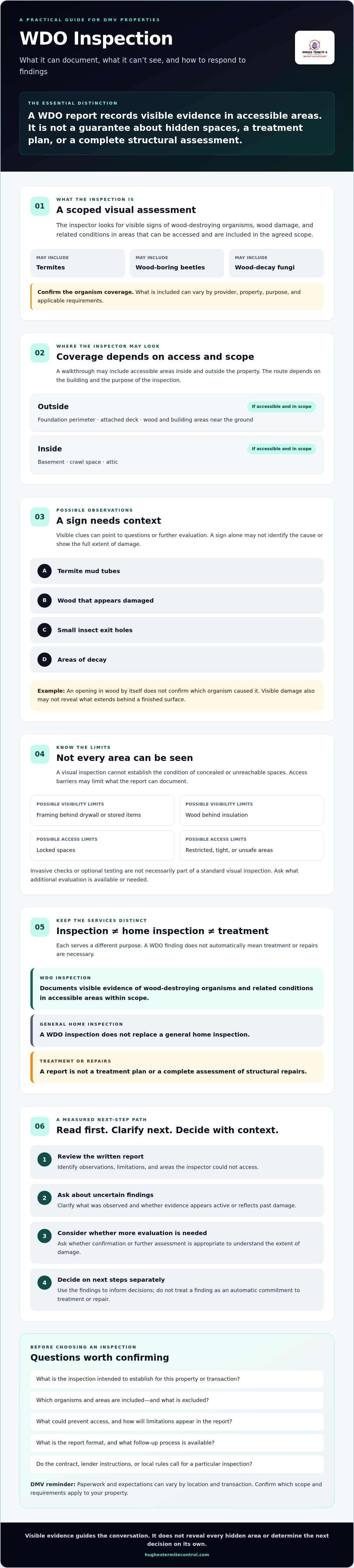
- Confirm what the inspection is intended to establish. Scope can depend on the property, purpose, and applicable requirements.
- A wdo inspection focuses on visible evidence of wood-destroying organisms and related conditions in accessible areas. It doesn’t replace a general home inspection.
- Compare the areas covered, exclusions, report format, and follow-up process before choosing an inspection.
- Use the written report to identify observations, limitations, and areas the inspector couldn’t access.
- Ask the inspector to clarify uncertain findings and whether evidence appears active or reflects past damage before deciding on next steps.
What Is a WDO Inspection, and When Do DMV Property Owners Need One?
What can an inspection tell you about wood damage before you buy, sell, or maintain a property? A wdo inspection looks for evidence of organisms that damage wood, but its findings depend on the inspection scope and which areas are accessible. It isn’t automatically a full home inspection, a treatment, or a complete assessment of structural repairs.
A WDO inspection is a visual assessment for signs of wood-destroying organisms and related damage in accessible areas, within the agreed scope. It can document visible evidence, but it can’t establish what lies behind finishes or in areas the inspector couldn’t reach. Before booking, ask what the inspection includes and what the written report is intended to establish. For broader context on pest-management approaches, see this Pest control overview.
Which organisms may a WDO inspection address?
Termites are a key concern, but they may not be the only organisms considered. Depending on the inspection scope and applicable requirements, an inspection may also address wood-boring beetles or wood-decay fungi. The organisms listed on a report can vary by provider and jurisdiction. Confirm which organisms the inspection covers for your property and transaction.
When should a homeowner, buyer, or seller consider an inspection?
A purchase or sale is a common reason to ask about an inspection, especially if a lender or sales agreement calls for one. Requirements can differ, so check the contract, lender instructions, and local rules rather than assuming one standard applies throughout the DMV.
Homeowners may also consider an inspection after noticing damaged wood or other changes that raise concern. A finding doesn’t automatically mean treatment or repairs are required. First clarify what the inspector observed, whether the evidence appears current, and whether another assessment is needed to understand the extent of the damage.
For a broader look at preparing for a pest-related property visit in the District, review this Washington, DC pest inspection checklist. Hughes Termite Control provides wood-destroying organism inspections and termite control in the DMV. Keep the inspection separate from any treatment or repair decision: findings help inform next steps, but they aren’t a treatment plan.
What Does a WDO Inspection Check Inside and Outside the Property?
A wdo inspection typically focuses on accessible areas where wood, moisture, and the building’s connection to the ground may offer clues. Outside, an inspector may examine the foundation perimeter and an attached deck. Inside, the walkthrough may include a basement, crawl space, or attic if the area is accessible and within the agreed scope. The route depends on the property and the inspection’s purpose.
During the visit, the inspector looks for visible organisms, wood damage, and conditions that may support wood-destroying activity. Those observations can help identify where questions or further evaluation may be warranted, but they don’t automatically establish the cause or extent of damage.
A visual inspection records evidence seen in accessible areas. It can’t guarantee the condition of concealed or unreachable spaces. Finishes, stored belongings, insulation, locked rooms, and tight or unsafe access can limit what the inspector can see. Texas publishes its own WDI inspection procedures, but that state-specific reference shouldn’t be treated as a description of DMV requirements. Ask which standards and scope apply to your property.
What signs of termites, beetles, and wood decay might be noted?
Possible observations include termite mud tubes, wood that appears damaged, small insect exit holes, or areas of decay. Each sign needs context. An opening in wood alone, for example, doesn’t confirm which organism caused it. Visible damage also doesn’t show how far it extends behind a finished surface. Ask the inspecting professional to explain what was observed and whether confirmation or further evaluation is appropriate.
Which areas may be inaccessible or outside the inspection scope?
Inspectors may not be able to view framing covered by drywall or stored items, wood behind insulation, locked spaces, or a crawl space with restricted access. A standard visual inspection also doesn’t necessarily include invasive checks or optional testing. Before the visit, ask which areas are included, what could limit access, and whether additional evaluation is available or needed.
Afterward, compare the report’s inspected areas with any spaces marked inaccessible or excluded. If an important area wasn’t visible, ask what that limitation means for your decision and whether another assessment makes sense. Hughes Termite Control offers wood-destroying organism inspections in the DMV. You can learn about its inspection services when considering a local provider.
How Does a WDO Inspection Compare with a Home Inspection and Treatment?
These services answer different questions. A WDO inspection looks for evidence related to wood-destroying organisms. A general home inspection reviews a broader range of visible property components. Treatment addresses a pest problem, while repairs address physical damage. One service doesn’t automatically include the others.
| Service | Purpose and likely scope | Typical output |
|---|---|---|
| WDO inspection | Looks for evidence of wood-destroying organisms and related conditions within the agreed scope and accessible areas. | A report documenting observations and limitations. |
| General home inspection | Reviews a broader range of visible home components. The provider’s scope determines what is covered. | A general report on observed property conditions. |
| Treatment | Addresses a pest problem based on the treatment provider’s assessment and plan. | A treatment service, not a substitute for a property inspection or a repair assessment. |
The National Pest Management Association’s wood-destroying insect resources provide industry context. For a specific transaction, confirm which report or inspection scope is requested rather than assuming one format applies everywhere.
Does a WDO inspection replace a general home inspection?
No. The inspections have different focuses and may complement each other. A general home inspector might observe a concern, while a specialist inspection may focus on evidence of wood-destroying organisms. Neither should be treated as a substitute for specialist evaluation if a concern remains. Buyers can confirm requested inspections and report requirements with their agent, lender, or contract contacts.
Does a WDO finding mean treatment or structural repair is required?
Not automatically. A report may describe suspected active activity, signs of past damage, or conditions that could support future activity. These findings mean different things, and visible evidence alone may not establish the full extent of damage. Ask the inspector to explain the wording and what supports the observation, then ask whether further evaluation is appropriate before deciding on treatment or repairs.
If the report raises a termite concern, the DMV termite control guide offers related treatment education. Keep the steps distinct: an inspection documents observations, treatment addresses a pest issue, and repairs address damage. A report also isn’t a guarantee that concealed areas are problem-free. It reflects what was observed within the inspection’s scope.
How Can DMV Homeowners Prepare and Compare WDO Inspection Options?
A little preparation can clarify the inspection’s scope before anyone arrives. Start with the reason for the visit: a property transaction, concern about visible wood damage, or routine follow-up. Then confirm which organisms, structures, and accessible areas the inspection covers. Ask what the report will document and how the provider handles questions or recommended follow-up.
Compare providers on more than appointment timing. Check the areas included, exclusions, report format, and process for explaining findings. For a purchase or sale, confirm the requested documentation with the relevant lender, agent, or contract contact. Requirements and forms may differ among Washington, DC, Maryland, and Virginia, so verify current details for the property’s location and transaction instead of assuming one DMV-wide standard.
What should you ask before booking a WDO inspection?
Before scheduling a wdo inspection, ask specific questions so you can compare providers on the same points:
- Which organisms, structures, and accessible areas are included?
- What spaces or conditions could be excluded, and how will limitations appear in the report?
- What report format and terminology should you expect?
- What qualifications and documentation are relevant to this property’s location and purpose?
- Who can explain uncertain findings, and what follow-up is available if the report identifies a concern?
Clear answers help you understand what the inspection can establish. If it’s part of a transaction, confirm that the proposed scope and report meet the request before booking.
How can you make the property easier to inspect?
Make reasonable access available without taking apart the home or creating hazards. Where practical, clear the path to the attic, basement, crawl-space entrance, and visible foundation areas. If a room or area is locked, arrange access or let the provider know ahead of time.
Share useful history, too. Mention known leaks, prior pest observations, previous treatments, or repair records. This information gives the inspector context, but it doesn’t replace what they can observe during the visit. Don’t remove fixed finishes or enter unsafe spaces to prepare. Ask the provider what access is appropriate.
After the inspection, read the written report alongside the agreed scope. Check which areas were inspected, what was unavailable, and how observations are described. If you need a local provider, request a WDO inspection from Hughes Termite Control and confirm the scope and documentation that fit your property.
What Should You Do After Receiving a WDO Inspection Report?
A report records observations; it isn’t an automatic instruction to treat or repair. Read it in context: note what the inspector observed, where they saw it, which areas they couldn’t access, and what follow-up they recommend. If the language is unclear, ask the inspector to explain it before making a decision.
How should you interpret a reported WDO finding?
Review each observation alongside the area inspected and any stated limitation. Ask what visible evidence supports the finding and whether it suggests current activity, prior damage, or a condition that could support future activity. Those distinctions matter, and the report may not establish how far damage extends into concealed materials.
Keep the report and any supporting records together. If the inspection relates to a purchase or sale, share them with the appropriate transaction contacts and confirm any required next steps. A report describes what was observed within its scope; it doesn’t guarantee that hidden or inaccessible areas are free of concerns.
When should you seek inspection or termite-control follow-up?
Ask for clarification if the report is incomplete, uses unfamiliar terms, or identifies an area that needs further evaluation. If it notes possible termite activity, discuss whether a separate pest assessment or termite-control follow-up is appropriate. If the concern is structural damage, consult a qualified repair professional. Treatment addresses a pest issue; it doesn’t assess or complete structural repairs.
Before authorizing work, make sure you understand the observation, the proposed next step, and which professional is responsible for it. A WDO report finding alone doesn’t mean treatment or repairs are automatically necessary.
Hughes Termite Control provides wood-destroying organism inspections and termite control in the DMV. If you need clarification or termite-related follow-up, you can contact Hughes Termite Control about WDO inspection and termite-control services. Ask which service fits your concern and confirm that the provider serves your property’s location.
Make Your Next Property Decision With Clear Information
A WDO inspection can help clarify what’s visible in accessible areas, but its findings depend on the scope and don’t guarantee that concealed spaces are free of concerns. Compare the inspection’s coverage and limitations with any transaction requirements, then ask the inspector to explain unclear observations. A reported finding isn’t automatically a treatment order or a structural repair assessment.
Keep the next steps separate: use the report to understand what was observed, seek termite-control follow-up if pest concerns warrant it, and consult an appropriate repair professional about possible damage. Hughes Termite Control offers wood-destroying organism inspections and termite control as local DMV services.
Ask Hughes Termite Control about a WDO inspection and confirm the service fits your property and location. With clear questions and a measured response, you can decide on a practical next step with greater confidence.
Frequently Asked Questions
What does WDO stand for in a property inspection?
WDO stands for “wood-destroying organism.” A WDO inspection looks for visible evidence of organisms that can damage wood, within the agreed areas and scope. It may be requested during a property transaction or because an owner has noticed a concern. The report describes observations and access limitations; it isn’t a full assessment of concealed spaces or a treatment plan.
What does a WDO inspection look for besides termites?
Depending on the inspection scope and local documentation requirements, it may consider wood-boring beetles or wood-decay fungi as well as termites. The list isn’t necessarily identical for every provider or location in the DMV. Ask which organisms the report addresses. Signs such as damaged wood or insect exit holes need context, and visual evidence alone may not establish the cause or full extent of damage.
Does a WDO inspection include a general home inspection?
No. A WDO inspection focuses on evidence related to wood-destroying organisms, while a general home inspection reviews a broader range of visible property components. One doesn’t automatically include the other. They may complement each other, especially during a purchase, but confirm the scope and report expected from each provider. If either inspection raises a concern beyond its focus, ask whether a specialist assessment is appropriate.
Can a WDO inspection find hidden termite damage?
A WDO inspection may identify visible signs that suggest termite activity or damage, but a standard visual review can’t reliably assess wood concealed behind walls, finishes, insulation, stored belongings, or other barriers. Access limits should be stated in the report. If you’re concerned about a concealed area, ask the inspector what the observations support and whether further evaluation is warranted before deciding on treatment or repairs.
Is a WDO inspection required when buying a home in the DMV?
Don’t assume the same requirement applies to every DMV transaction. Whether an inspection or particular report is requested can depend on the property’s location, lender instructions, and contract terms. Before scheduling, ask your lender, agent, or contract contact what documentation is needed, then confirm the provider can address that scope. Check current requirements for the specific transaction rather than relying on advice from another state or sale.
How should I prepare my home for a WDO inspection?
Make reasonable access available to areas that may be inspected, such as the attic, basement, crawl-space entrance, and visible foundation areas. Move loose belongings that block access where practical, and share known leaks, prior pest observations, treatment history, or repair records. Don’t remove fixed finishes or enter unsafe spaces to prepare. Ask the provider what access is appropriate and which areas may remain unavailable.
What should I do if a WDO inspection report finds evidence of activity?
First, ask the inspector to explain what evidence supports the finding, where it was observed, and whether it appears active or reflects prior damage. Review any access limitations and recommended follow-up. If termite activity may be present, discuss whether a separate termite-control evaluation is appropriate. If the report raises questions about structural damage, consult a qualified repair professional. A finding alone doesn’t automatically mean treatment or repairs are required.


