
The best pest control company isn’t necessarily the one making the biggest promises. It’s the one that can explain how it will inspect your property, identify the likely pest, recommend a plan, and discuss follow-up. That clarity matters when you’re unsure which service you need or comparing providers with different scopes.
Before agreeing to service, find out what the inspection includes, what the proposed work is intended to address, and what happens if activity continues. This guide shows you how to compare pest control companies using practical criteria and which questions to ask before work begins.
We’ll cover how to match a provider to the pest and property, assess an inspection and treatment plan, and clarify follow-up expectations. For DMV homeowners, Hughes Termite Control offers termite control, bed bug control, wildlife control, and wood-destroying organism inspections. Confirm that the service fits your concern and location.
Key Takeaways
- Record where and when pest activity appears so providers can assess what inspection or service may be appropriate.
- Compare each pest control company by how it inspects, identifies the likely pest, explains treatment options, and discusses follow-up.
- Ask specific questions about service scope, preparation, communication, and what happens if the problem continues.
- Confirm that the provider covers your exact DMV address, and check requirements for the relevant jurisdiction rather than assuming they’re the same across the region.
- Check whether Hughes Termite Control’s services, including termite control, bed bug treatments, wildlife control, and wood-destroying organism inspections, match your needs.
Choosing a Pest Control Company Starts with Identifying the Problem
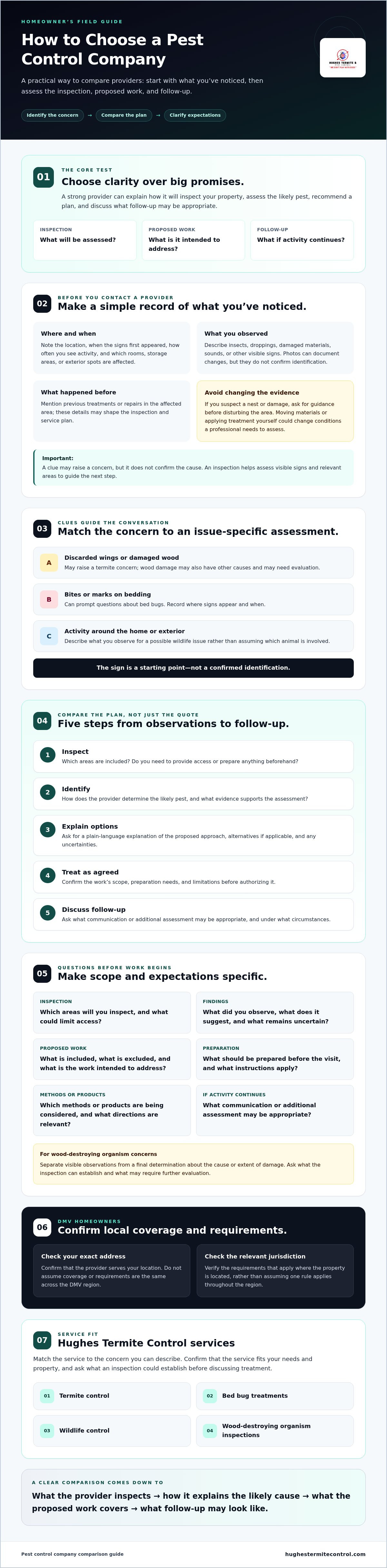
Different signs can call for different inspection and service approaches. Discarded wings or damaged wood may raise a termite concern, while bites or marks on bedding can prompt questions about bed bugs. Neither clue alone confirms the cause. Before contacting a pest control company, record what you’ve noticed so the provider can assess what needs a closer look.
A pest inspection assesses visible signs and relevant areas to help determine the likely cause and guide the next step. A professional may need to inspect before recommending service. Evidence may suggest a pest, but identifying it can require a closer look. General background on pest control can explain why approaches vary, but it can’t identify what’s happening in your home.
What information should you gather before contacting a provider?
Make a short record of what you’ve noticed. Include the location, when the signs first appeared, and how often you’ve seen activity. Note affected rooms, storage areas, or exterior spots, and describe visible evidence such as insects, droppings, damaged materials, or sounds. Photos can document changes, but they don’t confirm identification.
Tell the provider about previous treatments or repairs in the affected area, since these details may shape the inspection and service plan. If you suspect a nest or damage, ask for guidance before disturbing the area. Moving materials or applying a treatment yourself could change the conditions a professional needs to assess.
Which pest services might match your concern?
Termites, bed bugs, and wildlife call for issue-specific assessment. Wood damage may need evaluation for termite activity or other causes; this guide to effective termite control offers further context. For suspected bed bugs, note where signs appear and when. For a possible wildlife issue, describe activity around the home or exterior rather than assuming which animal is involved.
Match the provider’s services to the concern you can describe. Hughes Termite Control offers termite control, bed bug treatments, wildlife control, and wood-destroying organism inspections. Ask whether a service fits your signs and property, and what an inspection could establish before discussing treatment.
How to Compare a Pest Control Company's Inspection and Treatment Plan
A useful proposal explains how the provider moves from observations to recommendations. Compare the steps, not just the quote. A pest control company should be able to explain what it will assess, what the evidence suggests, and what the proposed work does and doesn’t cover.
A clear plan connects inspection findings to proposed work and follow-up. Use this five-step framework to compare providers:
- Inspect: Ask which areas the inspection includes and whether you need to provide access or prepare anything beforehand.
- Identify: Ask how the provider determines the likely pest and what evidence supports its assessment.
- Explain options: Request a plain-language explanation of the proposed approach, alternatives if applicable, and any uncertainties.
- Treat as agreed: Confirm the work’s scope, preparation needs, and limitations before authorizing it.
- Discuss follow-up: Ask what communication or additional assessment may be appropriate, and under what circumstances.
What should a pest inspection and explanation include?
Ask which areas the provider will inspect and whether furniture, stored belongings, or other access considerations could affect the visit. Afterward, look for a clear account of what was observed and what remains uncertain. A careful provider should explain the evidence behind a conclusion rather than present a possibility as confirmed.
For wood-destroying organism concerns, distinguish visible observations from a final determination about the cause or extent of damage. Ask what the inspection can establish and what would require further evaluation. The National Pest Management Association also offers consumer information that can help you understand pest management terms while reviewing a proposal.
How can you assess treatment transparency?
Ask what the proposed work is intended to address, which areas are included, and what it doesn’t promise to resolve. Request information about the products or methods being considered, along with instructions relevant to the service. Product labels provide directions for use, so ask how those directions and applicable requirements inform the proposed work.
Get preparation guidance directly from the provider, especially for occupants, pets, and belongings. Generic advice may not apply to the specific product or service. Before approving the plan, make sure you can explain the scope, preparation steps, limitations, and follow-up expectations in your own words.
If termite control or a wood-destroying organism inspection is your concern, review Hughes Termite Control services and confirm which service fits your situation.
Questions That Reveal Whether a Pest Control Company Is a Good Fit
Compare what each provider will actually do, not just its slogans or broad assurances. Ask the same questions of each company, then compare the detail and consistency of the answers. The U.S. Environmental Protection Agency’s tips for selecting a pest control service can help you prepare.
| Criteria | Question to ask | What a clear answer sounds like |
|---|---|---|
| Inspection detail | Which areas will you inspect, and who will conduct the inspection? | The provider identifies the areas to assess, explains any access needs, and tells you who will inspect or perform the work. |
| Service scope | What work is included, and what would require separate service? | The answer defines the proposed work and its limits, rather than implying it covers every possible pest or property issue. |
| Preparation guidance | What should occupants do before service? | You receive specific instructions for the proposed work, including any relevant steps involving pets, belongings, or access. |
| Follow-up | How will you handle follow-up, and what should I do if activity continues? | The provider explains the follow-up process and how to report continuing concerns without promising an outcome it can’t substantiate. |
| Communication | How will you explain changes if the inspection findings differ from expectations? | The provider agrees to explain new findings, any proposed change in scope, and relevant terms before proceeding. |
Ask for the proposed work and relevant terms in writing. This gives you a record of what you’re agreeing to, what preparation is expected, and what follow-up has been discussed. If findings change the recommendation, ask why and clarify any revised scope before authorizing additional work.
If your concern matches Hughes Termite Control’s services, ask Hughes Termite Control about your pest concern and confirm whether the service fits your property and location.
Which warning signs deserve a closer look?
Pause if a provider makes broad claims or offers a guarantee without clearly explaining its terms. A proposal should connect the observed evidence to the recommended work. If that connection isn’t clear, ask what findings support the plan and what remains uncertain. Reviews and credentials can provide context, but they don’t replace a clear explanation of scope, preparation, and follow-up.
Choosing a Pest Control Company in the DMV: Confirm Coverage and Expectations
The DMV spans Washington, DC, Maryland, and Virginia, but a provider’s service area may not include every city, county, or district. Share the property’s exact address or jurisdiction before comparing plans. Ask whether the company serves that location and handles your specific pest concern. Coverage in one part of the region doesn’t necessarily mean coverage in another.
How can you verify a company's local fit?
Give the provider the property’s city and county, or its Washington, DC district, and ask whether it serves that address for the pest issue you’ve described. If credentials or other local requirements may apply, ask what documentation is relevant to the service and jurisdiction, then verify the answer with the appropriate local authority.
Don’t assume requirements in Maryland, Virginia, and Washington, DC are interchangeable. The relevant jurisdiction depends on the property’s location. If a provider gives a general answer that doesn’t address where the work will take place, ask for clarification before proceeding.
How should you compare estimates and service terms?
An estimate is useful for comparison only when you understand what it covers. Ask each provider to describe the same elements: inspection scope, proposed treatment, preparation instructions, and follow-up. If an estimate leaves out an item, ask whether it’s excluded, handled separately, or still to be determined after inspection.
Ask what could change the proposed scope. If inspection findings differ from what you initially described, find out how the provider will explain the new findings, whether the recommendation may change, and how added work will be approved. Request the scope and relevant terms in writing, including scheduling expectations, access needs, preparation, and follow-up arrangements.
Read the terms rather than choosing based only on the lowest estimate. Proposals may cover different work or set different expectations. A clear pest control company should explain those differences in plain language, so you can compare what’s actually included instead of relying on assumptions.
To check whether a local provider’s coverage and services fit your property, contact Hughes Termite Control about your location and pest concern. Confirm the specific service and availability for your address before making plans.
When Hughes Termite Control May Fit Your Pest Control Needs
Hughes Termite Control may be worth considering if your concern matches one of its pest service categories. It’s a privately owned local company serving the DMV, but coverage and service availability can vary by location and concern. Confirm both for your property before deciding whether it’s a fit.
Which Hughes services may match your property concern?
Hughes offers termite control and wood-destroying organism inspections. If you’ve noticed signs that may point to termite activity or wood damage, ask which service fits your concern and what the inspection can establish. The findings and proposed next steps should be explained for your situation.
Bed bug treatments and wildlife control address different concerns. Describe the signs you’ve observed and ask how Hughes assesses the issue before agreeing to work. Don’t treat a suspected pest or animal as confirmed based on a guess alone.
Hughes also offers home improvement services, including windows and doors, roofing, siding, decking, flooring, and remodeling. These are separate from pest services. They may be relevant if you’re considering a repair or improvement, but a pest concern doesn’t automatically mean renovation work is needed.
What is a sensible next step before choosing?
Before contacting any pest control company, prepare a concise summary: the signs you’ve noticed, where they appear, the property’s city or county, and any prior service or repair history that may help explain the situation. This gives the provider useful context without assuming the cause or promising a particular treatment.
Ask Hughes to confirm that your location is within its service area and that it handles your specific concern there. Then ask what inspection process applies, what it can determine, and how recommended work and follow-up will be explained. These details help you judge fit before you commit.
If the service categories appear relevant, contact Hughes Termite Control to discuss your needs. Share the property location and concern, and confirm the applicable service and inspection expectations directly.
Choose With Clarity, Then Take the Next Step
Start by describing the signs you’ve noticed and confirming that the provider handles that concern at your property. Compare how each company inspects, explains its findings, defines the proposed work, and discusses follow-up. Before agreeing to service, review the written scope and confirm preparation, access, and location details.
A good pest control company should make its process understandable, not pressure you into a decision. Clear answers help you assess whether the service fits your concern and what to expect next.
Hughes Termite Control is a privately owned and operated local business with services that include termite control, bed bug treatments, and wildlife control. If those services may fit your needs, contact Hughes Termite Control to discuss your pest concern and confirm coverage for your location.
Take it one step at a time. With the right questions, you can move forward with greater confidence.
Frequently Asked Questions
How do I choose a reliable pest control company?
Choose a pest control company that handles your specific concern and property location, then compare its inspection, written scope, preparation instructions, and follow-up process. Ask how it identifies the likely pest and what evidence supports its recommendation. A reliable provider should explain limitations and answer questions plainly. In the DMV, confirm address coverage and ask what jurisdiction-specific credentials or documentation apply, verifying requirements with the appropriate authority.
What should I ask a pest control company before hiring?
Ask who will inspect or perform the work, which areas the inspection covers, and how the company will share its findings. Clarify what the proposed service includes, what may require separate work, and what preparation is needed for occupants, pets, or property. Ask how follow-up is handled and how the company will explain changes if inspection findings differ from expectations. Request the proposed scope and relevant terms in writing before agreeing.
Is a pest inspection included in pest control service?
Not necessarily. Whether an inspection is included, and what it covers, depends on the provider and the service. Before scheduling, ask whether the inspection is part of the proposed service, which areas will be assessed, and whether you need to provide access or prepare anything. Also ask what the findings can establish and whether further assessment or separate work may be recommended. Confirm related terms in writing.
How can I compare pest control company estimates?
Compare estimates by matching the scope, not just the total. Check whether each covers the same inspection areas, proposed work, preparation guidance, and follow-up. Ask what could change the scope after inspection and how added work would be explained and approved. Read the written terms closely. A lower estimate may describe different services, so clarify exclusions and unresolved questions before deciding which proposal best fits your concern.
Can one pest control company treat termites, bed bugs, and wildlife?
Some companies offer services for more than one pest, but confirm that the provider handles each specific concern at your property. Termites, bed bugs, and wildlife require issue-specific assessment, and the service process may differ. Hughes Termite Control offers termite control, bed bug treatments, and wildlife control, along with wood-destroying organism inspections. Ask which service fits your concern and confirm local coverage before making plans.
How do I find a pest control company serving my DMV address?
Give the provider your exact property address, city, and county, or Washington, DC district, and ask whether it serves that location for your specific pest concern. Don’t assume coverage in one part of the DMV means coverage throughout the region. Requirements can differ by jurisdiction, so ask what credentials or documentation apply where the work will take place and verify details with the relevant authority.
What happens if pests return after treatment?
Contact the provider and describe what you’re seeing, where activity has appeared, and when it returned. Ask whether the signs may relate to the original concern and what follow-up the written terms provide. Don’t assume that a return visit, additional treatment, or a particular outcome is included unless the agreement says so. Request a clear explanation of the next steps and any changes to the proposed scope before authorizing more work.


