

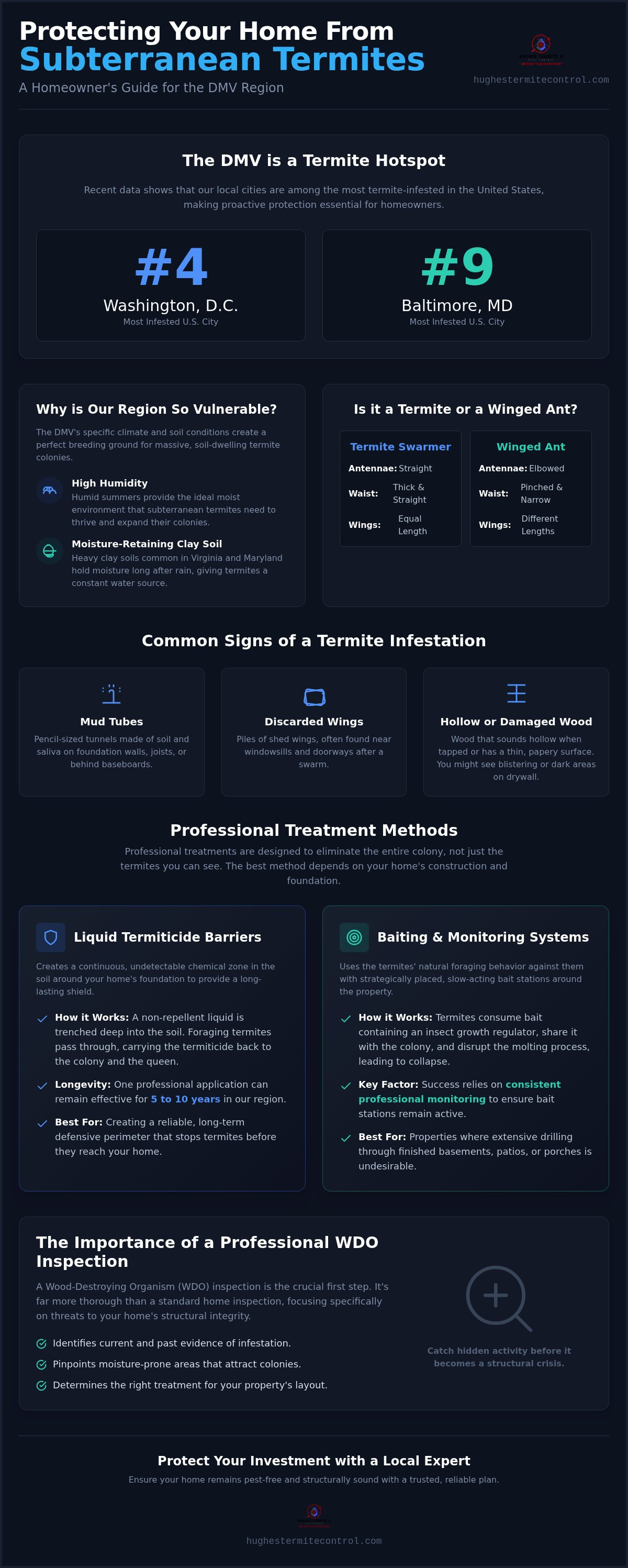
Did you know that Washington, D.C. and Baltimore currently rank as the 4th and 9th most termite-infested cities in the United States? For homeowners across the DMV, this isn't just a statistic; it's a constant concern that sits right beneath the floorboards. You've likely felt the anxiety of wondering if silent damage is spreading through your joists or felt confused by the conflicting advice surrounding different subterranean termite treatment options. It's stressful to face the possibility of a structural crisis, especially when you're unsure if a treatment will actually eliminate the colony or how much the subsequent repairs might cost.
We understand that you need a reliable, transparent plan to protect your investment. This guide offers a grounded look at how to identify, treat, and repair termite damage using methods specifically tailored for our local region. We'll clarify the differences between liquid barriers and baiting systems so you can make an informed choice. You'll also learn the exact steps of a professional inspection and how to address structural remediation. By the end, you'll have a clear roadmap to a home that is both pest-free and structurally sound, handled with the steady hand of a local expert.
Key Takeaways
- Understand why the DMV’s unique humidity levels and soil moisture create a high-risk environment for soil-dwelling colonies to thrive.
- Compare the mechanics of liquid barriers and baiting systems to determine which subterranean termite treatment best fits your home's specific foundation.
- Learn what to expect during the professional application process, including foundation preparation and targeted drilling for total coverage.
- Identify the common structural targets like sill plates and floor joists that require professional repair after the infestation is cleared.
- Find out how to evaluate service agreements and warranties to ensure your property remains protected by a steady, local expert.
Identifying Subterranean Termites in the DMV Region
Subterranean termites are social insects that live in massive underground colonies. They survive by consuming cellulose, a material found in the wood of your home's framing, flooring, and siding. In our region, the primary species homeowners encounter is the Eastern subterranean termite. These pests are particularly persistent because they don't just live in the wood they eat. Instead, they travel back and forth between their food source and the moisture of the soil.
The DMV climate is a high-risk zone for these colonies. Our heavy clay soils in Virginia and Maryland retain moisture long after it rains, while our humid summers provide the perfect environment for termites to thrive. If your home has a crawl space or a concrete foundation with even minor settling cracks, it's vulnerable. Unlike drywood termites found in warmer, coastal climates, these pests require constant contact with soil or a consistent moisture source to survive. This is why subterranean termite treatment usually focuses on the ground around your foundation rather than just the wood itself.
It's common for homeowners to confuse termite swarmers with winged ants during the spring. You can tell them apart by looking at three features. Termites have straight antennae, equal-length wings, and a thick, straight waist. Ants have elbowed antennae, wings of different lengths, and a pinched, narrow waist. If you see hundreds of insects emerging inside your home on a warm day, it's likely a termite swarm.
Signs of Activity You Can See
Because these insects are sensitive to light and air, they build "mud tubes" to travel safely. These pencil-sized tunnels made of soil and saliva are often found on foundation walls, floor joists, or behind baseboards. You might also find piles of discarded wings near windowsills and doorways, which swarmers shed after finding a mate. If you suspect damage, tap on the wood in your basement or crawl space. Wood that is infested will sound hollow or the surface will feel thin and papery to the touch.
The Role of WDO Inspections
A professional Wood-Destroying Organism (WDO) inspection is far more thorough than a standard home inspection. While a general inspector looks at the overall condition of a house, a WDO specialist focuses specifically on evidence of infestation and structural integrity. They identify moisture-prone areas, like leaky pipes or poor drainage, that attract local colonies. A specialized inspection is the first step in determining the right subterranean termite treatment for your specific property layout, ensuring that hidden activity is caught before it leads to a structural crisis.
Professional Treatment Methods: Liquid Barriers vs. Baiting
Choosing the right subterranean termite treatment depends on your home's construction, soil conditions, and the extent of the infestation. Most professional strategies fall into two categories: liquid barriers or baiting systems. Both methods aim for total colony elimination, but they achieve this through different biological pathways. While DIY products often focus on "spot treatments" that only kill the termites you see, professional methods address the hidden colony underground. Treating only a small area is a temporary fix. It usually results in termites simply moving their activity to an untreated part of your foundation.
Liquid Termiticide Barriers
The barrier approach creates a continuous chemical perimeter around your home's foundation. This process typically involves trenching the soil and rodding the termiticide deep into the ground. We prioritize non-repellent liquids because termites cannot detect them. As workers pass through the treated zone, they unknowingly carry the product back to the nest, eventually reaching the queen. In the heavy clay and high moisture levels of the Mid-Atlantic region, a professional application usually remains effective for five to ten years. This longevity provides a reliable, long-term shield that stops termites before they ever reach your sill plates.
Baiting and Monitoring Systems
Baiting systems use the natural foraging behavior of the colony against itself. Monitoring stations are placed strategically around the property, containing a slow-acting material that disrupts the termites' molting process. Because termites are social insects, they share this bait with the rest of the colony. This method is often preferred for homes where drilling through finished basement floors or extensive porches is less desirable. Success with baiting relies on consistent, professional monitoring to ensure the stations are active and effectively targeting the colony's biology.
According to the EPA guide on termites and How to Identify and Control Them, soil-applied liquid termiticides are the most common form of treatment. However, every property in the DMV has unique drainage and structural factors that influence which method will be most effective. If you're unsure which approach fits your foundation, a professional termite evaluation can provide the clarity you need to move forward with confidence. We focus on doing things the right way the first time, ensuring your home remains structurally sound and pest-free for years to come.
What to Expect During Your Termite Treatment
A professional subterranean termite treatment is a methodical process. It requires precision and specialized equipment to ensure your home's perimeter is fully protected. Unlike DIY attempts that often miss deep-seated colonies, a professional application follows a logical, step-by-step sequence designed for total elimination. You can expect a steady, thorough approach that prioritizes the structural integrity of your property.
The process begins with careful site preparation. We clear the foundation perimeter, which may involve moving mulch, wood piles, or dense vegetation that blocks access to the soil. For many homes in the DMV, attached structures like porches, garages, or basement slabs present a challenge. To reach the soil beneath these concrete surfaces, we perform precision drilling. We create small, evenly spaced holes through the slab to inject the treatment directly where termites travel. Once the application is complete, we patch these holes with mortar to match the original surface as closely as possible.
Using professional-grade pressure equipment, we apply the treatment materials into the trenches and drilled access points. According to research from Penn State Extension, Professional Treatment Methods like soil barriers are most effective when the material reaches the correct depth and concentration. This ensures no gaps are left for termites to exploit. After the application, we conduct a thorough cleanup and a safety walk-through. We'll show you exactly where the treatment was placed and answer any questions about the work performed.
Preparing Your Home for Service
To ensure the service goes smoothly, we ask that you clear access to basement walls and crawl space entries before we arrive. While the products we use are selected for their safety and efficacy, it's best to keep pets and children away from the immediate work zone during the application. We also provide detailed documentation of the service. Keep these records in a safe place, as they are often required during future home sales or real estate transactions in Maryland and Virginia.
The Professional Timeline
A typical subterranean termite treatment for a single-family home usually takes between four and eight hours to complete. While the physical barrier is established immediately, you might still see some activity for a few weeks as the colony interacts with the treatment and eventually dies off. We schedule follow-up inspections to verify that the colony has been eliminated. This steady monitoring ensures the treatment is working as intended and your home remains secure.
Beyond Elimination: Assessing and Repairing Structural Damage
Killing the colony is the first priority, but for most DMV homeowners, it's only half the battle. Once your subterranean termite treatment is complete, you're often left with a compromised structure. Subterranean termites are relentless foragers. They specifically target the sill plates that sit on your foundation, the floor joists that support your rooms, and the subflooring beneath your feet. These components are the skeleton of your home. If they're hollowed out, the safety of the entire property is at risk.
Many general contractors might suggest cosmetic-only repairs, such as wood filler or a fresh layer of paint. This is a dangerous approach. While it makes the surface look better, it ignores the underlying structural failure. We believe in doing things the right way. This means assessing the load-bearing capacity of every piece of timber and replacing what's no longer sound. A dual-specialty contractor who understands both pest biology and licensed home remodeling can manage this transition seamlessly. It saves you the stress of coordinating between two different companies and ensures the repairs meet the same rigorous standards as the treatment.
Termite Damage in Decks and Exterior Siding
Outdoor structures are especially vulnerable in our humid climate. We often find compromised structural posts in decking where the wood meets the soil. If a post is hollowed, the deck can shift or sag over time. When it comes to siding, we evaluate whether to patch small areas or replace entire sections to maintain your home's envelope. Maintaining proper wood-to-ground clearance is a critical step in preventing future infestations. It ensures that termites don't have a direct, hidden path back into your home's framing.
Interior Restoration: Flooring and Drywall
Inside the home, damage is often hidden behind finished surfaces. We assess floor joist damage under hardwood or carpet to ensure your floors remain level and sturdy. Termites leave a honeycomb pattern inside wall voids that can weaken the support for your drywall and interior trim. When we handle your restoration, we use professional building techniques to reinforce your space and ensure long-term stability. If you're ready to move from eradication to restoration, you can schedule a structural repair assessment to ensure your home is truly secure.
Long-Term Protection: Choosing a Trusted DMV Partner
Finding a partner for your subterranean termite treatment shouldn't involve high-pressure sales or alarmist tactics. In the DMV, where termite pressure is consistently high, you need a professional who prioritizes long-term stability over a quick transaction. A grounded, local expert understands how our regional weather patterns and soil moisture levels affect treatment efficacy. They offer a steady hand when you're facing a potential structural crisis, providing clear answers instead of marketing hype. This transparency is essential for lowering your stress and ensuring you feel like your home is in safe, capable hands.
When you evaluate service agreements, look for financial transparency and predictability. A reliable warranty should clearly define what is covered, including the frequency of future inspections and the specific conditions for retreatments. These agreements are not just pieces of paper; they're commitments to the ongoing health of your property. Integrating this protection into your broader home improvement plan ensures that any future remodeling, decking, or flooring projects remain secure from the ground up. It's a logical progression from a state of uncertainty to a state of resolution.
Questions to Ask Your Termite Professional
Before you sign a contract, ask specific questions to gauge the professional's level of expertise and accountability. You want to ensure they're prepared to handle both the infestation and the resulting damage. Consider asking the following:
- Are you licensed for both pest control and home remodeling in my state?
- Do you provide a comprehensive report of the structural damage found during the inspection?
- What is your specific process for long-term monitoring and prevention?
A trusted advisor should move at a pace that suggests thoroughness rather than haste. If a contractor is hesitant to discuss the structural implications of an infestation, they might not be the right fit for a home requiring specialized repairs.
The Hughes Advantage: Protection and Value
With over 20 years of local experience serving DC, Maryland, and Virginia, we understand the unique pressures facing homeowners in this region. We take pride in being a single-source solution for both colony elimination and structural remediation. This dual-specialty means we don't just kill the termites; we fix the joists, sill plates, and subflooring they damaged, using the same high standards for both tasks. It's about doing things the right way to protect your largest investment. If you're ready for a clear, no-surprises plan to secure your property, contact Hughes Termite Control for a grounded assessment of your home today.
Securing Your Home's Future
Protecting a property in the DC, Maryland, and Virginia area requires more than just a quick fix. You now understand how the local climate creates unique pressures and why a dual-specialty approach is necessary to address both the colony and the structural damage left behind. Choosing a professional subterranean termite treatment is about more than just stopping an infestation; it's about restoring the stability of your sill plates, floor joists, and subflooring with precision.
With over 20 years of DMV expertise, we provide the steady hand needed to handle these complex crises. We are licensed in both Pest Control and Home Improvement, offering a single-source solution that eliminates the stress of coordinating multiple contractors. Our approach focuses on transparent, grounded pricing without the hype, ensuring you know exactly what to expect at every step. Schedule a Professional WDO Inspection with Hughes Termite Control. You don't have to face hidden structural concerns alone. Taking this proactive step today ensures your home remains a safe, pest-free environment for years to come.
Frequently Asked Questions
How long does a subterranean termite treatment last?
A professional subterranean termite treatment typically provides protection for five to ten years when using high-quality liquid barriers in Mid-Atlantic soil. Baiting systems require ongoing maintenance and station refills to remain effective. Environmental factors like heavy rainfall or soil shifting can affect this timeline. We recommend annual inspections to ensure the perimeter remains intact and to identify any new moisture issues that might attract a new colony to your foundation.
Is subterranean termite treatment safe for my pets and family?
Modern treatment materials are EPA-approved and applied with precision to minimize exposure to your family and pets. We prioritize non-repellent liquids that are placed deep into the soil or beneath concrete slabs. During the application process, it's best to keep pets and children inside or away from the immediate work zone until the material has dried. Our technicians provide clear safety guidance based on the specific layout of your Maryland or Virginia property.
Can I stay in my house during the treatment process?
You can remain in your home during the entire treatment process without any disruption. Subterranean treatments are primarily focused on the exterior foundation and the soil beneath your structure; there is no need for the overnight evacuation required by fumigation. If we need to treat interior areas like a crawl space or basement, the process is localized and quiet. Most homeowners go about their normal daily routine while we secure the perimeter.
What is the average cost of subterranean termite treatment in the DMV?
The cost of treatment varies based on the size of your home's foundation, the type of construction, and whether you choose a liquid barrier or a baiting system. Factors like the presence of crawl spaces, attached porches, or finished basements also influence the scope of work. Because every property in the DMV has unique structural requirements, we provide a detailed assessment after a professional inspection to ensure the proposed solution fits your home's specific needs.
How do I know if my termite damage is structural or cosmetic?
Structural damage affects the load-bearing components of your home, such as the sill plates and floor joists. You can often identify this by wood that sounds hollow when tapped or feels thin and papery. Cosmetic damage is typically limited to non-structural elements like baseboards or drywall. Because subterranean termites often feed from the inside out, a professional Wood-Destroying Organism inspection is the most reliable way to determine if your home's integrity is at risk.
Do termites return after a professional treatment?
Termites can return if the protective barrier is disturbed by landscaping, home additions, or significant soil erosion. While a professional subterranean termite treatment is designed for long-term elimination, no treatment is permanent without proper maintenance. This is why we emphasize the importance of annual monitoring and service agreements. Staying proactive with regular check-ups ensures that any new activity is caught and neutralized before it can cause structural damage to your property.
Will my homeowners insurance cover termite treatment or repairs?
Standard homeowners insurance policies almost never cover the cost of termite treatment or the repairs needed for structural damage. Insurance companies generally view termite infestations as a preventable maintenance issue rather than a sudden, accidental event. This makes early detection through professional inspections and a consistent prevention plan critical for protecting your investment. Investing in a reliable treatment plan now can save you from high out-of-pocket costs for structural remediation later.
What is the best time of year to treat for termites in Maryland and Virginia?
You can effectively treat for termites at any time of year in Maryland and Virginia as long as the ground isn't frozen. Many DMV homeowners schedule service in the spring when swarming activity makes the presence of a colony more obvious. However, subterranean termites remain active underground throughout the winter. Addressing an infestation immediately, regardless of the season, is the best way to prevent further damage to your home's framing and subflooring.
