

A window’s style affects more than the look of a Washington, DC home. For energy-efficient window installation in Washington, DC, start with the performance ratings: ENERGY STAR-qualified windows for the North-Central climate zone, which includes DC, must have a U-factor of 0.30 or lower and a Solar Heat Gain Coefficient of 0.40 or lower. These ratings help show how well a window limits heat transfer and solar heat gain.
It also makes sense to consider how each style suits the room. The type of window you choose affects appearance, admitted daylight, comfort, and energy savings, so the glass and the design both matter. This article explains what makes a window energy efficient, how common styles can shape performance, and what to weigh when planning replacement windows, including savings, comfort, and financing in Washington, DC.
Key Takeaways
- Compare window performance ratings and glass features to understand how a replacement may help manage heat transfer.
- Weigh double- and triple-pane designs alongside coatings and spacers when considering insulation.
- Choose a window style with the room’s daylight, comfort, and appearance in mind, not energy performance alone.
- Review project scope, potential savings, and financing considerations together to make a practical replacement plan.
What Makes an Energy-Efficient Window?
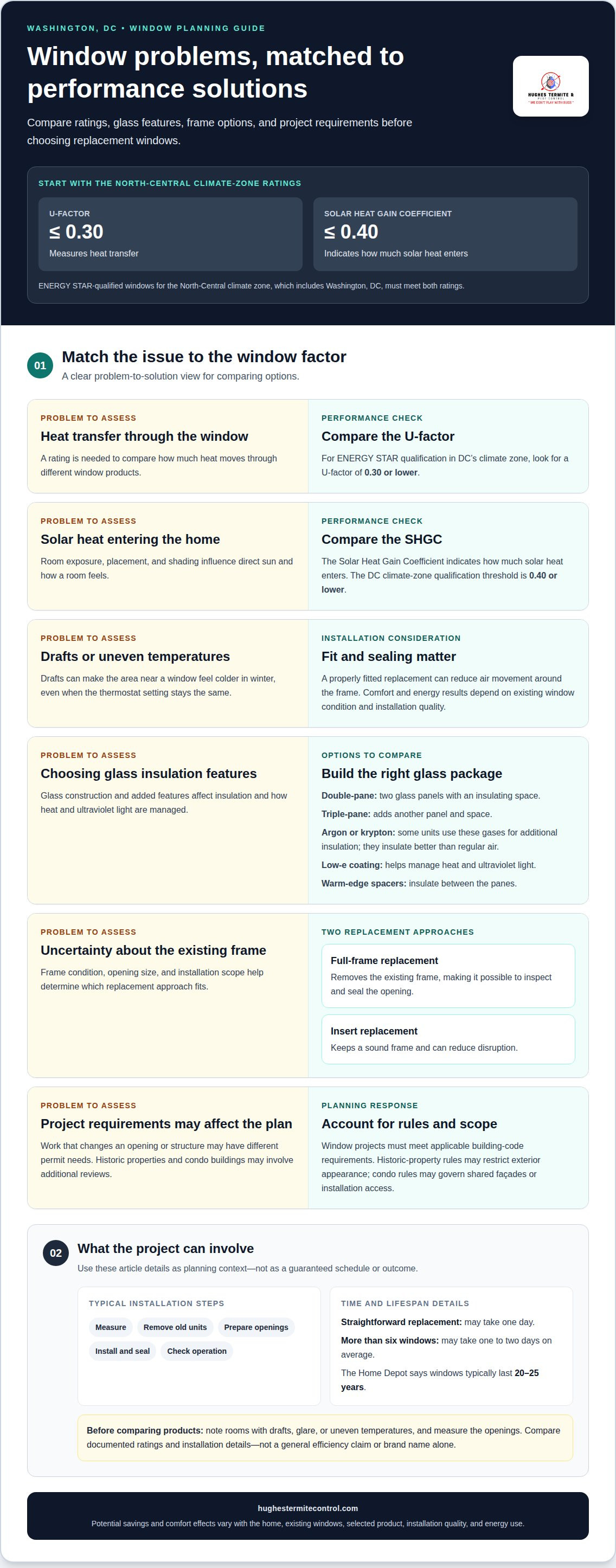
In Washington, DC, ENERGY STAR-qualified windows for the North-Central climate zone must meet two ratings: a U-factor of 0.30 or lower and a Solar Heat Gain Coefficient of 0.40 or lower. U-factor measures heat transfer; the Solar Heat Gain Coefficient indicates how much solar heat enters. These ratings help homeowners compare products for energy efficient window installation Washington DC projects.
Double- or triple-pane glass creates an insulating air space; some units use argon or krypton gas for additional insulation. Low-e coatings help manage heat and ultraviolet light, while warm-edge spacers insulate between the panes. A full-frame replacement removes the existing frame, making it possible to inspect and seal the opening. An insert replacement keeps a sound frame and can reduce disruption. The condition of the frame, opening size, and installation scope help determine which option fits.
Replacement cost depends on the number of windows, frame condition, glass specifications, access, and project scope. Long-term savings depend on heat loss through the existing windows, the selected ratings, and installation quality. Replacing drafty windows may improve comfort and reduce wasted heating or cooling, but the effect varies by home and energy use. When planning energy efficient window installation in Washington, DC, weigh these factors together.
Window projects in Washington, DC, must meet applicable building-code requirements. Permit needs depend on the work, particularly if it changes an opening or structure. Historic properties and condo buildings may involve additional reviews: exterior appearance can be restricted, and condo rules may govern shared façades or installation access. Account for these requirements during planning.
Straightforward replacement may take one day; projects involving more than six windows may take one to two days on average. Typical steps include measuring, removing old units, preparing openings, installing and sealing windows, then checking operation. The Home Depot says windows typically last 20-25 years. Drafts, difficult operation, or visible frame damage can signal a need for assessment.
For window and door replacement contractors serving Washington, DC, a written agreement should identify product and installation details, payment and work schedules, and guarantees. Clear documentation sets expectations for national brands and local replacement projects, supporting better customer service and peace of mind.
Are Financing Options Available for Window Replacement in Washington, DC?
Financing and incentives are separate parts of a window replacement budget. Compare glass performance, product details, and payment terms before choosing how to proceed.
Financing Options
Financing may spread project payments over time, but terms depend on the financing arrangement. Review the total repayment amount, interest, fees, payment schedule, and early-payment conditions. Check that the written project scope aligns with the financing amount, especially when several windows are included. A clear budget helps DC homeowners weigh upfront costs against potential heating and cooling savings.
Rebates, Tax Credits, and Incentives
Rebates and tax credits are separate from contractor financing. Include an incentive in your budget only when current written program rules cover the selected product and installation. Eligibility may depend on product performance, project details, and program conditions. Keep records of the window specifications and installation so you can match the incentive application to the completed work.
For Washington, DC’s North-Central climate zone, ENERGY STAR-qualified windows must have a U-factor of 0.30 or lower and a Solar Heat Gain Coefficient of 0.40 or lower. These ratings offer a useful starting point when selecting replacement windows. A double-pane unit has an insulating space between glass panels; triple-pane adds another panel and space. Some units use argon or krypton gas, which insulates better than regular air.
Glass options include low-e coatings, which help manage heat and ultraviolet light, and warm-edge spacers, which insulate between panes. The right combination depends on the home’s exposure, existing frames, and comfort priorities. Compare the U-factor and Solar Heat Gain Coefficient for each proposed window, rather than relying on a general efficiency claim.
Window brands offer different designs and specifications, so compare documented ratings and included installation details instead of choosing by brand name alone. Product selection should fit the opening and the home’s appearance while meeting the desired performance criteria. For a project that includes window and door replacement, align product choices and written scope before making financing decisions.
Energy savings and indoor comfort in Metro Washington
In Washington, DC, window performance can affect room comfort and energy use. The benefits of replacement depend on the condition of existing windows, installation quality, and the home’s heating and cooling patterns.
Window Choice and Indoor Comfort
Drafts can make an area near a window feel colder in winter, even when the thermostat setting stays the same. A properly fitted replacement can reduce air movement around the frame. Window style also affects daylight and the feel of a room: a larger glazed area admits more light, while placement and shading influence direct sun. Before planning, note which rooms have drafts, glare, or uneven temperatures, and measure the openings.
Window Choice and Energy Savings
Window selection affects how much indoor heat escapes during heating season and how much outdoor heat enters in warmer weather. The Home Depot states that leaky, inefficient windows account for 25% of the average household’s energy bill. That figure describes an average, not a promised reduction after replacement. The result depends on current window condition, the selected unit, proper sealing, and how the household uses heating and cooling.
Potential Utility-Bill Savings
To estimate potential savings, connect the window problem to the energy use it may affect. Persistent drafts beside an older window can prompt extra heating, while strong afternoon sun may increase cooling demand. Compare utility use with the rooms and conditions identified during measurement. A sound project plan distinguishes expected comfort improvements from bill savings, which depend on the home’s starting point and energy habits.
Financing can spread project payments, but it doesn’t determine how much energy a window saves. Compare repayment terms with the replacement scope and likely efficiency benefits. A DC homeowner weighing different styles can prioritize the rooms with the clearest comfort problems first. The same assessment applies to homes in Northern Virginia, where exposure and existing window condition shape the project’s needs.
Window styles and energy efficiency
Window style affects ventilation, daylight, and how well the unit seals against drafts. For a Washington, DC, replacement, match the operating design to each room’s use, the existing opening, and the home’s exterior.
Double-hung windows have two movable sashes, allowing ventilation from the top, bottom, or both. The meeting rails and sash edges need a proper fit to limit air leakage. Casement windows open on hinges, while sliding windows move along a track. Either style can perform well when the frame, seals, glass, and installation suit the opening.
Fixed windows don’t open, making them useful for bringing daylight into places where ventilation isn’t needed, such as beside a door or above a stair landing. They also have no movable sash joints. Pairing a fixed unit with an operable window can balance light and fresh air instead of using the same style throughout the house.
In a sunny room, consider how window orientation and shading affect cooling needs. A style that admits broad daylight may suit a dim space, while an exposed room may benefit from appropriate solar control. Glass ratings and coatings matter as much as frame design. Compare the full unit specifications, not just the style name.
In an older Washington home, preserving the original exterior proportions may favor a traditional double-hung look over a different operating style. Frame condition matters too: keeping a sound frame is different from changing the opening. The installation must seal the perimeter correctly. Even a high-performing window won’t fix drafts caused by gaps around a poorly fitted unit.
Consider each room separately: identify drafts, ventilation needs, daylight, and exterior appearance, then match those needs to an operable or fixed design. For a coordinated project involving window and door replacement, plan your window and door replacement around the home’s openings and performance goals.
Hughes Termite Control: Windows & Doors
Hughes Termite Control provides window and door replacement for homeowners planning a window project or broader home improvements. Turn to the team when you’re ready to move from comparing performance and styles to planning installation in the DC area. The right scope depends on the existing openings, frame condition, and the appearance you want to maintain.
Share which rooms need attention, the comfort issues you’ve noticed, and the window features that matter most. These priorities help shape a project around your home, whether you’re replacing individual windows or planning window and door work together. They also keep decisions focused on product choices and installation details.
Contact Hughes Termite Control to plan your window project in the DC area.
Turn Your Window Plan Into a Clear Next Step
Before moving ahead with energy-efficient window installation in Washington, DC, define what a successful project should address in your home. You might prioritize a drafty bedroom, a bright but uncomfortable living area, or a consistent exterior appearance. These priorities can guide the project scope and keep decisions focused on the rooms that matter most.
Bring those goals into a conversation about your window project. A practical plan connects the home’s needs with product selection and installation details, so the work has a clear purpose from the start. If you’re ready to discuss window and door work, contact Hughes Termite Control today. Take the next step at your own pace, with your priorities in view.
Frequently Asked Questions
Are replacement windows in Washington, DC built for Northeast winters?
Yes. You can choose replacement windows for Washington, DC’s regional climate, but a generic “winter-ready” label isn’t enough. Compare documented efficiency ratings and glass construction, then consider how each window will be installed. This helps you assess products for local seasonal conditions based on specifications, not broad marketing language.
Can Replacement Windows Help Lower Utility Costs in Washington, DC?
Yes. Replacing leaky windows can reduce energy waste by limiting the heated or cooled air escaping around the assembly. The effect on utility costs depends on existing air leakage, household heating and cooling use, and installation fit. For a practical comparison, review bills from similar seasons and account for weather and rate changes rather than treating one month’s bill as proof of a lasting difference.
Can Replacement Windows Improve a Washington, DC Home’s Resale Value?
Replacement windows can refresh a home’s appearance and document an improvement for future buyers. They don’t, on their own, establish resale value; buyers also consider condition, layout, location, and the local market. Keep product details and the completed work scope with your home maintenance records so you can describe the upgrade accurately if you sell.
Will Experienced Professionals Install My Windows in Washington, DC?
Yes. Hughes Termite Control provides professional window and door replacement. For a Washington, DC, home, the installation plan should account for opening dimensions, existing trim, and access to each work area. The written scope should specify which windows are included and what finish work is part of the project, helping align expectations before installation begins.
Are U-Values Important?
Yes. A window’s U-factor indicates how readily heat passes through it, so a lower value means less heat transfer. Compare ratings for the complete window, not just the center glass, and consider solar heat gain performance as well. The right balance for a DC home depends on exposure and whether winter heat retention or summer solar control matters more in each room.
Is Warranty Support Included With Window Replacement in Washington, DC?
Warranty support depends on the written product and installation terms, so don’t assume coverage based on a product label alone. The replacement agreement should identify any guarantees, what they cover, and how to request service. Keep the contract and product paperwork together after installation. These records clarify the applicable terms if a question about the window or installation arises.


