

Engineered wood flooring in Arlington, VA, can suit homes where changing indoor conditions make solid wood less practical. Its layered construction typically combines a real-wood top layer with a plywood core, giving you a wood surface with a different structure beneath it. The right choice depends on your home, subfloor, and preferred finish.
It makes sense to weigh appearance, durability, and budget, especially when choosing flooring for an older or newer home. Project pricing depends on the flooring, subfloor condition, and installation scope, and is provided after a quote request.
This article explains where engineered flooring can be installed, how product options differ, what affects project costs in the DMV, and how to assess flooring choices for different homes. You’ll also learn what installation involves, so you can compare options with clearer expectations.
Key Takeaways
- Match the flooring and installation method to the room and subfloor, especially in basements and over concrete.
- Compare engineered wood options by wear layer, core, and refinishing potential to find a fit for your home.
- Understand which parts of a DMV flooring project shape the overall budget before you plan the work.
- Consider how seasonal humidity and the age of your home affect the trade-offs between engineered and solid hardwood.
Flooring installation locations
Engineered hardwood can work in living rooms, bedrooms, and other dry, conditioned spaces. Its layered construction combines wood or wood-based composite layers. For example, a bedroom with a stable plywood subfloor may suit a floating or glued installation. The right method depends on the flooring design and the subfloor beneath it.
Do Arlington building codes, permits, or HOA rules affect flooring replacement? Replacing the flooring surface alone does not automatically establish a permit requirement; the work’s scope and applicable local rules matter. HOA documents may also set flooring or sound-control requirements, so account for them in the project plan before installation.
Can engineered wood flooring be installed in basements or over concrete in Arlington homes? Yes, engineered hardwood can be installed over a concrete slab. Concrete installations and basement use call for careful moisture control and adherence to the flooring manufacturer’s instructions. Moisture control matters; engineered wood isn’t waterproof luxury vinyl and shouldn’t be treated as suitable for standing water.
Installation starts with assessing the subfloor for moisture, levelness, and stability. The installer then prepares the surface and follows the product’s required method, such as floating, gluing, or nailing. Over concrete, install a vapor barrier beneath the flooring when specified. Cork underlayment can be used with Arlington Hickory Hand Scraped Engineered Hardwood.
Installation time depends on room size, subfloor preparation, layout, and installation method. A simple rectangular bedroom needs less cutting than a connected living room with doorways and transitions. Subfloor repairs also add work before installation. The sequence matters: prepare the surface first, install the flooring, then fit transitions and trim.
For kitchens and entryways, consider where spills and tracked-in water collect. Wipe up moisture promptly and follow the flooring manufacturer’s care instructions. In a lower-level room, humidity control is essential, not a finishing detail. These checks help determine whether engineered hardwood suits the space or waterproof luxury vinyl better matches its exposure.
Flooring product options
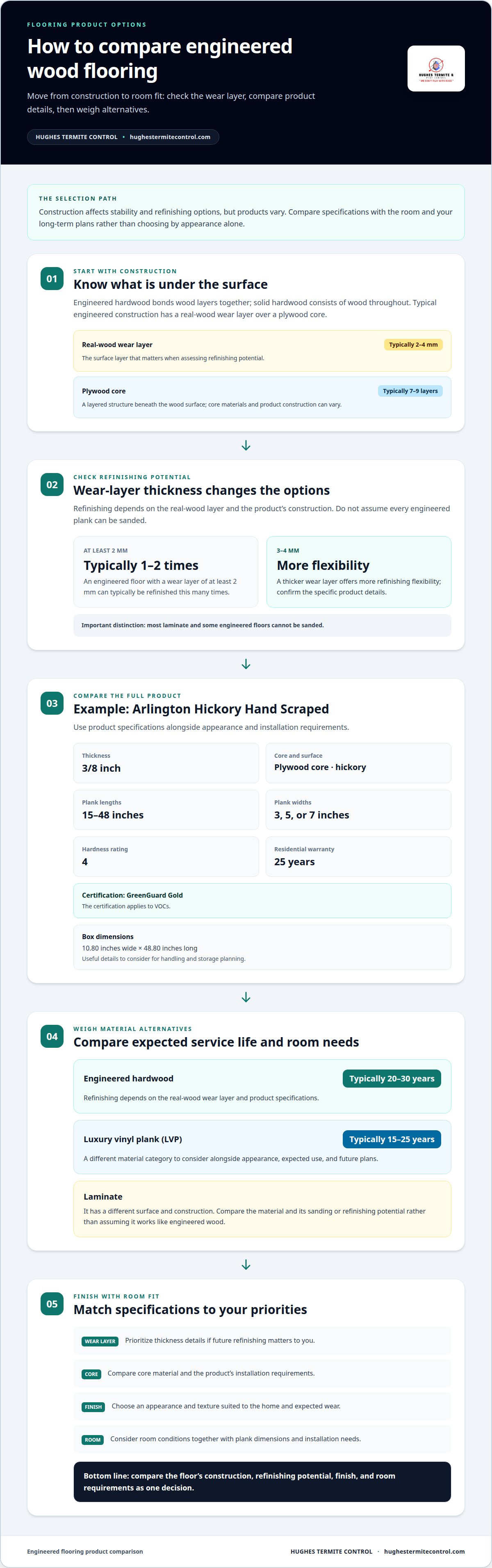
Engineered hardwood combines a real-wood surface with a layered core. Typical construction uses a 2-4 mm wear layer over a 7-9 layer plywood core. Solid hardwood consists of wood throughout, while engineered flooring bonds wood layers together. That difference affects stability and refinishing options, but product construction still varies.
For Northern Virginia homes, compare wear-layer thickness, core material, plank dimensions, finish, and room conditions. An engineered floor with a wear layer of at least 2 mm can typically be refinished 1-2 times. A 3-4 mm wear layer offers more refinishing flexibility. Ask how the finish suits the room’s expected use.
One example is Arlington Hickory Hand Scraped Engineered Hardwood. It has a 3/8-inch thickness, a plywood core, and a hickory surface. Planks come in 15-to-48-inch lengths and 3-, 5-, or 7-inch widths. Its GreenGuard Gold certification applies to VOCs, and its residential warranty is 25 years.
- Wear layer: A thicker real-wood surface can allow refinishing, depending on product construction.
- Core: Plywood is one available option; compare the core and installation requirements.
- Finish and texture: Select an appearance that suits the home and expected wear.
- Alternative materials: Laminate has a different surface and construction. Most laminate and some engineered floors cannot be sanded, so don’t assume every plank can be refinished.
Before selecting a floor, match its specifications to the room and your long-term plans. For example, a homeowner who values future refinishing should prioritize wear-layer details. Someone focused on a particular look may compare hickory, plank width, and finish. A flooring project assessment can help connect product requirements with installation needs.
The Arlington Hickory Hand Scraped Engineered Hardwood has a hardness rating of 4. Its box is 10.80 inches wide and 48.80 inches long, information that can help with handling and storage planning. Consider these specifications alongside the plank dimensions and installation requirements, rather than relying on appearance alone when comparing products for a room.
LVP flooring typically lasts 15-25 years. It offers another material category to consider when weighing appearance, expected use, and future plans. Compare its expected service life with the priorities that matter most for the space before choosing between it and engineered hardwood.
Engineered flooring costs in the DMV
In Virginia, the total project budget depends on more than the engineered hardwood itself. Flooring choice, room size, subfloor condition, preparation, transitions, and installation method all affect the scope and price, which is provided after a quote request. Removing existing carpet or correcting an uneven subfloor can also change the work required.
Review material selection separately from preparation and installation. A clear rectangular room with a sound subfloor needs different preparation from connected rooms with thresholds or floor repairs. Plank format and installation method also affect cutting, fitting, and labor. A room-by-room plan helps identify what drives the project.
Ask for a project scope that identifies the flooring, subfloor preparation, removal, and finishing details. Doorways, stairs, trim, and transitions can add steps that a basic room measurement misses. In a kitchen, for example, appliance clearance and adjoining floor heights may shape the installation plan. These details explain why two homes with similar floor areas can require different work.
How should engineered wood flooring be maintained, repaired, and refinished? Sweep or vacuum grit, wipe spills promptly, and use care products suited to the finish. Engineered hardwood typically lasts 20-30 years; refinishing depends on the real-wood wear layer and product specifications.
How does engineered wood flooring hold up to humidity, water, pets, and heavy traffic? DMV homes can experience a 50-60% humidity swing between summer and winter conditions, so stable indoor humidity matters. Engineered wood isn’t waterproof; promptly clean spills, and use floor protection where pets or heavy traffic may scratch the finish.
Compare options by lifecycle, not appearance alone. Carpet may feel softer underfoot, while engineered hardwood provides a wood surface. In a home with pets, entry mats and regular grit removal can help protect the finish. In a lower-level room, moisture management remains an important cost and durability consideration.
Flooring choices for older and newer DMV homes
In Northern Virginia, choose flooring based on your home’s structure, room conditions, and plans for future upkeep. Older houses may have uneven transitions between rooms or subfloors that need preparation before installation. A newer home can also require careful assessment, especially where flooring meets stairs, cabinetry, or another surface. A home’s age alone does not determine the best material.
For an older home, consider how long you want the floor to serve and whether sanding matters. Solid hardwood can last 50-100 or more years and can be refinished 6 or more times. Engineered wood has a real-wood surface, but refinishing depends on its wear layer and construction. That distinction matters if preserving the existing floor is a priority.
Basement conditions can also influence the choice in older and newer homes. Solid hardwood boards in basements may cup, warp, or crack within 2-5 years due to humidity swings. Engineered hardwood may be suitable in a basement when relative humidity stays below 50% year-round. The room’s moisture conditions should guide the decision, not simply the home’s age.
In newer homes, coordinate plank appearance with the floor plan and adjoining finishes. A consistent finish can connect open living areas, while a different material may better suit a room with distinct uses or exposure. “Luxury” describes the appearance, not a guarantee of performance; match the product’s care requirements to your household routines.
- Older home: Assess subfloor condition, transitions, and whether future sanding is important.
- Newer home: Plan plank direction, finish, and transitions across connected rooms.
- Basement: Use humidity conditions to decide whether engineered hardwood is suitable.
Before installation, we assess the existing floor and subfloor, then plan preparation and transitions around the home’s layout. For flooring choices suited to your home, plan your flooring project.
Hughes Termite Control: Flooring
Hughes Termite Control provides flooring services for homeowners planning an installation or replacement. Turn to the team when comparing engineered wood options, updating older rooms, or coordinating new flooring with existing transitions and finishes. The project starts by understanding the rooms, subfloor conditions, and flooring goals, then planning the work around those details.
If you’re concerned about possible wood damage before installing a new floor, a Wood-Destroying Organism Inspection can address that separate concern. Addressing the issue before covering the area can help you make a more informed flooring plan. Flooring work and inspections serve different needs, so the next step depends on your home’s requirements.
For a straightforward discussion of your flooring project, contact Hughes Termite Control.
Make Your Flooring Plan Work for Your Home
The next step is to turn your preferences into a practical room-by-room plan. Consider how each space is used, which surfaces it meets, and what matters most: a particular wood appearance, easier upkeep, or future refinishing. These priorities help narrow your options before finalizing installation details.
For engineered wood flooring in Arlington, VA, choose a product that suits your home’s conditions and the way you live in it. Hughes Termite Control provides flooring for homeowners planning a new installation or replacement. Share which rooms you’re updating and the results you want to start a conversation about your project.
Contact Hughes Termite Control today to discuss your flooring plans. A clear starting point can make the decisions ahead easier to manage.
Frequently Asked Questions
What does engineered wood flooring cost per square foot in Arlington, VA, including installation?
There is no single installed price for every Arlington home. Project pricing depends on the work involved and is provided after a quote request. Key cost factors include the selected flooring, room layout, subfloor condition, removal of existing materials, and installation details such as transitions. A connected space with several doorways may require different preparation and fitting than a simple open room.
Which flooring contractors install engineered wood flooring in Arlington, VA?
Hughes Termite Control provides flooring services, including installation and repair. For an engineered wood project, the work can be planned around the rooms involved, existing surfaces, and desired finish. For example, replacing flooring in several connected rooms requires attention to consistent transitions and how the new material meets adjoining surfaces. Share your project details with Hughes Termite Control to discuss the work.
Which engineered wood flooring types and finishes are best for Arlington homes?
The best option depends on how you use the room, the look you want, and how much visible texture suits your home. A lower-sheen finish, for example, can create a quieter appearance, while a more pronounced grain gives the floor stronger visual character. Compare samples beside your cabinetry and trim in the room’s lighting, then choose a finish that works across adjoining spaces.


